



ATTRACTION
Viceroy Palace Tbilisi,
Tbilisi


About
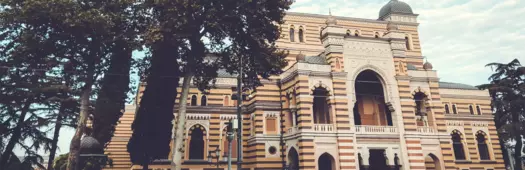
Vorontsov's Palace once had guards on the street outside. This stretch of Rustaveli Avenue was closed to ordinary pedestrians because the palace housed the Viceroy of the Caucasus, the Tsar's chief representative for the Russian Empire's Caucasian territories.
A palace was demolished here in 1801 to make way for a nicer one, which grew with each new appointment until the Tsar's own son lived in it. Its best-known resident, Viceroy Mikheil Vorontsov, gave it much of its present look. Under his governorship, theatres opened, and local newspapers were allowed.
After the Russian Empire fell, Georgians, Armenians and Azerbaijanis proclaimed independence here, and it became the main building of the Transcaucasian Seim, a parliament. Then the Soviets stripped it of its imperial majesty and made it a Youth Palace. Today it serves much the same function, and even hosts an American corner.
VoiceMap's self-guided walk down Rustaveli Avenue lets you sit where guards once kept pedestrians out.

Tours featuring Viceroy Palace Tbilisi (1)

Architecture
Social Movements
Revolution
Discover humor, history and countless cafes along Tbilisi's main street

 Walking Tour
|
 90 mins
Download the app for free
VoiceMap
- Download tours to use them offline
- Listen hands-free with GPS playback
- Get turn-by-turn directions


Scan to get app
Download the app for free
VoiceMap




 App of the Day

 Editor’s Choice






Itchy feet? Us too
VoiceMap’s newsletter scratches that itch and stimulates your senses, every fortnight. Curiosity is the only currency you need to subscribe.

Exploring is easier with a VoiceMap account
To purchase tours, add them to a wishlist, or access them with the VoiceMap app, please sign in or create a VoiceMap account


Exploring is easier with a VoiceMap account
To purchase tours, add them to a wishlist, or access them with the VoiceMap app, please sign in or create a VoiceMap account