



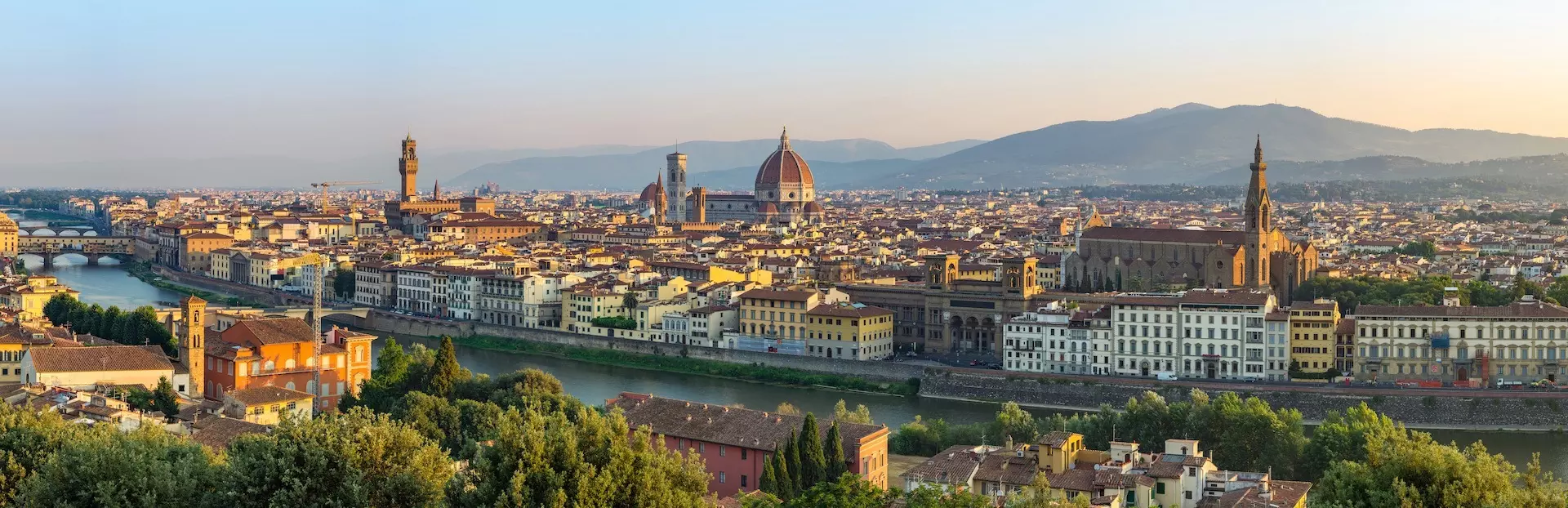
Florence
27 curiously human self-guided audio tours
Browse all tours in Florence



 Walking Tour
 90 mins
 Walking Tour
60 mins
Walking Tour
60 mins
 Walking Tour
60 mins
Walking Tour
60 mins

 Walking Tour
90 mins
Walking Tour
90 mins
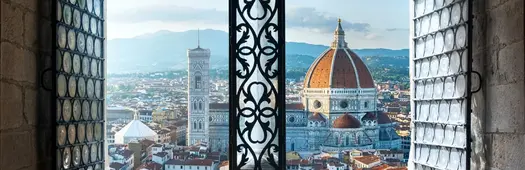 Walking Tour
90 mins
Walking Tour
90 mins
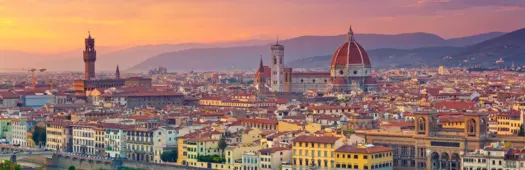
 Walking Tour
75 mins
Walking Tour
75 mins
 Walking Tour
90 mins
Walking Tour
90 mins
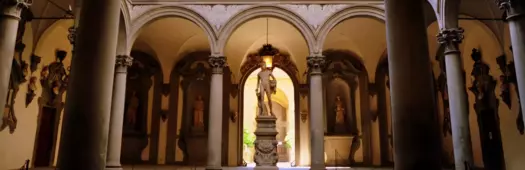 Walking Tour
45 mins
Walking Tour
45 mins


 Indoor Tour
45 mins
Indoor Tour
45 mins
Introducing our Florence tours
Cradle of the Renaissance, city of the Medici, and a place so storied it gave us Stendhal syndrome. The writer was so overwhelmed by Santa Croce – with its Giotto frescoes and tombs for Michelangelo, Galileo, and Machiavelli – that he fainted.
A single family bankrolled much of what overwhelms visitors today. For three centuries the Medici were bankers, schemers, popes, and patrons of virtually everything you'll queue to see – including the Uffizi, which began as their private offices.
The trap is that the centre is so walkable people assume it's legible. A morning covers the Duomo and Ponte Vecchio, and the temptation is to call it done. But cross the Arno into the Oltrarno, where Florentines actually live, and the city shifts: artisan workshops, buchette del vino, and piazzas no tour bus will find.
VoiceMap's self-guided audio tours bring depth to Florence's landmarks and texture to the streets beyond – the Medici's rise told palazzo by palazzo, a culinary trail through lampredotto carts and wine cellars, or five centuries of Jewish history hiding in plain sight.
Put your earbuds in. Let Firenze unfold at your pace.


Save with Florence audio tour passes
How do passes work?

Download the app for free
VoiceMap
- Download tours to use them offline
- Listen hands-free with GPS playback
- Get turn-by-turn directions


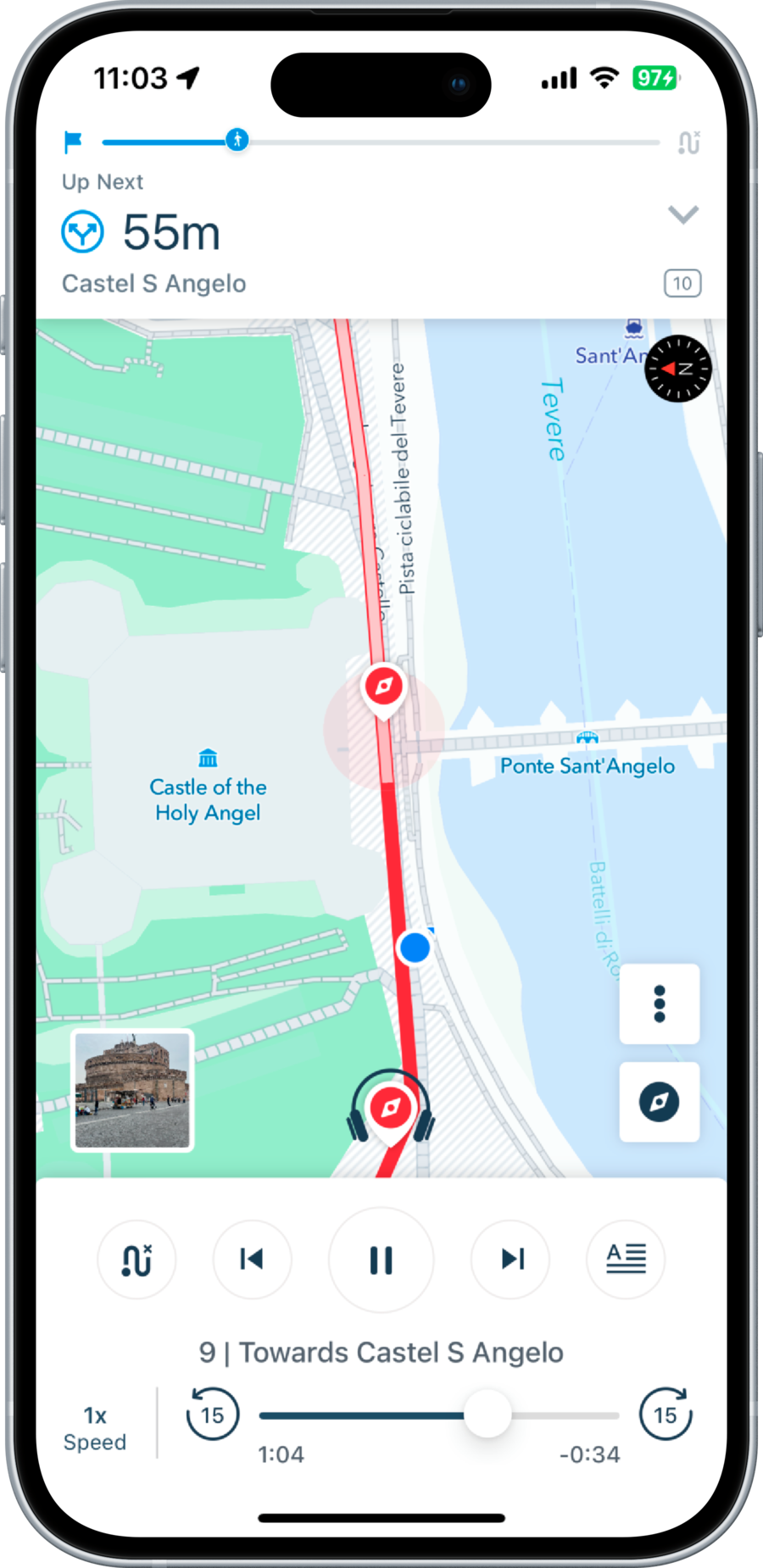
Scan to get app
Download the app for free
VoiceMap




 App of the Day

 Editor’s Choice
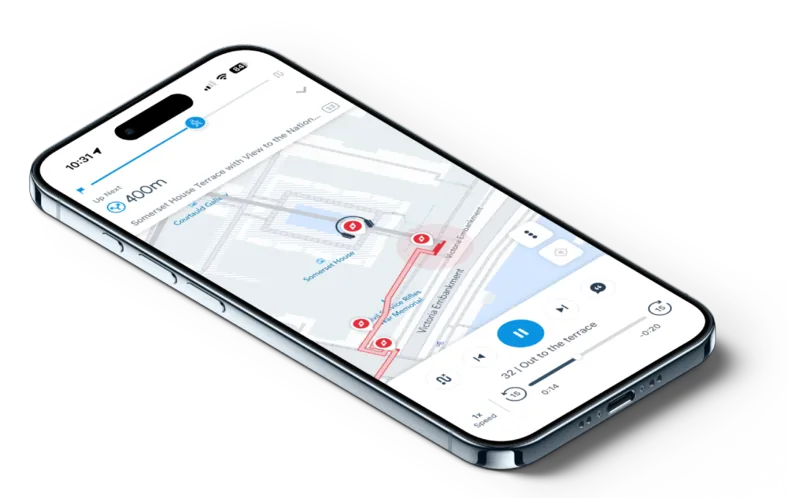

Self-guided walking tours in Florence
-
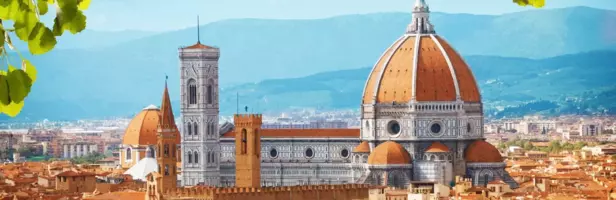 Florence
-
-
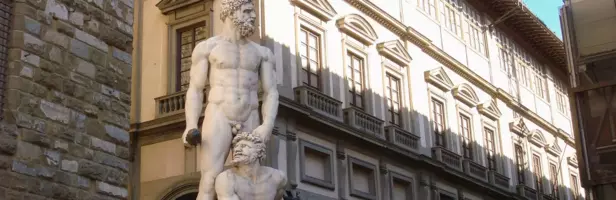 Florence
-
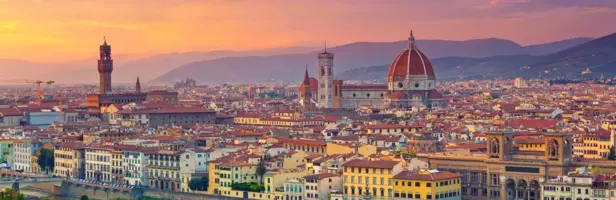 Florence
-
-
-
-
 Florence
-
 Walk
See all
Walk
See all


Best Florence tours for depth of information
Tours with incredible depth, often by experts in their field
-
-
-
 Florence
-
-
-
-
 Florence
-
 Depth of Information
See all
Depth of Information
See all


Florence attractions on our audio guides
 Featured on 10 routes

How the VoiceMap app works
-
Focus on your surroundings, not the screen
The VoiceMap app uses GPS to play audio automatically, at the right time and place, so you can focus on your surroundings, not the screen.

-
Follow a route with turn-by-turn-directions
VoiceMap tours follow a route from a fixed starting point. That lets us give turn-by-turn directions and use context to tell a better story.

-
Resume playback to go at your own pace
If you'd like to stop for a drink or go into a museum, end your tour then use the Resume feature to pick up exactly where you left off.
-
Listen as many times as you like
You can listen to your tours as often as you like using both the VoiceMap app and website.

-
Take virtual tours anywhere, like a podcast
Select Virtual mode in the VoiceMap app to listen to tours like a podcast - at home or in transit.

-
Buy for less on voicemap.me and sync
Once you've purchased a tour, it's added to your VoiceMap library. To access it in the app, just sign in using the same account.

-
Do tours without paying for data
Tours work offline, so you don't have to pay roaming fees. Just download them over WiFi before you get started.

Florence tours about Top Sights

-
Florence
-
Florence
-
-
-
 Florence
-
-
-
Florence
-
 Top Sights
See all
Top Sights
See all

Nearby destinations




Explore more with VoiceMap
-
Get a group discount
Get 15% to 50% off when you buy for a group

-

-



Frequently Asked Questions


More than in most cities. Florence isn't just beautiful – it's layered with meaning that isn't visible on the surface. The cathedral's marble façade looks centuries old but was actually completed in 1887, making it younger than the Brooklyn Bridge. The sculptures in Piazza della Signoria aren't just decoration – each one is a political statement placed by rival factions to assert dominance. The Uffizi's collection tells the story of how Western art transformed over 300 years, but without context the rooms can blur together. Understanding the Medici – the banking family who funded much of what you're looking at – connects the palaces, churches, and art into a single narrative that makes the whole city feel different.
How much guidance you need depends on the experience you're after. A private guide is worth it for anything you care deeply about – they can answer your questions in the moment and tailor the visit to your interests. Self-guided audio tours, including VoiceMap's Florence tours, work well at crowded sites or when you'd rather set your own pace – you get expert narration without being locked into a group's schedule. Group tours are a good option if you're travelling solo and would like to meet other people, or if you want skip-the-line museum access handled for you. Free walking tours are also an option, but in peak season – between May and September – groups can grow to 50 people or more. If you join one of these, don't forget to tip!
The best approach is often a mix. Use a self-guided tour when you want freedom and depth, book a private guide for the one site that matters most to you, and leave time to simply wander. Florence is a city where even getting lost in the backstreets between Piazza della Repubblica and the Arno turns up something worth seeing.
The range is enormous, and a lot depends on whether museum entry is included. A basic group walking tour of the historic centre starts at around €25 per person, but that covers the streets and piazzas only. Once you add skip-the-line access to the Uffizi or Accademia, group tour prices climb to €50–125 per person depending on the operator, group size, and which museums are included. Food tours typically cost €70–120 per person. Private guides start from around €260 for a half-day, which can make sense for a small group but adds up fast for a couple.
Museum entry is often a separate cost that catches people off guard. The Uffizi charges €25 at the ticket office (€29 online with the booking fee), and the Accademia is €16 (€20 online). Some guided tours include entry in the price; others don't. Always check before booking.
VoiceMap's Florence tours range from $5.99 to $19.99 and are often created by experienced local guides who either can't meet demand for private tours or prefer to focus on them. Couples can listen together by sharing audio through Bluetooth headphones or a splitter, and group purchases with a volume discount are available if everyone wants the tour on their own device.
If you're planning to do more than one or two tours, VoiceMap's tour passes bring the per-tour cost down further. A Florence pass starts at $24.99 for 3 credits, and passes with more credits offer greater discounts and longer validity periods. Italy passes and global passes are also available for travellers visiting multiple cities. All purchased tours stay in your library permanently, so you can replay them on a return visit at no extra cost.
For Florence's three most popular attractions, yes. The Uffizi Gallery, the Accademia Gallery (home to Michelangelo's David), and the Brunelleschi dome climb all use timed-entry ticketing, and in peak season the popular morning slots sell out days or weeks ahead. All three now issue named tickets that require ID at the entrance, so buying from unofficial resellers is risky.
How far ahead depends on the season. Between April and September, booking two to three weeks out for the Uffizi and Accademia is sensible. The dome climb, which requires a Brunelleschi Pass (€30, covering the entire Duomo complex for three days), can sell out even faster because the slot cannot be changed once booked and capacity is limited to small groups on the narrow staircase. In quieter months, booking a few days ahead is usually enough.
If you arrive without tickets, you can try the on-site ticket offices. The Uffizi and Accademia both have walk-up windows, and on a quiet weekday outside peak season you might get in within an hour. On a summer Saturday, you're looking at two to three hours or being turned away entirely. Both museums are closed on Mondays.
Plenty of Florence doesn't require booking at all. The cathedral interior is free (though a reservation is needed, it's usually available same-day). The piazzas, bridges, churches, markets, and the entire Oltrarno neighbourhood are open to anyone who shows up. VoiceMap's self-guided audio tours work the same way. There's no booking, no fixed time, and no group to join. Download one when you're ready and start whenever suits you. If your museum ticket falls through or the queue is too long, you can switch to a walking tour of the city instead and come back to the museum another day.
The Uffizi is open Tuesday to Sunday, 8:15am to 6:30pm, with last admission at 5:30pm. It's closed every Monday, though the Uffizi occasionally opens on specific Mondays during spring and around public holidays. Check the official site for current opening times before your visit.
Book your timed-entry ticket in advance through the official booking system, especially between April and September when popular morning slots sell out days ahead. All tickets are now issued in the holder's name, so bring ID that matches. Since 2026, pricing is the same year-round: €25 at the ticket office or €29 online (which includes a €4 booking fee). A discounted afternoon ticket is available for entry after 4pm (€16 at the ticket office, €20 online), giving you about two and a half hours before closing. The first Sunday of each month is free, but the queues are extreme and the rooms are packed.
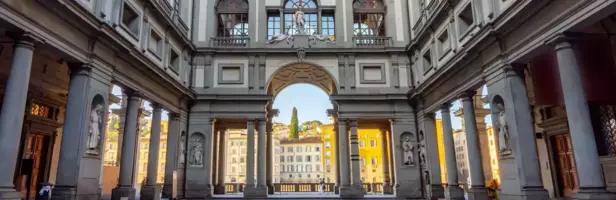
Plan for at least two hours inside, and three if you want to see both floors properly. The collection runs chronologically, starting on the second floor with medieval and early Renaissance works and moving through to the High Renaissance. Most visitors head straight for Botticelli's Birth of Venus and Primavera, which means those rooms are crowded by mid-morning. If you arrive for the first slot at 8:15, consider starting elsewhere and circling back.
The first floor, which many visitors skip entirely, houses later works including Titian, Caravaggio, and Rembrandt. It's quieter and often more rewarding for the time you spend there. An audio guide makes a significant difference at the Uffizi. The sheer scale of the collection can feel overwhelming without some structure, and the question above covers VoiceMap's two indoor Uffizi tours in detail.
The Uffizi spans over fifty rooms across two floors, arranged chronologically from the 1200s to the 1600s. Without any guidance, most visitors gravitate to the Botticelli room, spend a few minutes with The Birth of Venus, and then drift through the rest without a clear sense of what they're looking at or why the collection is arranged as it is. An audio guide transforms the visit because it tells you what changed between one room and the next, and why those changes mattered.
The Uffizi offers its own audioguide for rent on-site (€7, available in multiple languages). It covers the full collection and works well enough as a room-by-room companion, though the commentary tends toward the encyclopaedic.
VoiceMap has two indoor tours of the Uffizi, both designed to work differently from a traditional audioguide. Inside the Uffizi Galleries is by Alexandra Korey, a PhD art historian who has specialised in Renaissance Italian art and lived in Florence for over 25 years. Rather than describing each painting, she teaches you how to see them. Her tour asks questions, draws comparisons across periods, and helps you understand what made Giotto's naturalism revolutionary, why Botticelli's mythological paintings are more complex than they appear, and how Leonardo, Michelangelo, and Raphael each pushed the art form in different directions. It runs about two hours. The second, Uffizi Gallery: A Tour of Renaissance Masterpieces by Julie Thomas, follows the Medici story through the collection and includes an optional 30-minute extension covering the first floor, where Titian's Venus of Urbino and Caravaggio's Medusa are displayed.
Both use VoiceMap's indoor tour player rather than GPS. You navigate using reference photos and tap I'm here
when you arrive at each work, then the audio plays. You can skip ahead, go back, or spend as long as you like in front of a painting that grabs you.
Absolutely, and in some ways it's better. Tuscan food culture is built around small, independent places that don't respond well to a group of fifteen people arriving at once. A lampredotto cart serves one or two people at a time. A wine bar with six stools rewards those who linger, not those on a schedule. Eating your way through Florence at your own pace means you can stop when you're hungry, sit down when something catches your eye, and skip what doesn't appeal.
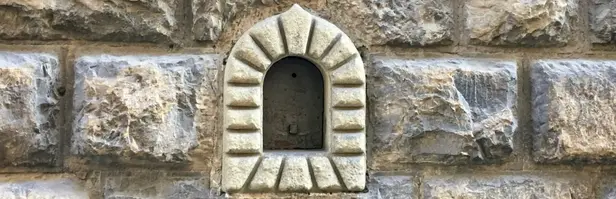
VoiceMap's Fine Food in Florence tour is designed for exactly this kind of self-guided eating. Created by culinary expert Adrienne Kovats for Context Travel, it walks you from Piazza della Signoria through the historic centre and across the Arno to Santo Spirito, stopping at places most visitors walk straight past. You'll hear the story behind schiacciata (Tuscany's crispy flatbread), learn why Florentine bread is famously unsalted, visit Enoteca Alessi for a wine tasting, and discover the buchette del vino (wine windows) that once allowed noble families to sell wine directly from their palaces without paying tax. The tour also traces the origins of the negroni to a 1919 invention by Count Camillo Negroni, and takes you to Giacosa1815 where you can try one.
One thing to keep in mind is that restaurants close or change hands, street food vendors move, and menus evolve, so it's worth checking recent reviews before going with a self-guided option.
It's also worth noting that food tours are often the best format for a group experience. There's time to eat and drink together, the atmosphere tends to be more social and less scripted than a walking tour, and sharing a meal with strangers is one of the few group dynamics that genuinely adds something. If you're travelling solo and want to meet people, a group food tour is a strong option.
Quite a lot of Florence's best experiences don't require a ticket at all. The cathedral interior is free (a same-day reservation is needed but usually available). The Baptistery doors, the sculptures in Piazza della Signoria, the Loggia dei Lanzi, Ponte Vecchio, and the entire streetscape of the historic centre are open to anyone. Churches like Santa Felicita, Santo Spirito, and Santa Trinita hold remarkable works of art and charge nothing. The Oltrarno neighbourhood, the daily market in Piazza Santo Spirito, and the artisan workshops of San Frediano are all walk-in territory. You could spend a full day in Florence without booking anything and still have a rich experience.
It's also worth saying that you don't have to visit the major museums to have a meaningful trip. Florence was a Renaissance city before it was a museum city, and the streets, palaces, piazzas, and churches tell that story just as vividly as the galleries do. If the idea of queuing for the Uffizi or the Accademia doesn't excite you, don't go because you feel you ought to. Spending a morning walking through the backstreets with a good audio guide and an afternoon in an Oltrarno wine bar is a perfectly valid way to experience Florence, and arguably closer to how the city was meant to be enjoyed.
That said, if you do want the museums, the Uffizi, Accademia, and Brunelleschi dome climb all use timed-entry ticketing that sells out during peak season. The Uffizi's afternoon ticket (entry after 4pm, €16/€20) is sometimes available same-day and gives you two and a half hours inside. Beyond the big three, the Palazzo Pitti museums and the Boboli Gardens are generally easier to access without advance booking.
VoiceMap's self-guided audio tours are built for exactly this kind of unplanned visit. There's no booking, no fixed departure, and no group to join. If you wake up without a plan, you can download a tour over coffee and start whenever you're ready. If the weather changes or your energy fades, pause and pick it up tomorrow. The tours work offline once downloaded, so you don't even need a mobile data connection once you've started.
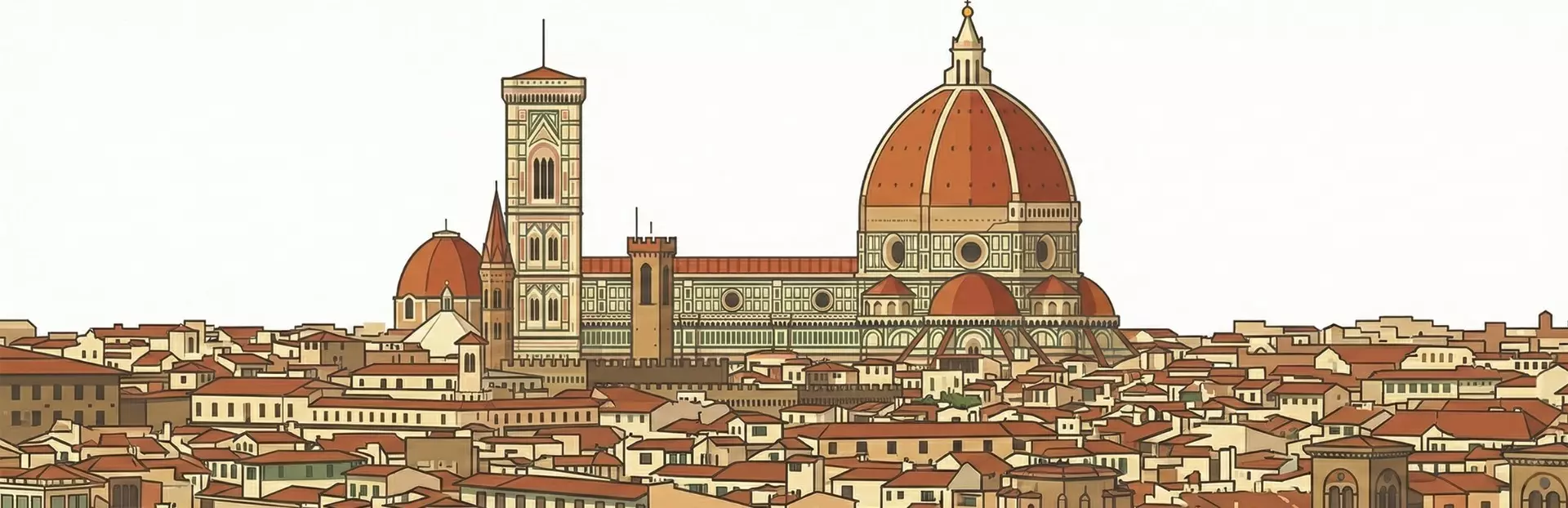
Start by understanding the shape of the city. Florence's historic centre is small and organised around a few landmarks you'll quickly recognise. The Duomo sits roughly in the middle. To the south, a five-minute walk takes you to Piazza della Signoria and the Uffizi, and another five minutes beyond that to Ponte Vecchio and the Arno. North of the Duomo, the San Lorenzo neighbourhood clusters around the Medici churches and the Mercato Centrale. Once you have those reference points, the rest falls into place quickly.
The single most useful thing you can do on your first morning is walk. Not into a museum, not onto a bus, but through the streets between the Duomo and the river, getting a feel for how the city connects. Florence rewards this kind of unhurried orientation because the density of the centre means you'll pass something remarkable every few minutes without trying.
A self-guided audio tour is a good way to structure that first walk without locking yourself into a fixed schedule. VoiceMap's AudioZoom into Florence ($5.99) is designed as an introduction to the historic centre, starting at San Lorenzo and covering the Duomo, Piazza della Signoria, Ponte Vecchio, and Santo Spirito in about an hour. Classic Florence ($8.99) covers similar ground from Santa Maria Novella to Ponte Vecchio. Either one gives you a mental map of the city and enough context to make the rest of your visit more meaningful. Save the museums for the afternoon once you understand how the pieces fit together.
One practical tip: don't try to do the Uffizi, the Accademia, and the Duomo cupola on the same day. Each one deserves focused time, and cramming them together turns a rich city into a checklist. Two or three days in Florence, with mornings for walking and afternoons for one major museum, is a pace that actually lets you absorb what you're seeing.
Florence's historic centre is one of the most walkable in Europe. The Duomo, Ponte Vecchio, Piazza della Signoria, the Uffizi, and the Accademia are all within 15 minutes of each other on foot, and much of the centre is a ZTL (zona a traffico limitato), which means private cars are restricted and the streets belong mostly to pedestrians. You won't need a bus or a taxi for anything in the main tourist area.
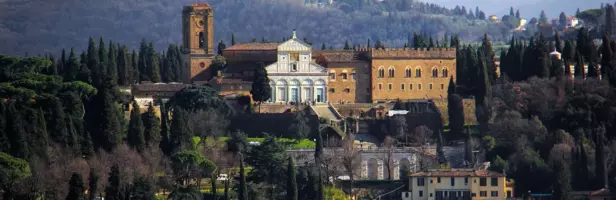
The terrain is almost entirely flat on the north side of the Arno. If you cross to the Oltrarno, it stays flat through Santo Spirito and San Frediano. The exception is Piazzale Michelangelo and the Basilica of San Miniato al Monte, which involve a genuine uphill climb. The views are worth it, but allow extra time and energy. The streets are paved with stone throughout, some of it uneven, so sturdy flat-soled shoes make a real difference, especially if you're walking for several hours.
For anyone with mobility concerns, the flat centre is manageable, but the cobblestones and kerbs can be challenging with a wheelchair or pushchair. Taxis are readily available and relatively affordable within the city. Florence also has a tram line (T1) connecting the train station to the suburbs and a network of small electric buses (the C lines) that circulate through the historic centre, which are useful if you need a rest between areas.
Florence is generally very safe for walking, including at night. The main tourist neighbourhoods (Duomo, Santa Croce, Oltrarno, the Ponte Vecchio corridor) are well-lit and busy with locals and visitors until late in the evening, especially in warmer months. For solo women, most of the centre feels comfortable after dark. The area immediately around Santa Maria Novella train station can feel less welcoming late at night, and Parco delle Cascine is best avoided after dark, but these are the exceptions rather than the rule. The main concern for all visitors is pickpocketing in crowded areas, particularly around the Duomo, on Ponte Vecchio, and on the small C-line buses. A crossbody bag and basic awareness are sufficient precautions.
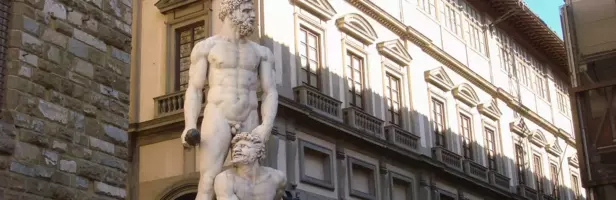
Early morning is transformative. The Piazza della Signoria before 8:30am feels like a different city. You can stand in front of the replica David and the Perseus without being jostled, hear your footsteps echo off the Palazzo Vecchio, and cross Ponte Vecchio with the jewellery shops still shuttered and the Arno catching the first light. By 10am, the corridor between the Duomo and Ponte Vecchio is shoulder-to-shoulder, and it stays that way until evening.
In summer (June through September), the midday heat is a serious factor. Florence sits in a valley with no sea breeze, and temperatures regularly reach 38°C (100°F) or higher. The stone piazzas radiate heat, shade is scarce, and the compact centre offers nowhere to escape the sun without ducking indoors. Plan to be inside a museum, a church, or a restaurant between noon and 3pm. This is what Florentines themselves do.
Late afternoon and evening are the second-best window. From around 5pm the temperature drops, the light turns golden on the stone facades, and the city shifts into passeggiata mode. Piazza Santo Spirito in the Oltrarno fills with locals rather than tour groups, and the aperitivo hour begins. If you're exploring with a self-guided audio tour, this is a rewarding time because the streets are animated but not overwhelmed, and the commentary plays against the kind of atmospheric backdrop that makes Florence feel like itself.
In spring and autumn, the midday window opens up. The centre is busy but bearable, the light is beautiful, and you can comfortably walk for three or four hours without needing to retreat. Winter is quieter still, with mild daytime temperatures around 10–12°C (50–54°F), short days, and a fraction of the crowds. You'll want a coat, but the walking is comfortable and the museums are blissfully uncrowded.
Walk it. The Medici story is written into the city's streets, and Florence is compact enough that you can trace three centuries of one family's ambition in a single morning.
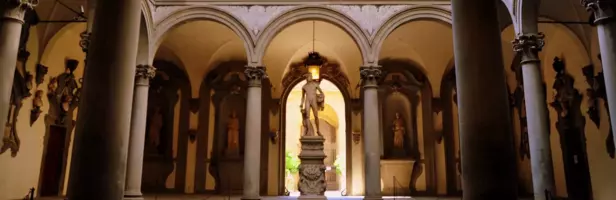
Start at Basilica di San Lorenzo, the family mausoleum, where the Medici first attached themselves to the city's religious life. Around the corner stands Palazzo Medici-Riccardi, deliberately built to look austere from the outside because Cosimo the Elder wanted to appear close to ordinary Florentines rather than flaunt his wealth. He rejected the original design by Brunelleschi as too flamboyant and chose a more sober architect instead. The opulence was all on the inside, hidden behind those plain stone walls.
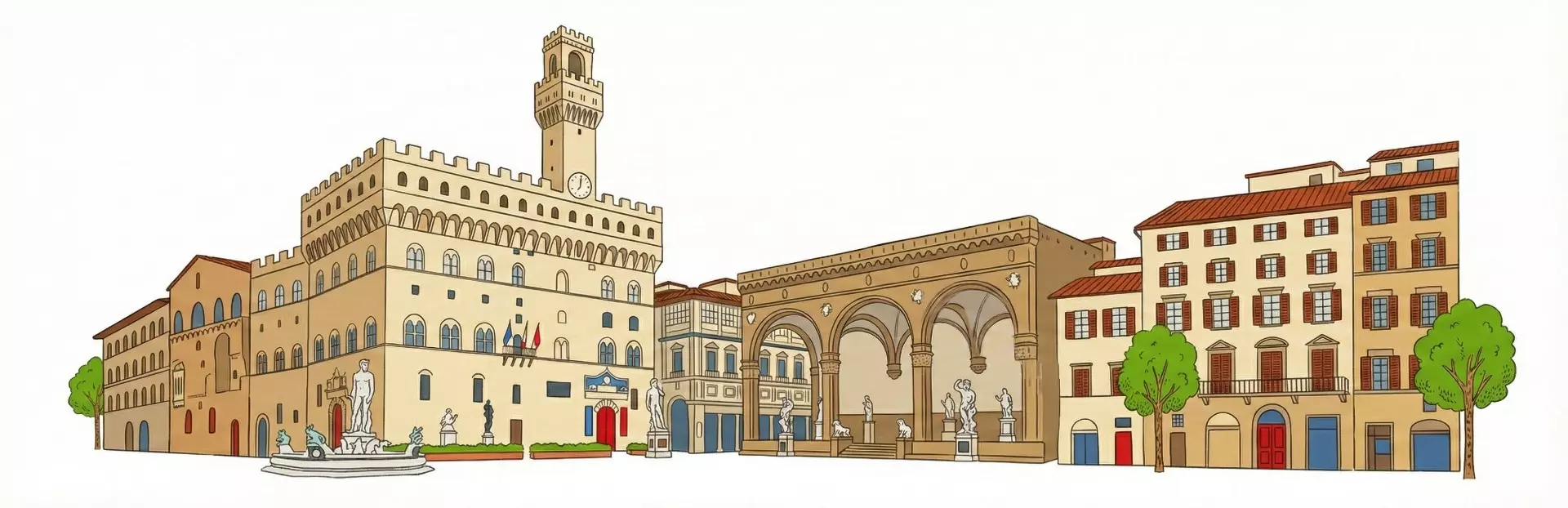
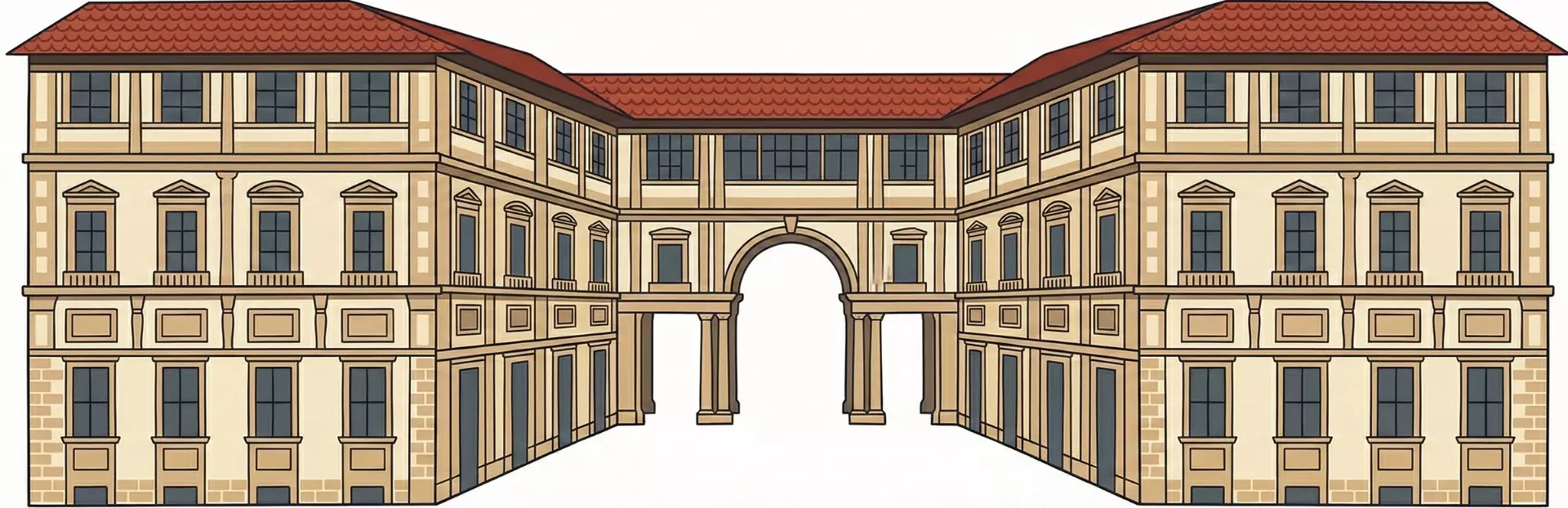
From there, the trail leads to the cathedral, where the Pazzi conspiracy played out in 1478. Lorenzo the Magnificent's brother Giuliano was stabbed to death during Mass in a coup backed by the Pope himself. Lorenzo escaped to the sacristy and took terrible revenge, hanging every conspirator he could find. Walk on to Piazza della Signoria, where Cosimo the First used sculpture as propaganda. The Neptune fountain carries his own face, and the bronze Perseus holding Medusa's severed head is a sculpted metaphor for crushing the Republic. Even the Uffizi started life as Medici offices before their private art collection on the upper floors became the museum we know today.
VoiceMap has several tours that tell this story from different angles. Three Hundred Years of Art, Power, and Politics: A Tour of Medici Florence by Julie Thomas, an art history graduate of the Ecole du Louvre who has lived in Florence since 2013, follows the family from San Lorenzo to Pitti Palace. Politics and Power by Context Travel takes a broader view of how banking, guild politics, and artistic patronage turned a medieval wool town into the cultural capital of Europe. Both work offline and use GPS to trigger the narration as you walk, so the stories arrive at the exact moment you're standing in front of the places where they happened.
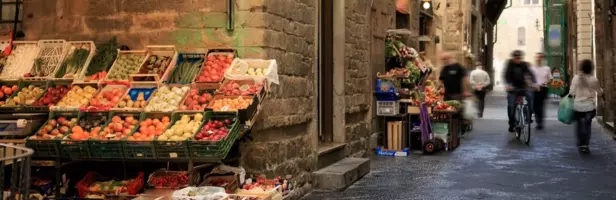
Cross the Arno. Most visitors never get further than Ponte Vecchio's jewellery shops, but the Oltrarno on the south bank is where Florentines actually live. Piazza Santo Spirito has a daily market, neighbourhood bars, and Brunelleschi's last church. Piazza della Passera is a tucked-away square most tourists never find, lined with local restaurants. Via Maggio, once the grand residential street of the Medici era, is now home to antique dealers selling Murano chandeliers and Renaissance furniture. And San Frediano, further west, was historically the working-class district of wool workers and dyers. The street names still record the old trades: Via dei Cardatori (carders), Via dei Tessitori (weavers). Today it's full of trattorie and artisan workshops, and the Brancacci Chapel in the Carmine church holds frescoes that inspired Michelangelo.
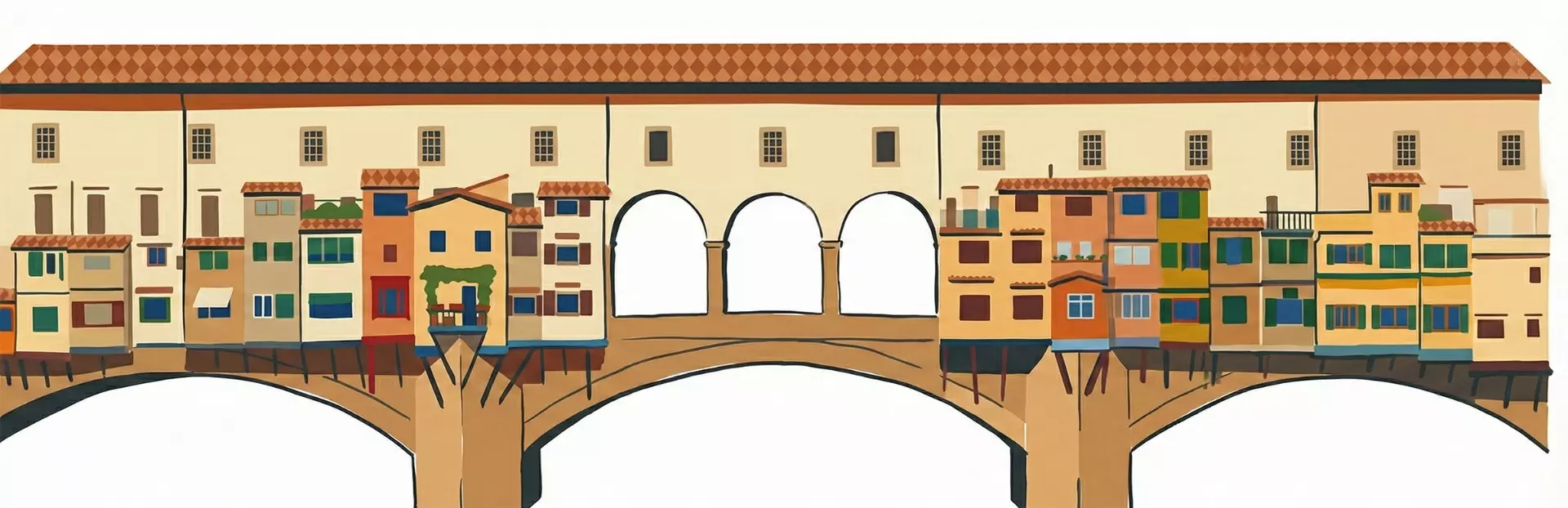
If you want a tour that takes you into the Oltrarno with someone who knows it, VoiceMap's Where Tradition Meets History by Julie Thomas loops through the backstreets from Ponte Vecchio to a seven-storey medieval tower called Torre dei Belfredelli, passing the Medici's private corridor above Santa Felicita, a little-known Michelangelo work in the Basilica di Santo Spirito, and the buchette del vino (wine windows) that are uniquely Florentine.
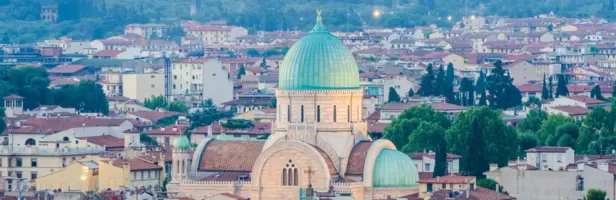
For a completely different perspective, Bridging Florence's History by Cornelia Danielson for Context Travel follows the Arno itself, tracing how the river shaped the city from its Roman origins through the devastating 1966 flood, when the National Central Library lost a third of its collection and volunteers known as the Mud Angels arrived from across Italy to save what they could. And The History of the Jewish Ghetto in Florence by Paola Barbetti-Bohm, a Florence native and member of the city's Jewish community, uncovers a history that starts in a narrow alley in the Oltrarno where the first synagogue stood in the 1200s and ends at the Moorish-domed Great Synagogue that dominates the eastern skyline.
Florence's compact size is the first thing that works in your favour. The entire historic centre is walkable in 30 minutes end to end, which means you never need to plan complicated transport or coordinate meeting points. You can follow your curiosity down a side street, spend an extra hour in front of a painting that grabs you, or change your entire afternoon plan without it costing you anything. That spontaneity is one of the real joys of travelling alone. There's no negotiating a schedule or compromising on priorities. If you want to skip the Accademia and spend the morning in the Oltrarno instead, you just do it.
The city's food and drink culture makes solo dining easy. Eating at the bar rather than taking a table is standard practice in Florence, and the aperitivo tradition means there's always somewhere to sit with a glass of wine and a plate of something small without feeling self-conscious about being alone. Piazza Santo Spirito in the Oltrarno is particularly good for this in the evening. The tables fill with a mix of locals and visitors, and the atmosphere is social without requiring you to socialise. Mercato Centrale, the covered market near San Lorenzo, is another natural solo spot, with dozens of food stalls and communal seating where nobody notices or cares whether you're with someone.
Self-guided audio tours are worth considering specifically because they remove the group dynamic that can feel awkward when you're on your own. Instead of standing with a cluster of strangers following a guide's umbrella, you're just someone walking through Florence with headphones on. VoiceMap's tours use GPS to trigger narration as you walk, so you don't need to check your phone constantly. The Oltrarno tour and the Arno River walk both take you through quieter parts of the city that are especially rewarding to explore alone.
For solo women, Florence is one of the safer cities in Italy. The main tourist neighbourhoods are well-lit and busy until late in the evening, and the question above on walkability and safety covers the specifics.
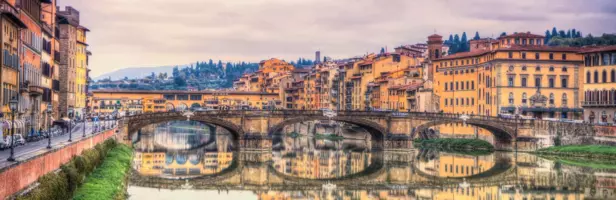
Florence was practically designed for couples, but the most romantic experiences tend to happen away from the crowds rather than in the middle of them. Ponte Vecchio at midday, with hundreds of people pressing past the jewellery shop windows, is not the intimate moment the photos suggest. Ponte Santa Trinita at sunset, looking back at the Vecchio with the Arno reflecting the last light, is.
The Oltrarno is the neighbourhood that rewards couples most. Piazza Santo Spirito has a quieter, more local rhythm than anything north of the river. Via Maggio's antique shops are the kind of places you browse together without a plan. And the walk up to Piazzale Michelangelo in the early evening, when the city spreads out below you and the light is golden on the Duomo, is one of those views that earns its reputation.
For a shared food experience, the aperitivo tradition is more intimate than a formal dinner. Find a wine bar in San Frediano or near Piazza della Passera, order a glass of something local, and let the evening unfold. If you want more structure, VoiceMap's Fine Food in Florence tour walks you through the food culture together, from schiacciata to the origins of the negroni, at whatever pace you set.
Self-guided audio tours work particularly well for couples because the experience is shared and private at the same time. You're listening to the same stories, reacting to the same details, and choosing where to linger or skip. Couples who share audio through Bluetooth headphones hear everything in sync. It's closer to exploring with a knowledgeable friend whispering in both your ears than to trailing behind a guide in a group of twenty strangers.