






ATTRACTION
Castel Sant'Angelo,
Rome

About
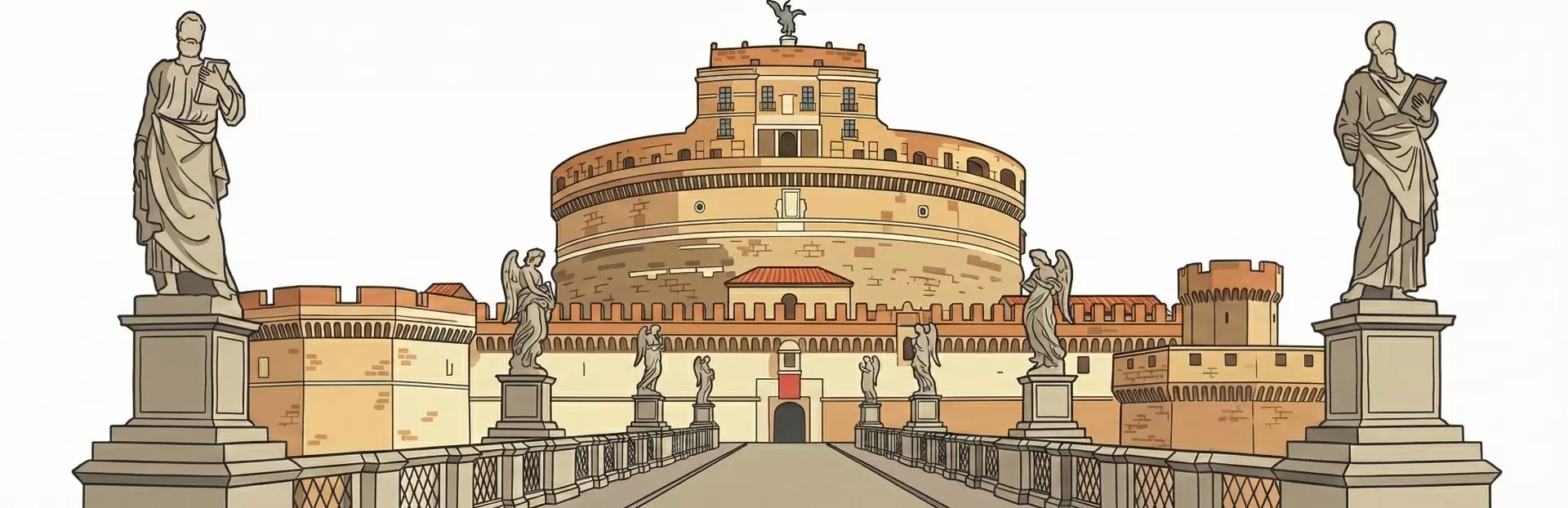
Castel Sant'Angelo began life in 139 AD as Emperor Hadrian's mausoleum, a towering drum of cement over 150 feet high. Its spiral ramp once carried imperial funeral processions five storeys up to deposit emperors' ashes in the Room of Urns, where trap doors and murder holes protected the dead from intruders.
The castle's longest-serving executioner, Giovanni Battista Bugatti, spent 68 years beheading over 500 men here, though between appointments he sold umbrellas to tourists. Among its more colourful prisoners was Benvenuto Cellini, a goldsmith who enjoyed satanic ceremonies in the Colosseum and stabbing his girlfriend's lovers.
Six different statues of the Archangel Michael have crowned the fortress over the centuries, the first made of wood until it weathered away. Puccini set the final act of Tosca here, where the heroine throws herself from the ramparts.
VoiceMap's self-guided tours trace the castle's transformation from imperial tomb to papal fortress, revealing how its 58 rooms became a labyrinth of prison cells, Renaissance apartments and a centrally heated bathroom with marble tub, explaining the building's reinvention through plague, siege and Medici excess.
The castle's longest-serving executioner, Giovanni Battista Bugatti, spent 68 years beheading over 500 men here, though between appointments he sold umbrellas to tourists. Among its more colourful prisoners was Benvenuto Cellini, a goldsmith who enjoyed satanic ceremonies in the Colosseum and stabbing his girlfriend's lovers.
Six different statues of the Archangel Michael have crowned the fortress over the centuries, the first made of wood until it weathered away. Puccini set the final act of Tosca here, where the heroine throws herself from the ramparts.
VoiceMap's self-guided tours trace the castle's transformation from imperial tomb to papal fortress, revealing how its 58 rooms became a labyrinth of prison cells, Renaissance apartments and a centrally heated bathroom with marble tub, explaining the building's reinvention through plague, siege and Medici excess.

Tours featuring Castel Sant'Angelo (3)

Ancient History
Ghosts And Hauntings
Oddities And Rarities
Explore ancient Rome with a "tour ghost", who shows you all his favourite haunts

 Walking Tour
|
 75 mins

Architecture
Medieval History
Ancient History
Follow popes, fictional characters and artists through the Eternal City
 Walking Tour
|
120 mins
Ancient History
Top Sights
Architecture
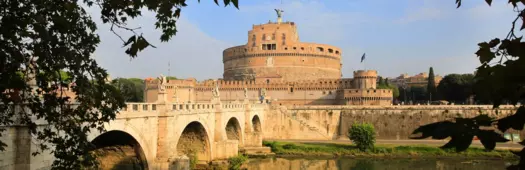
Unlock the 2,000-year-old castle’s secrets, from safe rooms to centuries-old art

 Indoor Tour
|
75 mins
Download the app for free
VoiceMap
- Download tours to use them offline
- Listen hands-free with GPS playback
- Get turn-by-turn directions


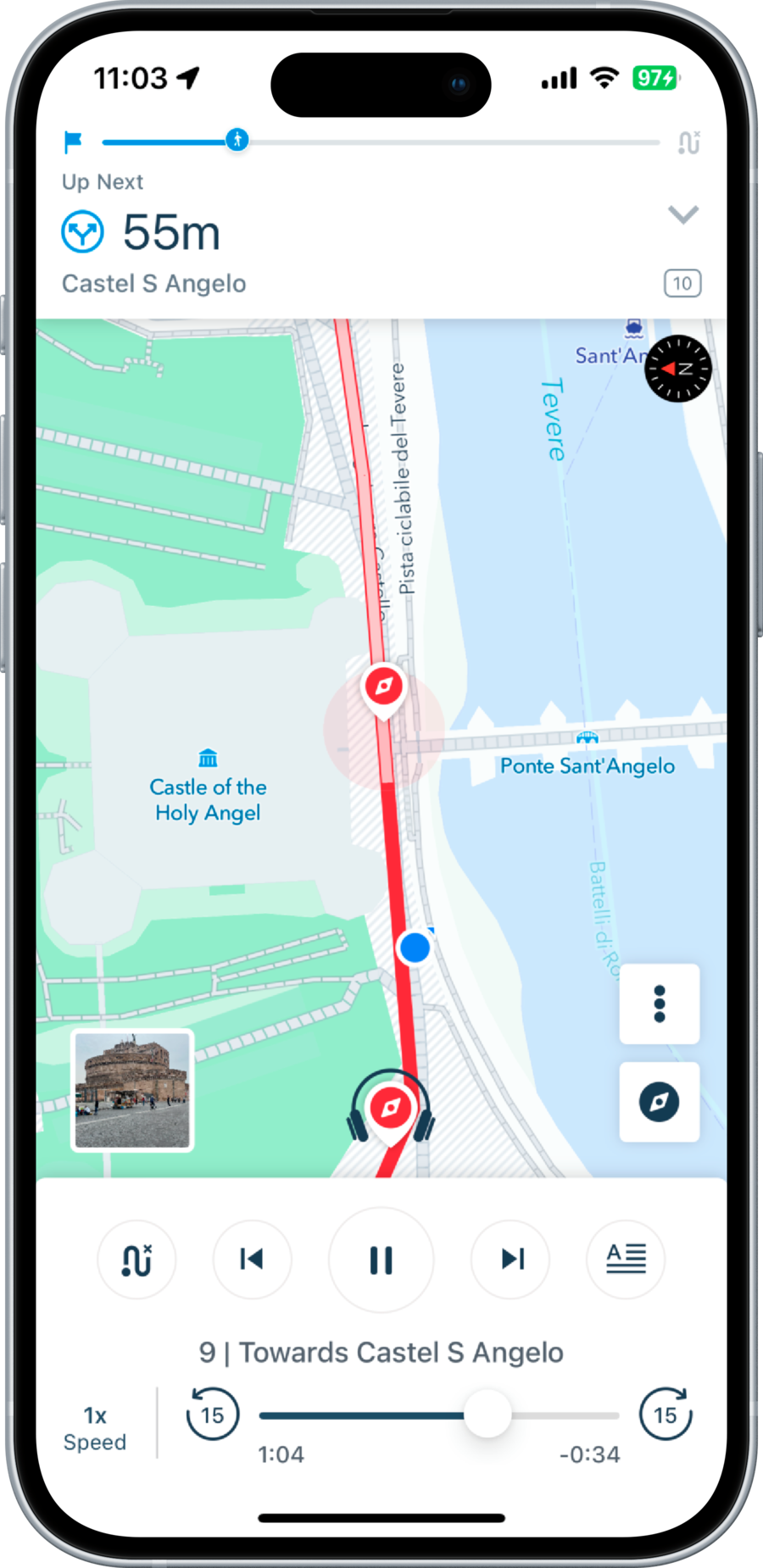
Scan to get app
Download the app for free
VoiceMap




 App of the Day

 Editor’s Choice







Itchy feet? Us too
VoiceMap’s newsletter scratches that itch and stimulates your senses,
every fortnight. Curiosity is the only currency you need to subscribe.

Exploring is easier with a VoiceMap account
To purchase tours, add them to a wishlist, or access them with the VoiceMap app, please sign in or create a VoiceMap account


Exploring is easier with a VoiceMap account
To purchase tours, add them to a wishlist, or access them with the VoiceMap app, please sign in or create a VoiceMap account