







ATTRACTION
Can Vivot,
Palma

About
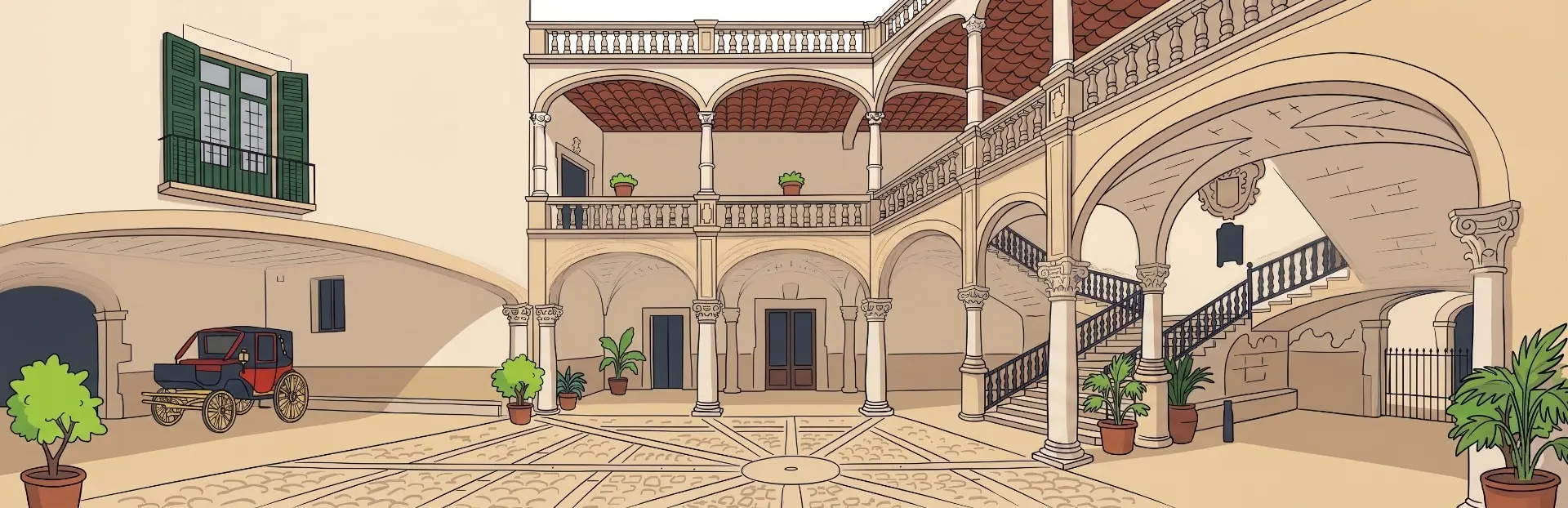
Can Vivot has belonged to the Vilalonga family for six centuries, which in itself says something about stability in a city that has changed hands several times. The house dates to the fourteenth century, though its elegant Baroque courtyard reflects eighteenth-century renovations, and it remains private today.
The patio is the point. Slender columns, a noble staircase, a well at the centre. These courtyards were never purely private spaces: the doors stayed open so anyone could draw water from the well, neighbours gathered on market days, and the family announced births by hanging laurel on the door for a boy or myrtle for a girl. When someone died, the doors were left slightly ajar.
The house carries quieter histories too. Families in this neighbourhood sheltered converted Jews persecuted by the Inquisition, and Can Vivot was no exception.
VoiceMap's tours use Can Vivot to open up the social world of Palma's noble patios, connecting their everyday rhythms to the city's deeper history of faith, fear and community life.
The patio is the point. Slender columns, a noble staircase, a well at the centre. These courtyards were never purely private spaces: the doors stayed open so anyone could draw water from the well, neighbours gathered on market days, and the family announced births by hanging laurel on the door for a boy or myrtle for a girl. When someone died, the doors were left slightly ajar.
The house carries quieter histories too. Families in this neighbourhood sheltered converted Jews persecuted by the Inquisition, and Can Vivot was no exception.
VoiceMap's tours use Can Vivot to open up the social world of Palma's noble patios, connecting their everyday rhythms to the city's deeper history of faith, fear and community life.

Tours featuring Can Vivot (3)

Local Legends
Architecture
Oddities And Rarities
Discover ancient palaces, churches and hidden patios on a stroll through Palma

 Walking Tour
|
 75 mins
Local Legends
Medieval History
Oddities And Rarities
Profitez d’une promenade ludique pour découvrir le centre historique de Palma
Walking Tour
|
60 mins
Local Legends
Medieval History
Architecture
Disfruta de un paseo entretenido para descubrir el casco antiguo de Palma
Walking Tour
|
60 mins
Download the app for free
VoiceMap
- Download tours to use them offline
- Listen hands-free with GPS playback
- Get turn-by-turn directions


Scan to get app
Download the app for free
VoiceMap




 App of the Day

 Editor’s Choice






Itchy feet? Us too
VoiceMap’s newsletter scratches that itch and stimulates your senses,
every fortnight. Curiosity is the only currency you need to subscribe.

Exploring is easier with a VoiceMap account
To purchase tours, add them to a wishlist, or access them with the VoiceMap app, please sign in or create a VoiceMap account


Exploring is easier with a VoiceMap account
To purchase tours, add them to a wishlist, or access them with the VoiceMap app, please sign in or create a VoiceMap account