





Where the Bureaucracy Lives: The Architecture of Argument in D.C




 Buy for a Group
 Reviews
 About the Tour
 About the Tour
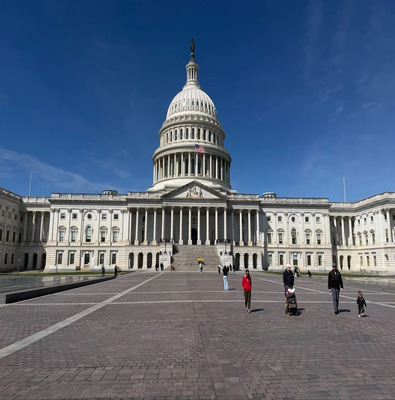
Washington's federal buildings aren't just architecture – they're arguments about what government should be and who it serves. On this walking tour, you'll trace that argument through the Capitol Hill complex, from the founding compromises embedded in the Capitol's design to the agencies, libraries, and institutions built to make democracy function. You'll also hear the stories of the people whose names are on the doors – and why those names matter.
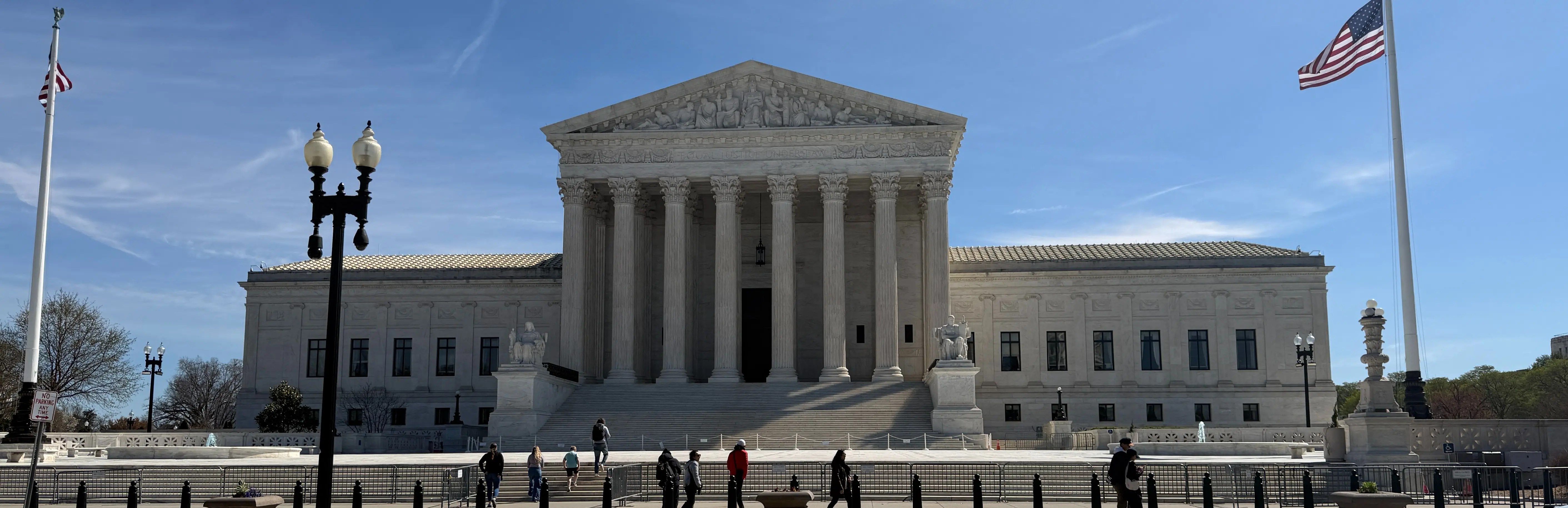
The tour starts at the East Front of the United States Capitol, a building that was never one unified vision. You'll cross to the Supreme Court, whose 1935 Corinthian facade was designed to look as though it existed outside of politics – even while deciding the country's most political questions. From there, you'll explore all three Library of Congress buildings, each a different answer to what a library should be, before moving through the Senate office buildings and Senate Park toward Union Station.
Along the way, you'll encounter the Belmont-Paul Women's Equality National Monument, where Alice Paul wrote the original Equal Rights Amendment in 1923 and ran a decades-long campaign from the same address. You'll also pass the Folger Shakespeare Library, a privately funded institution that houses a third of the world's surviving First Folios, and the Thurgood Marshall Federal Judiciary Building, named for the lawyer who won 29 of 32 cases before the Supreme Court before ever joining it.
On this 90-minute tour, you'll have a chance to:
- Hear how Chief Justice John Marshall claimed the power of judicial review in 1803 – authority the Constitution never explicitly granted
- Learn why the Adams Building's bronze entrance doors, depicting writing systems from Greek to Cherokee to Aztec, were quietly radical for a 1939 federal building
- Discover how Everett Dirksen broke the longest filibuster in Senate history to pass the Civil Rights Act of 1964
- Explore the Russell Senate Caucus Room, where the Titanic, Army-McCarthy, and Watergate hearings all unfolded
- Find out how Joseph P. Kennedy – whose fortune was built through Wall Street manipulation – became the SEC's first chairman
- See the Thurgood Marshall Building's five-story indoor bamboo forest, designed around what staff call
the democratization of light
The tour ends at Union Station, a building that was nearly demolished in the 1980s and is now the closest thing this walk has to a thesis statement about what the federal government actually is.
Tour Producer
 Tour Producer

Michael Ring

Michael Ring is a writer, educator, and longtime federal civil servant with a passion for storytelling, architecture, and American bureaucracy. A Floridian by birth and a Washingtonian by conviction, he moved to D.C. area in the early 2000s to help strengthen the nation’s cybersecurity posture and never stopped exploring the city’s federal heart. His last job before retiring was a staff detailee at the White House National Security Council as a Cyber Policy Director for East Asia.
Using his experience as a tour guide for Walt Disney and an instructor for the federal government, he is moving into the audio tour space to make every listener have a memorable experience. His walking tours are part history lesson, part policy deep-dive, and part sarcastic love letter to the quiet machinery of government. When he’s not uncovering overlooked federal buildings, he’s probably hunting down tacos or going for a walk listening to an audiobook.
Save with Washington, D.C. audio tour passes
How do passes work?

Preview Location
 Preview Location
Location 1
Start: The United States Capitol - East
I'm Michael Ring. I spent 22 years as a federal employee, arriving in DC just after...
 View locations and route

How VoiceMap Works





Major Landmarks
 Major Landmarks
-
United States Capitol
-
Supreme Court of the United States
-
Library of Congress
-
Folger Shakespeare Library
-
Belmont-Paul Women's Equality National Monument
-
Hart Senate Office Building
-
Dirksen Senate Office Building
-
Russell Senate Office Building
-
Thurgood Marshall Federal Judiciary Building
-
Washington Union Station - Main Entrance
Getting There
 Getting There
Route Overview
-
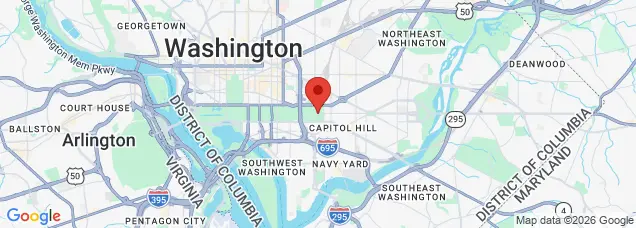
Start locationWashington, DC 20004, USA
-
Total distance3km
-
Final location50 Massachusetts Ave NE, Washington, DC 20002, USA
-
Distance back to start location816.05m


Directions to Starting Point
The tour begins at the Capitol Visitor Center on the east front of the U.S. Capitol. The most direct Metro option is Capitol South (Blue, Orange, or Silver line). Once you exit, walk north on First Street SE toward the dome you can already see. It's about a five-minute walk. If you're coming in on the Red line, get off at Union Station (which will eventually be Stop 14) and walk south on First Street NE past the Russell Building; you'll reach the CVC in roughly ten minutes. Street parking on Capitol Hill is technically legal and practically aspirational, so plan on transit or a rideshare.
 Show Directions




Tips
 Tips
Tips
Places to stop along the way
Several of the tour stops are worth entering if you have the time. The Library of Congress Jefferson Building's Great Hall is the most visually stunning federal interior in Washington — free, no ticket required, closed Sundays. The Folger Shakespeare Library reopened in 2024 with new below-grade public exhibition space, a small cafe, and the Elizabethan theater — also free. The Belmont-Paul Women's Equality National Monument is a small but rich National Park Service site with free ranger-led tours a few times a day; call ahead to confirm the schedule. If you want lunch mid-tour, a short detour south to Pennsylvania Avenue SE puts you at many options. Union Station itself is a working terminal with a full concourse of restaurants. A good place to sit and let the tour settle.
Best time of day
DC walking tour, so it can get hot in the summer. Early mornings or late afternoons is the most pleasant times, but since the buildings referenced along the route are mostly open to the public, standard working hours is best if you plan to go inside. The Library of Congress Jefferson Building, the Folger Shakespeare Library, and the Belmont-Paul National Monument all keep several-days-a-week schedules, so check ahead if you want to duck inside. Avoid days when the State of the Union, an inauguration, a major joint session, or a large protest is scheduled — the whole Capitol complex effectively becomes a temporary security zone, and some of the sightlines the tour references will be behind bike-rack fencing.
Precautions
Wear comfortable walking shoes. The route covers roughly two miles of sidewalk and includes several street crossings on First Street NE, East Capitol Street, and Constitution Avenue. Bring water! The DC summer will punish you fast. Sunblock and a hat are worth having. The Capitol Hill area is safe during daylight hours, but the tour ends at Union Station, so keep an eye on your belongings as you would in any major transit hub. If you plan to enter any of the buildings along the route, be ready for security screening — Library of Congress, Supreme Court, Senate offices, and Union Station all have some version of metal detectors and bag checks.
Get The App
 Get The App




Scan to get app
Download the app for free
VoiceMap




 App of the Day

 Editor’s Choice


 Last Updated
 Questions and Reviews