




The Iconic and Enduring That Luang: A Temple Complex Audio Guide




 Buy for a Group
 Reviews
 About the Tour
 About the Tour
Vientiane's most recognisable landmark is more than a golden stupa – it's a layered record of Lao history, religion, and identity. On this walking tour, you'll trace That Luang's story from its origins as a Hindu site to its place at the heart of modern Lao Buddhism. You'll also learn some basic Lao language and cultural customs, which will come in handy as you navigate the country.
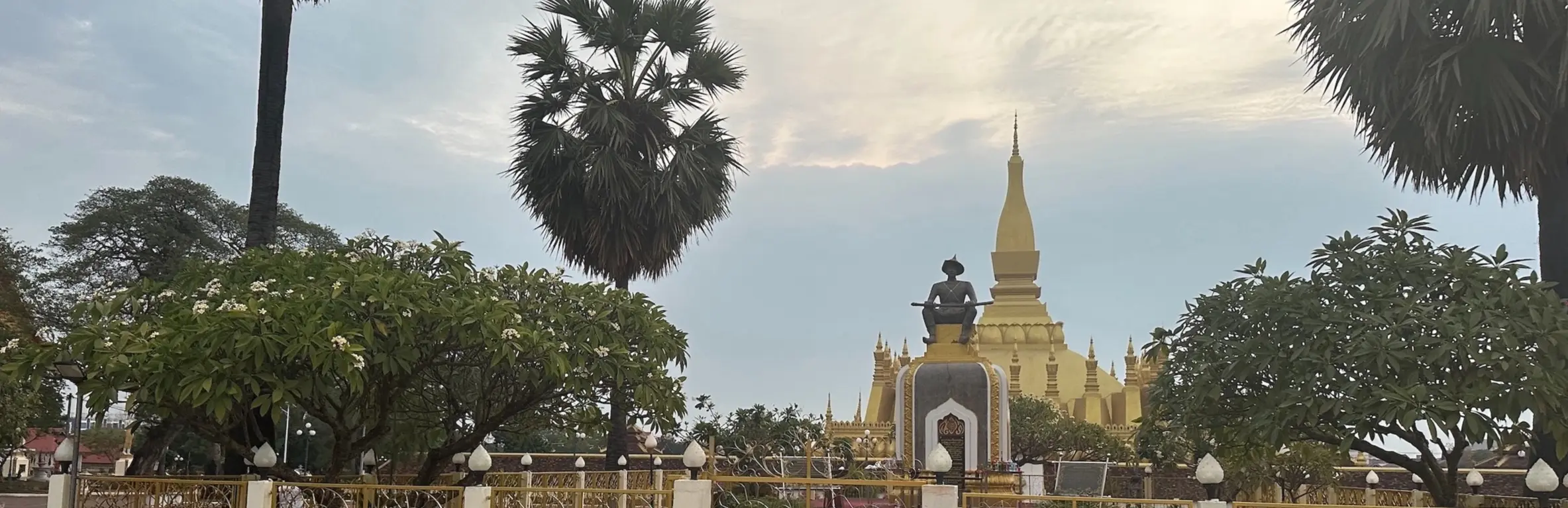
The tour starts at the entrance pathway to the That Luang Complex, in front of the statue of King Setthathirath, who moved the Lao capital to Vientiane in 1563 and commissioned the golden stupa that stands behind him. You'll enter Pha That Luang itself to examine its three-tiered architecture – each level a symbolic step toward enlightenment – and walk the cloister clockwise past Khmer artefacts, stone fragments from previous structures on the site, and paintings documenting centuries of invasion, ruin, and restoration.
You'll then explore Wat That Luang Tai, the Southern Temple complex, where the stories of Mae Thoranee, the Lao earth goddess, and the Naga of Mekong legend come to life through statues, murals, and temple architecture. The tour ends at the statue of King Setthathirath, with recommendations for other sites across Vientiane and Luang Prabang that he also commissioned.
On this 60-minute tour, you'll have a chance to:
- Understand the symbolic meaning of the mudras, gestures or poses of Buddha statues
- Follow the life of the Buddha through temple murals depicting his birth, the Four Sights, and his first teachings
- Examine a Lingam artefact that points to the site's origins as a Hindu temple in the 1st century BC
- See the large reclining Buddha at Wat That Luang Tai, representing Buddha's passing into parinirvana
- Visit the Bodhi tree at Wat That Luang Neua, said to be a descendant of the tree under which Buddha attained enlightenment
- Learn about the That Luang Festival, one of the largest almsgiving ceremonies in Southeast Asia
Whether you're exploring Buddhism for the first time or simply curious about Lao culture, this tour gives you the context to understand what you're seeing – and why it matters.
Sok Dee!
Tour Producer
 Tour Producer

Renusha Parkin

A polyglot and lover of historical fiction, intrigued by history, language, and culture, living in Laos since 2016. When we came to Laos, we stopped at every landmark and statue we saw. We had hoped we could learn something about the country that was to be our short-term home, only to discover that there was very little information available in English at that time.
I am a curious person. If I see a statue, a building, or even a small detail, I need to know the story behind it. I ask questions, look things up, and piece together clues until it makes sense. For me, seeing isn’t enough — understanding is what really matters.
And so, to feed my curiosity, I read anything I could find and listened to many locals tell tales to uncover the stories behind the statues, temples, and landmarks of Laos, and I am happy to be able to share them with you.
(Take heart; national projects to make information more accessible are currently underway.)

Save with audio tour passes
How do passes work?

Preview Location
 Preview Location
Location 2
The Statue of King Setthathirath
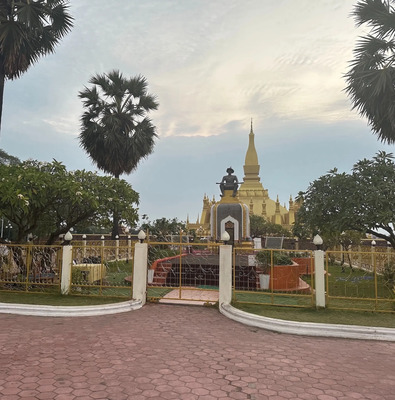
King Setthathirath was one of the great leaders of the Lane Xang Dynasty. He m...
 View locations and route

How VoiceMap Works







Major Landmarks
 Major Landmarks
-
Pha That Luang Vientiane
-
Reclining Buddha
-
Wat That Luang Tai
-
Wat That Luang Neua
-
ຮູບປັ້ນເຈົ້າໄຊເສດຖາ
-
Buddhist Fellowship Organization of Lao PDR
-
Ho Thammasapha
-
Revolution Memorial Tower
Getting There
 Getting There
Route Overview
-
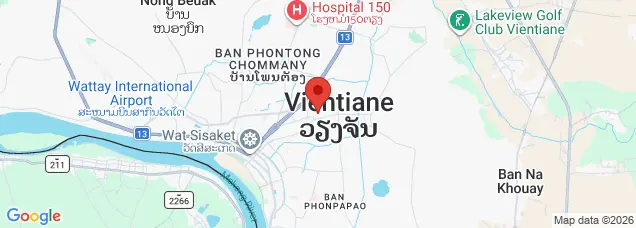
Start locationXJGM+9VH, Vientiane, Laos
-
Total distance0m
-
Final locationXJGM+9VH, Vientiane, Laos
-
Distance back to start location0m


Directions to Starting Point
The starting point of the tour is close to a large parking area. You will likely see a number of buses in the parking area. This is considered the front entrance.
You can reach this location by coming up Singha Road and going through the large gates of the parking area.
If you ask any taxi or tuk-tuk driver to bring you to Pha That Luang, they will know the location, but you may have to specify that you would like to be dropped off in the parking lot at the top of Singha Road.
 Show Directions



Tips
 Tips
Tips
Places to stop along the way
The Revolution Memorial Tower, also known as the Revolution Monument, was built as a tribute to those who died fighting for Laos' independence between 1945 and 1975.
You will find it on the other side of the parking lot; walk 30 degrees to your right with your back to That Luang.
ຊີ້ນດາດ ໂດຍ ລາວເດີມ (Seendard By Lao Derm): Seendard restaurants are very popular here in Laos, especially in the cold season. It's like a BBQ at your table. The central BBQ grill is surrounded by a ring of broth. As the fats and juices release from grilling, they drop into the broth below, creating a soup. It is a fully interactive meal where you spend time cooking and eating together.
There is a seendard restaurant located among the restaurants on the opposite side of the parking lot.
Best time of day
This tour can be done all year round.
The main museum area for an unrestricted view of Pha That Luang is open from 08:00 to 17:00, making the daytime the best time to do this tour.
You can't access the golden stupa at night, but there are many photo ops. Pha That Luang, and the garden of the Golden Buddha, are exceptionally stunning at night.
If you would like to be part of one of the incredible festivals here in Vienitane, look out for the dates for That Luang Festival which is held in around November
Precautions
November to January are the coolest months in Laos, which makes for more comfortable outside walking tours.
Mid-February to April are marked by dry, hot days until the rains come. - use sun protection and carry a lot of water
The rainy season is from May to October - So, don't forget your umbrella.
Essentials to carry with you: - hat, sunglasses, disinfected wipes, umbrella (useful for shade too)
It may be a good idea to carry a scarf too and not have too much leg exposed as you will be entering religious sites. (covering will be offered to you, if needed)
Get The App
 Get The App




Scan to get app
Download the app for free
VoiceMap




 App of the Day

 Editor’s Choice


 Last Updated
 Questions and Reviews