






Meiji Shrine Audio Guide: The Power of a Pure Heart




 Buy for a Group
 Reviews
 About the Tour
 About the Tour
Meiji Shrine sits at the end of one of Tokyo's most iconic avenues, the tree-lined shopping boulevard Omotesando. On this walking tour, you'll trace humanity's long path from survival instinct to shared meaning, using the shrine's forest, rituals, and poetry as touchstones along the way.
The tour starts at the intersection of Omotesando and Meiji-dori, where you'll learn how both street names are linked to the shrine you'll be visiting. On the walk to the main shrine buildings, you will be surrounded by greenery. Just over a century after the first young trees were planted on bare scrubland, the sacred forest at Meiji Shrine now shelters everything from rare microorganisms to a nesting goshawk. What does it take to start from almost nothing and create an entirely self-sustaining forest? As you walk, we'll reflect on how attention, collaboration, and the sharing of knowledge brought us from wandering hunter-gatherers to city dwellers who know what it means to stand at an intersection, choose a path, and move in the direction of a better future.
You'll pass offerings of sake casks and Burgundy wine barrels, pausing to consider how agriculture might have contributed to expressions of gratitude, to prayers to unseen forces, and to disputes over resources. A hand-washing ritual invites you to reset before entering the shrine's main courtyard, where the tour ends under the spreading branches of a magnificent green tree, as old as the shrine itself. Every day, hundreds of wooden tablets bearing wishes for health, love, and forgiveness are hung around its trunk.
On this 35-minute tour, you'll have a chance to:
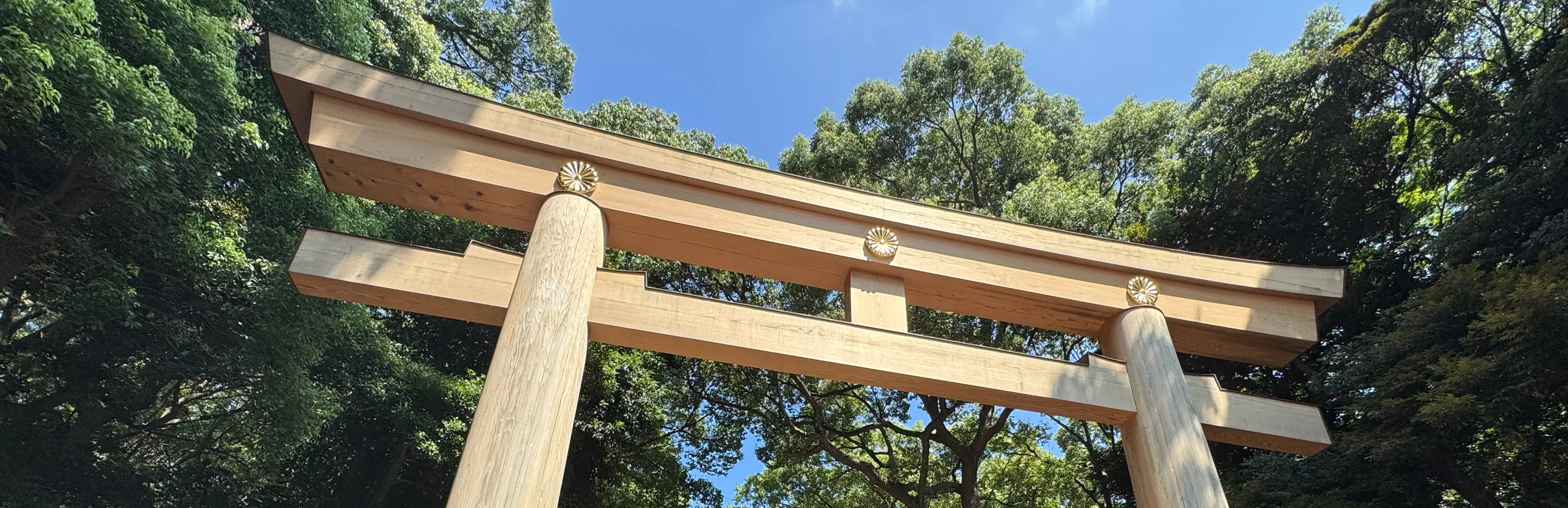
- Pass through three large cypress torii, among Japan's most impressive shrine gates
- Learn how the Japanese concept of magokoro – pure heart – shapes the shrine's identity and philosophy
- Discover why serious shrine-goers avoid the centre of the path
- Draw an imperial poem at the souvenir shop, a tradition unique to Meiji Shrine
- Observe the shrine's planted yet entirely self-sustaining urban forest ecosystem
- Reflect on the Japanese word omoi –
to think about
– and how that idea can be expressed in the form of a heart, an eye, and a tree.
By the end of this walking tour, you'll have experienced a delightful philosophical accompaniment to this beloved Tokyo landmark.
Tour Producer
 Tour Producer

Adam Fulford

I'm from England. I moved to Japan in 1981.
I spend a lot of time in Tokyo, but my home is actually in the mountains of Nagano Prefecture. Until 2025, I lived by the sea in Kanagawa Prefecture.
Over the course of 45 years in Japan, I have become interested in ways to make the most of the present moment, which is, after all, the only opportunity available to us to do anything. This "now-how" idea is evident in Japan's culture of tea, where host and guest focus on the value of each unique encounter. Now-how is an idea that seems especially important in an ever-changing, unpredictable world. We need to be resourceful in order to build resilient communities, and various aspects of traditional Japanese culture nurture these very qualities.
In my spare time I would like to explore different aspects of Japan, and revenue from this site will help me produce new content for you.

Save with Tokyo audio tour passes
How do passes work?

Preview Location
 Preview Location
Location 9
Big Gate
This wooden shrine gate is twelve meters tall. The wood is cypress — hinoki. The wood comes from...
 View locations and route

How VoiceMap Works







Major Landmarks
 Major Landmarks
-
Tokyu Plaza Omotesando"OMOKADO"
-
Meiji Jingu Forest Terrace 2nd
-
Meiji Jingu Museum
-
Meiji Jingu
-
Omote-Sando Avenue
-
Harajuku Station
-
Takeshita Street
-
Yoyogi 1st National Gymnasium
-
Yoyogi Park
Getting There
 Getting There
Route Overview
-
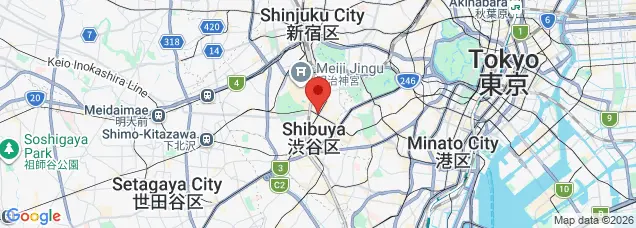
Start location4-chōme-12-10 Jingūmae, Shibuya, Tokyo 150-0001, Japan
-
Total distance1km
-
Final location1-1 Yoyogikamizonochō, Shibuya, Tokyo 151-8557, Japan
-
Distance back to start location934.79m


Directions to Starting Point
The tour starts about a 5-minute walk from the entrance to Meiji Shrine. You should aim to be outside Exit 5 of Meiji-jingu-mae Station. That station is on the Chiyoda Line (station code: C-03) and the Fukutoshin Line (station code: F-15).
The Chiyoda Line includes stops at Omotesando, Hibiya, and Otemachi.
The Fukutoshin Line includes stops at Shibuya and Shinjuku.
If you're staying at a hotel near any of these locations, you will be able to travel smoothly and quickly to Meiji-jingu-mae. Note that the trains in the direction of Otemachi and Shibuya will be crowded between 7 and 9 in the morning. Trains the in other direction will tend to be crowded after 5 in the afternoon.
You can also get off the train at JR Harajuku (between Shibuya and Shinjuku on the Yamamote Line) and walk a few minutes down Omotesando to the starting point.
 Show Directions




Tips
 Tips
Tips
Places to stop along the way
After about a 5-minute walk from the first shrine gate, you will find a cluster of cafes and restaurants to the right of the main path, so stop there for refreshments and rest rooms. You'll also find a good selection of souvenirs that are not available at the main shrine buildings.
Before or after visiting Meiji Shrine, you might like to walk in Yoyogi Park (the birthplace of aviation in Japan, among other claims to fame) or along Takeshita-dori, the heart of kawaii culture. Omotesando, meanwhile is full of upscale shops.
Best time of day
The shrine is open during daylight hours throughout the year. You should aim to enter before around 3 pm in the winter. In the summer, before 4 pm. Then you won't have to hurry to get to an exit before the gates close. In the summer, the shrine is open from very early in the morning. That's my personal recommendation. You won't be able to shop for souvenirs at 6 am on a summer morning, but you'll have the shrine almost to yourself. It's a great time to enjoy the sacred forest around the shrine. Look for the various paths leading into the woods. You might be surprised at the wildlife you encounter!
Precautions
Once you're in the shrine precinct, it may be difficult to pick up an umbrella, so be sure to take one if it looks like rain. Please do not eat or drink as you walk in the shrine precinct.
The main path is covered in gravel, but there are flat paths on either side suitable for wheelchairs.
Get The App
 Get The App





Scan to get app
Download the app for free
VoiceMap




 App of the Day

 Editor’s Choice


 Last Updated
 Questions and Reviews