






Gilded Shadows: A Tervuren Park Walking Tour




 Buy for a Group
 Reviews
 About the Tour
 About the Tour
Tervuren looks, at first glance, like a perfectly pleasant Flemish village – old trees, café terraces, a church tower. On this walking tour, you'll discover how one of history's most morally complicated rulers turned this quiet corner of Belgium into a showcase for a colonial empire built on forced labour and mass death. You'll also hear how the landscape he created – genuinely beautiful, genuinely compromised – is still being reckoned with today.
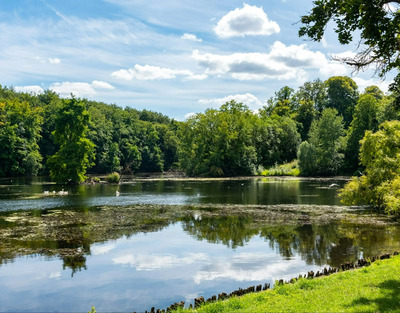
The tour starts at the Cacao Tree on the market square and heads into Tervuren Park, passing the broad lake commissioned by King Leopold II for the Brussels International Exhibition of 1897. You'll walk through formal gardens designed by the landscape architect Élie Lainé, past giant Californian redwoods planted as status symbols, and along the forest avenues of the ancient Sonian Forest, where wild boar have recently made a dramatic comeback after decades of absence.
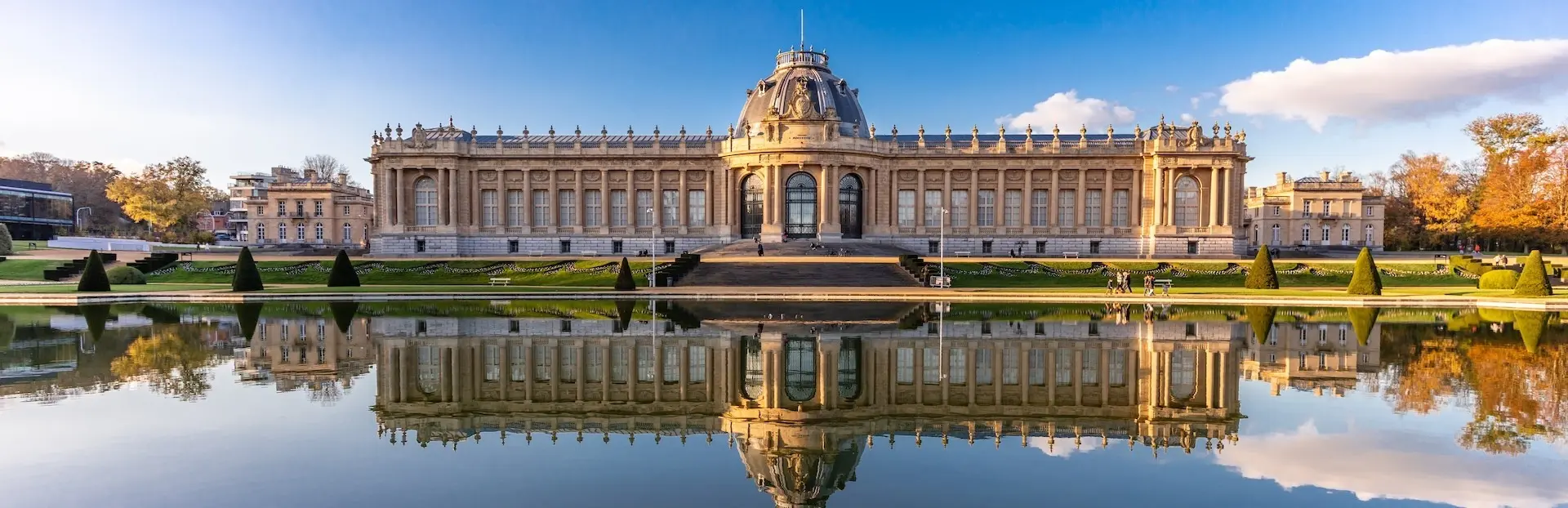
You'll reach the Africa Museum, originally built as a monument to Belgian colonialism and radically reimagined after a major renovation in 2018. Along the way, you'll learn what Leopold's Congo rubber economy actually looked like – the quotas, the hostage-taking, the severed hands – and why historians estimate the population of the Congo was roughly halved during his reign. The tour ends at the churchyard of Saint John the Evangelist, where seven Congolese people who died during the 1897 exhibition are buried – people whose names, Sambo, Mpemba, Ngemba, Ekia, Nzau, Kitukwa, and Mibange, the tour makes a point of remembering.
On this 75-minute tour, you'll have a chance to:
- Stand at the Zevenster, a star-shaped hunting junction where seven forest rides converge, built for aristocratic par force hunts
- Examine prehistoric Neolithic stones that Leopold II simply bought and repositioned as garden decoration
- Visit the 17th-century St Hubert Chapel, the only surviving remnant of Tervuren's once-grand ducal castle
- Walk the forest avenues where Belgian Olympic distance runner Miel Puttemans trained, setting 16 world records in the 1970s
- Pass through the Warandepoort, the ceremonial gateway built for the 1897 exhibition through which hundreds of thousands of visitors once entered
- See the Hoefijzer, the horseshoe-shaped castle stables that survived when the castle itself was demolished in 1781
Tervuren rewards slow attention. This tour gives you the context to understand what you're actually looking at.
Tour Producer
 Tour Producer

Denzil Walton

Hi, I’m Denzil. For nearly four decades, I’ve been discovering Belgium not as a checklist of famous sights, but as a collection of stories waiting to be noticed.
Belgium is full of places that people walk, cycle, or drive past without ever realising what happened there.
I love uncovering those overlooked stories and sharing them through my blog, Discovering Belgium, and now through VoiceMap tours. These stories range from castles that changed hands in European power struggles, to landscapes shaped by industry, to towns where language and history quietly collide — and the people who shaped them.
My tours are not lists of landmarks. They are journeys through the layers of a place.
As we travel together, I’ll help you notice what others miss — the hidden stories behind elegant façades, the industrial scars beneath peaceful countryside, and the lives that shaped the Belgium you see today.
If you’re curious about what lies beyond the guidebook highlights — and beyond the familiar clichés of beer and chocolate — you’re in the right place.
Because Belgium’s most fascinating stories aren’t always obvious.
But once you discover them, you’ll never see the country in quite the same way again.
Save with audio tour passes
How do passes work?

Preview Location
 Preview Location
Location 17
Turn right along Spaanse Huisdreef
::
The Sonian Forest is one of the great ancient forests of north-western Europe. It st...
 View locations and route

How VoiceMap Works






Major Landmarks
 Major Landmarks
-
Markt Tervuren
-
Royal Museum for Central Africa
-
Spaans Huis
-
Zevenster met ‘dolmensteen van Duisburg’
-
lago Tervuren
-
The Cacao Tree
-
Park van Tervuren
Getting There
 Getting There
Route Overview
-
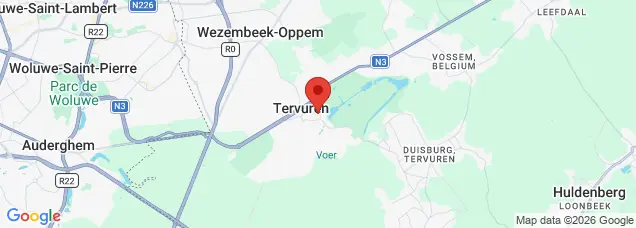
Start locationMarkt 3, 3080 Tervuren, Belgium
-
Total distance5km
-
Final locationKerkstraat 6, 3080 Tervuren, Belgium
-
Distance back to start location74.15m


Directions to Starting Point
The tour begins outside The Cacao Tree on Tervuren Market Square (Markt), in the centre of Tervuren.
The easiest way to reach Tervuren from Brussels is by tram 44, which terminates at Tervuren Station, around a 5-minute walk from the starting point. Several bus routes also serve the town.
If you're arriving by car, there is public parking available in and around the market square, although it can become busy at weekends and on sunny afternoons.
The tour finishes just a few minutes' walk from where it begins.
 Show Directions



Tips
 Tips
Tips
Places to stop along the way
There are several excellent places to pause during the tour.
AfricaMuseum – One of Europe's finest museums devoted to Central Africa. If you choose to visit, allow at least one to two hours. The tour is designed so you can pause here and continue afterwards.
Spaans Huis – A charming historic café and restaurant beside the lake, ideal for coffee, lunch or a refreshing drink around the halfway point.
Lago Café – Overlooking the lake near the start of the walk, with lovely views across the water.
The Cacao Tree – Where the tour begins and ends, perfect for coffee, pastries or lunch before or after your walk.
Numerous benches throughout Tervuren Park provide excellent places to pause, enjoy the scenery and reflect on the stories you've heard.
Best time of day
This tour can be enjoyed throughout the year, although spring, summer and autumn offer the most pleasant walking conditions.
Spring brings flowering gardens and fresh woodland colours, while autumn is particularly beautiful as the beech trees of Tervuren Park and the Sonian Forest turn shades of gold and copper. Winter offers a quieter, more contemplative atmosphere, although some paths may be muddy after prolonged rain.
If possible, start in the morning or late afternoon, when the park is generally quieter and the light is especially attractive for photography.
Allow around 2½ to 3 hours, longer if you plan to visit the AfricaMuseum or stop for refreshments.
Precautions
The walk follows a mixture of paved paths, gravel tracks and woodland trails. Most of the route is easy, but comfortable walking shoes are recommended, particularly after wet weather when some forest paths can become muddy.
Bring a bottle of water, especially during warmer months, and consider sunscreen or a hat in summer, as parts of the park are exposed. An umbrella or lightweight waterproof is advisable if rain is forecast.
The route involves a couple of minor road crossings, so please take care at these points. Cyclists are common throughout the park, so remain aware when walking on shared paths.
Public toilets and refreshments are available at several points during the walk.
Get The App
 Get The App




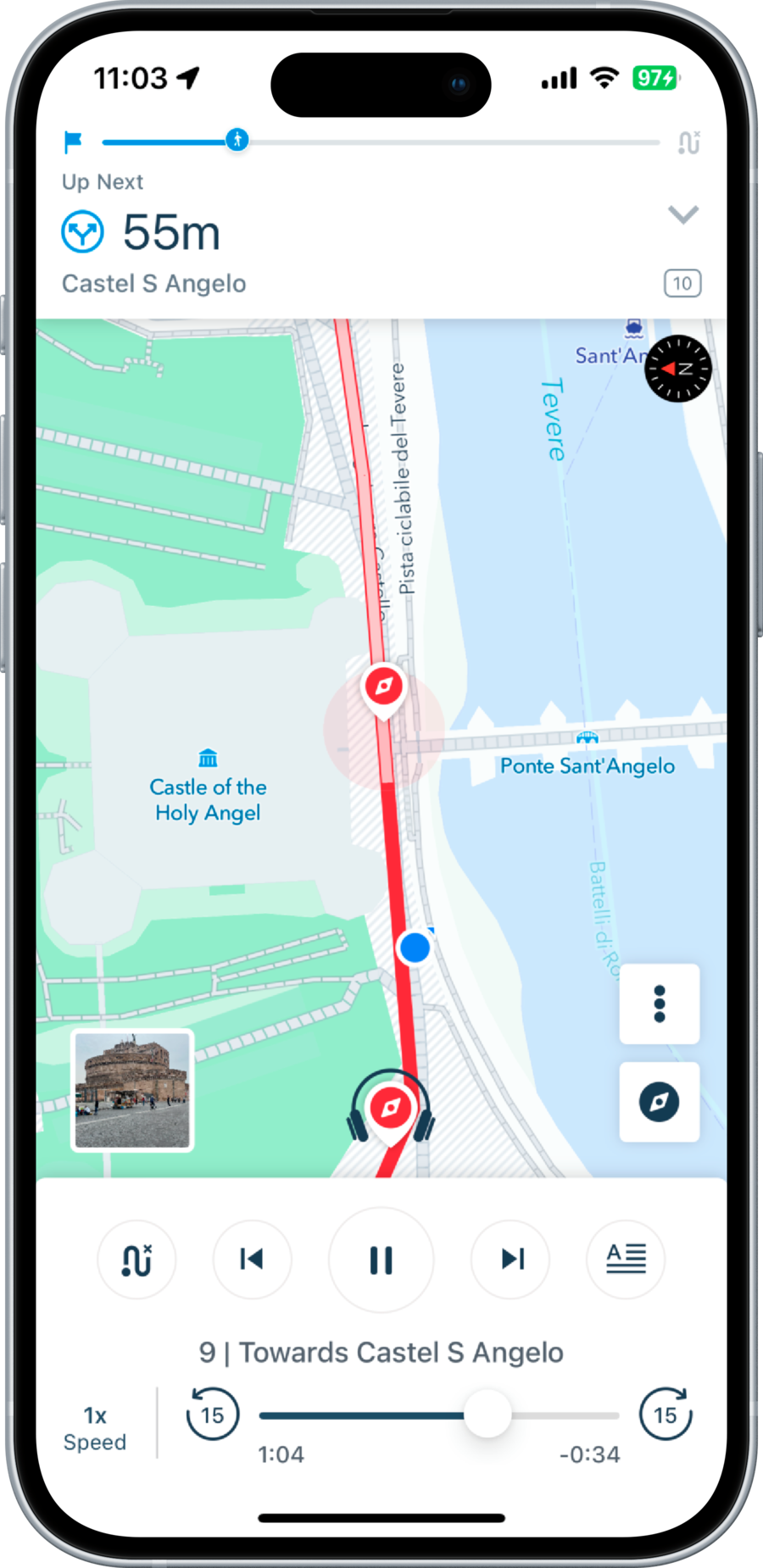
Scan to get app
Download the app for free
VoiceMap




 App of the Day

 Editor’s Choice


Last Updated
 Last Updated
Questions and Reviews
 Questions and Reviews