


Ottawa: A Walking Tour of Locks, Lumber and Local Lore




 Buy for a Group
 Reviews
 About the Tour
 About the Tour
Ottawa's quiet, orderly capital hides a rowdier past of lumber barons, assassinated politicians, and hand-cranked canal locks. On this walking tour, you'll find out how a raucous lumber town called Bytown became Canada's capital, from hand-dug canals to a giant bronze spider. Indigenous trade routes, colonial ambition, and quirky local lore all come together along the way.
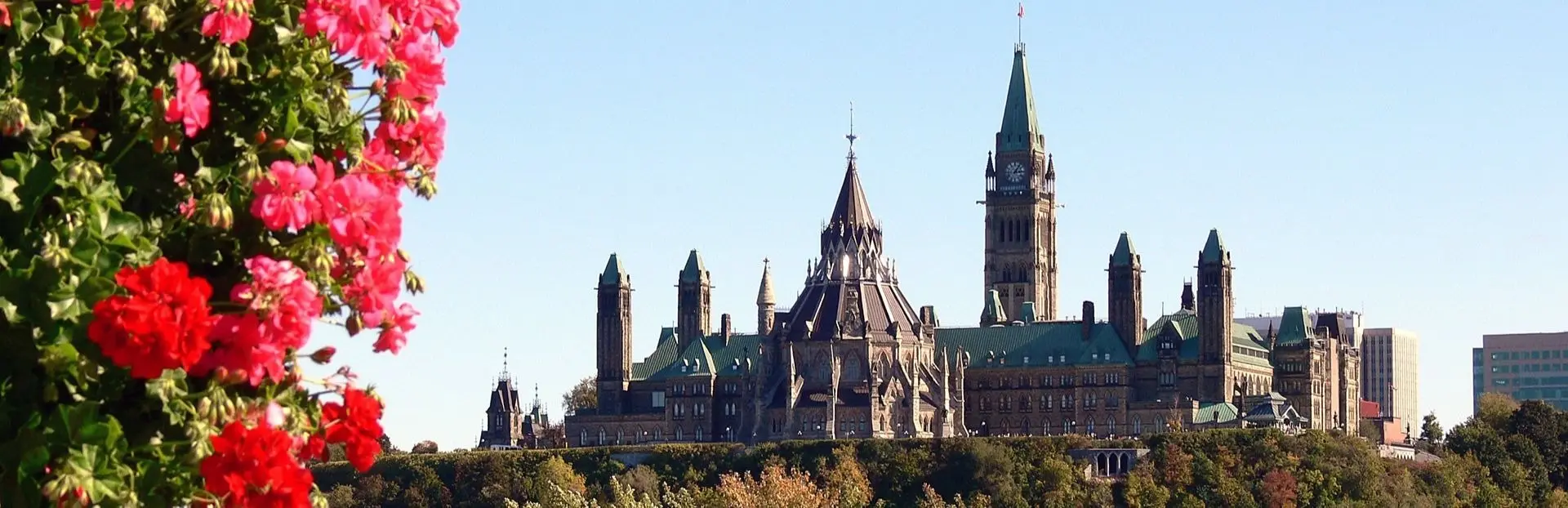
The tour starts beside Maman, Louise Bourgeois's towering bronze spider outside Notre-Dame Cathedral, Ottawa's oldest church. From there, you'll pass the National Gallery of Canada and a statue of explorer Samuel de Champlain before reaching Kìwekì Point, a lookout over the Ottawa River on unceded Algonquin Anishinaabe territory. You'll continue through Major's Hill Park to the Reconciliation Monument, then along Sussex Drive's ‘Mile of History’ past the US Embassy and into the Byward Market.
You'll walk past a solstice sundial to meet Lieutenant-Colonel John By, the engineer whose Rideau Canal literally carved Ottawa into existence, then watch boats navigate the hand-cranked locks below the Fairmont Château Laurier. Past the flags of Canada's provinces and the National War Memorial, you'll stroll down Sparks Street, Canada's first pedestrian mall, before the Peace Tower comes into view. The tour ends at the Centennial Flame on Parliament Hill, continuously burning since Canada's 1967 centennial.
On this 30-minute walking tour, you'll have a chance to:
- Spot the Supreme Court of Canada's dark-green roof and the Canadian Museum of History's wind-carved silhouette across the river.
- See the Alexandra Bridge, built by the Canadian Pacific Railway between 1898 and 1900, linking Ottawa to Gatineau.
- Visit the National Arts Centre, home to Canada's national orchestras, on lively Elgin Street.
- Explore the Senate of Canada Building, a former 1912 train station turned temporary home for Canada's upper chamber.
- Hear why Queen Victoria chose this muddy lumber town over Montreal and Toronto to become Canada's capital.
- Find out how Bytown's name changed to Ottawa in 1855, borrowed from the Algonquin word for trade.
By the time you reach the Centennial Flame, you'll understand why Ottawa's quiet confidence, not noise, defines Canada's capital.
Tour Producer
 Tour Producer

Craig Turpin

I grew up about an hour south of Ottawa before moving to the city for university over four decades ago. Aside from a brief stint working in the United States, I've spent my life and high-tech career right here in the National Capital Region. Over the years, I've lived all over town, from Sandy Hill, the Glebe, and Westboro to the downtown core, the southern suburbs, and even across the river in Aylmer, Quebec.
That long run as a local has given me a genuine appreciation for the region's different neighbourhoods and hidden stories. In my spare time, you'll usually find me sketching, tinkering with tech projects, or cycling along the Rideau Canal.
Through my self-guided audio tours, I love sharing the human stories, architectural quirks, and unlikely history that shaped Canada's capital. Rather than delivering a dry textbook lecture, I aim to sound like a knowledgeable local friend showing you around town at a relaxed, story-filled pace.

Save with audio tour passes
How do passes work?

Preview Location
 Preview Location
Location 15
The Reconciliation Monument
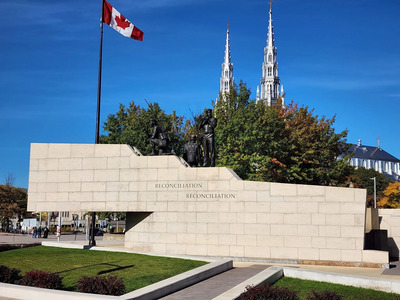
The Reconciliation monument, or more commonly known as the Peace Keeping Monument, was dedicated back in October of 1992 to honor Canadian peacekeepers, both those who made ...
 View locations and route

How VoiceMap Works






Major Landmarks
 Major Landmarks
-
Maman Sculpture
-
National Gallery of Canada
-
Kìwekì Point
-
Major's Hill Park
-
Reconciliation: The Peacekeeping Monument
-
ByWard Market
-
Rideau Canal, Locks 1 - 8 - Ottawa
-
Fairmont Château Laurier
-
The National War Memorial
-
Centennial Flame
Getting There
 Getting There
Route Overview
-
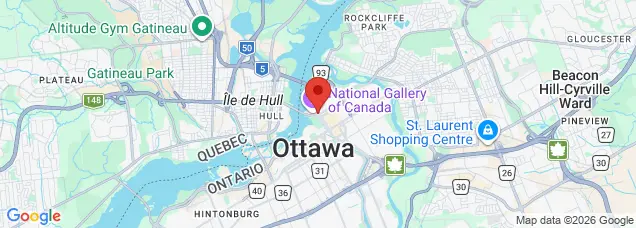
Start location385 Sussex Dr, Ottawa, ON K1N 1J9, Canada
-
Total distance2km
-
Final location111 Wellington St, Ottawa, ON K1A 0A4, Canada
-
Distance back to start location639m


Directions to Starting Point
The tour begins outdoors beneath Maman, the giant bronze spider sculpture in front of the National Gallery of Canada at 380 Sussex Drive, directly across from Notre-Dame Cathedral. Do not enter the gallery building. Simply stand on the exterior plaza near the spider to begin.
 Show Directions




Tips
 Tips
Places to stop along the way
National Gallery of Canada: Step inside the soaring glass Great Hall to admire the architecture and browse the permanent collections, which includes Barnett Newman's Voice of Fire.
Kìwekì Point Lookout: A scenic stop with panoramic views of the Ottawa River, Parliament Hill, the Supreme Court, and the Canadian Museum of History across the water - ideal for taking photos and catching a breeze.
Tavern on the Hill (Major's Hill Park): Positioned right along the park path with public washrooms nearby, making it an easy spot to pause for a drink, a snack on the patio, or simply relax in the park.
The ByWard Market: A lively hub to wander through outdoor produce stalls, browse local artisan shops, grab an iconic BeaverTail on George Street, and snap a photo at the giant OTTAWA sign.
D'Arcy McGee's Irish Pub & Sparks Street: Located right at the corner of Sparks and Elgin, you can stop in for a pint or stroll down Canada's first permanent outdoor pedestrian mall to people-watch and catch seasonal street festivals.
Best time of day
From dawn to dusk, any day.
Precautions
Traffic & Crossings: The route is in a safe, well-traveled part of the city, but crosses several busy streets (including Sussex Drive, Wellington Street, and Elgin Street). Always use marked crosswalks and follow pedestrian signals.
Bike Lanes: Watch for fast-moving cyclists when crossing dedicated bike lanes, especially along Mackenzie Avenue near Major's Hill Park.
Terrain & Footwear: Expect paved sidewalks and paths, and a few stone staircases. Comfortable walking shoes are recommended.
Get The App
 Get The App




Scan to get app
Download the app for free
VoiceMap




 App of the Day

 Editor’s Choice


 Last Updated
 Questions and Reviews