



The Great Fire of London with Dan Snow




 Buy for a Group
 Reviews
 About the Tour
 About the Tour
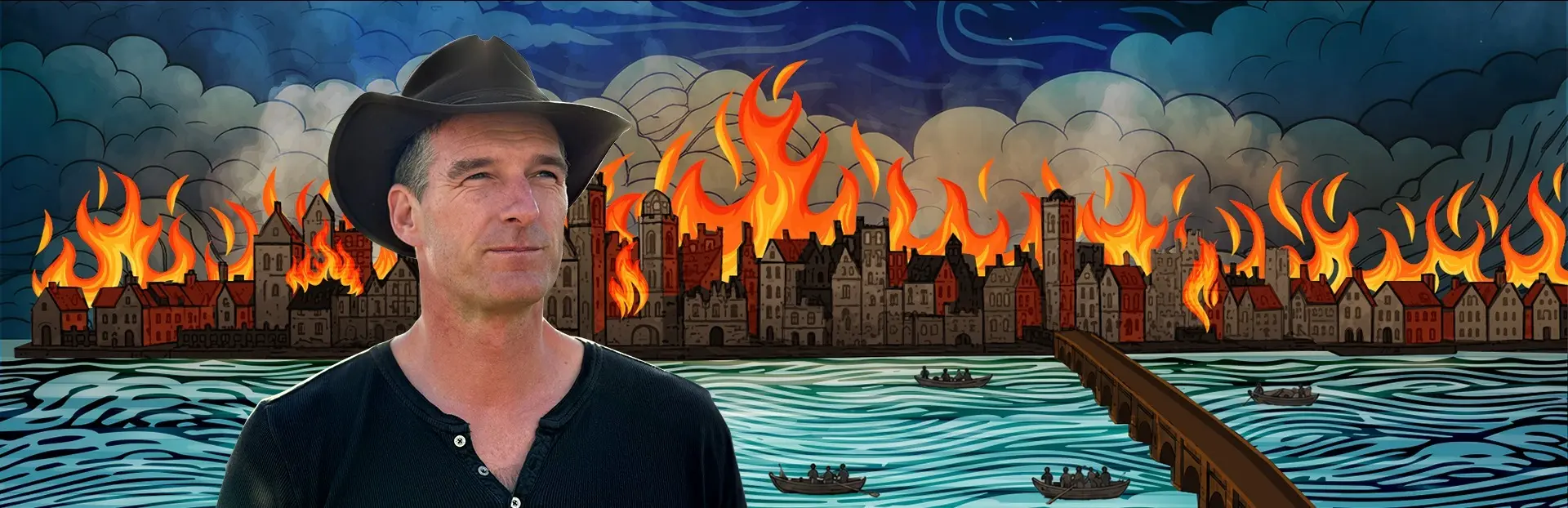
London in 1666 was a city already on its knees – ravaged by plague, drained by war, and bone dry after months of drought. On this walking tour with historian Dan Snow, you'll track the Great Fire from its origins in a baker's forgotten oven to the smouldering ruins of a city transformed. You'll also discover how four days of catastrophe reshaped London's streets, institutions, and sense of itself forever.
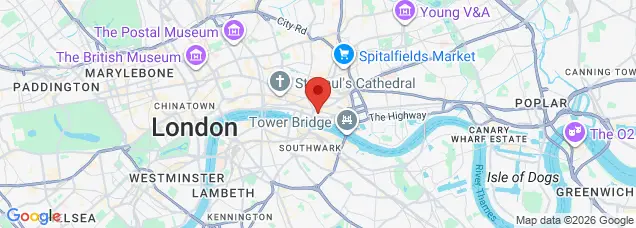
The tour starts on Pudding Lane, steps from the plaque marking Thomas Farriner's bakery, where a single spark in the early hours of 2nd September ignited one of London's most consequential disasters. From here, you'll walk south to the Monument – its height of 202 feet precisely matching the distance to Farriner's shop – before heading down Fish Street Hill to the church of St Magnus the Martyr, where Lord Mayor Thomas Bloodworth's catastrophic indecision allowed the fire to take hold unchecked.
Crossing London Bridge, you'll hear how thousands of panicked Londoners fled onto its overcrowded wooden span, their city reflected in the burning Thames below. Samuel Pepys described the river as choked with boats and possessions, a floating refugee camp lit by falling embers. You'll continue through Leadenhall Market, the alleyways of St Michael's Alley, and the ruins of the Royal Exchange before reaching St Paul's Cathedral, where hundreds of thousands of books stored for safekeeping became fuel for the inferno. The tour ends at the Golden Boy of Pye Corner – a gilded, grinning figure marking where the fire finally stopped, placed here by Londoners who believed their city had burned as punishment for the sin of gluttony.
On this 75-minute tour, you'll have a chance to:
- Stand inside Leadenhall Market, built over the ruins of Roman London's basilica
- Hear how an innocent French watchmaker, Robert Hubert, was executed for a fire he didn't start
- Walk St Michael's Alley and understand how narrow medieval lanes acted as vertical chimneys
- Visit the Guildhall, the only secular stone building in the City predating 1666
- Learn why King Charles II personally overrode his Lord Mayor to order the firebreaks that saved London
This tour brings one of history's great urban disasters to life on the streets where it unfolded.
Go beyond the tour with History Hit, the world’s best history channel. Subscribe to stream exclusive documentaries, including 'A History of England' hosted by Dan Snow. Discover the past through our award-winning original documentaries and podcast network.
Tour Producer
 Tour Producer

History Hit

History Hit is the world's best history channel: an award-winning streaming service and podcast network founded by the historian and broadcaster Dan Snow in 2015.
Our self-guided audio tours bring the past to life in the places where history was made. Written and presented by world-renowned historians and local experts, these immersive historical audio guides offer the same premium storytelling as our hit documentaries.
Meet the History Hit tour guides:
Dan Snow: A born-and-bred Londoner, British historian, and broadcaster. As the host of Dan Snow's History Hit podcast, Dan investigates the defining moments of global history, bringing his deep expertise to our London history tours and city walks.
Tristan Hughes: Ancient historian, presenter, and host of The Ancients podcast. Tristan specialises in bringing our distant past to life, guiding you through ancient sites with captivating storytelling.
Matt Lewis: Author and medieval historian. The host of the Gone Medieval podcast, Matt is a specialist in the Wars of the Roses and King Richard III, and former chair of the Richard III Society.

Save with London audio tour passes
How do passes work?

Preview Location
 Preview Location
Location 8
London Bridge II
 View locations and route

How VoiceMap Works







Major Landmarks
 Major Landmarks
-
Monument to the Great Fire of London

-
London Bridge
-
Leadenhall Market
-
Mansion House
-
Bank of England
-
St Paul's Cathedral
-
St Mary-le-Bow Church
Getting There
 Getting There
Route Overview
-
Start location30 Monument St, London EC3R 8LJ, UK
-
Total distance3km
-
Final locationGiltspur St, London EC1A 9DD, UK
-
Distance back to start location1km


Directions to Starting Point
The tour begins on the corner of Pudding Lane, and is marked by a plaque on the corner wall of Faryners House. You can reach it by pavement. It is directly opposite the Monument to the Great Fire.
The nearest Underground stations to Pudding Lane are Bank and Monument stations, a short walk away. The closest main-line railway stations are Fenchurch Street and Cannon Street, 10 or 5 minutes walk respectively.
 Show Directions



Tips
 Tips
Tips
Places to stop along the way
Inside the London Guildhall is the Roman Amphitheatre, which you can visit for free via the Guildhall Art Gallery. The area of City of London is full of places to stop for refreshments either along the way or after you complete the tour.
Best time of day
The City of London is typically busy year-round, so please be aware of heavy traffic and crowded pedestrian crossings. It is best to avoid peak commuter times, specifically 7:00–9:00 AM and 5:00–7:00 PM.
Precautions
The tour is best experienced in daylight, though this central route is well-lit after dark. British weather is famously unpredictable, so it’s worth having an umbrella or sun protection to hand - just in case.
Get The App
 Get The App




Scan to get app
Download the app for free
VoiceMap




 App of the Day

 Editor’s Choice


Last Updated
 Last Updated
Questions and Reviews
 Questions and Reviews