



Devotion, Decline, and Destruction: A My Son Walking Tour




 Buy for a Group
 Reviews
 About the Tour
 About the Tour
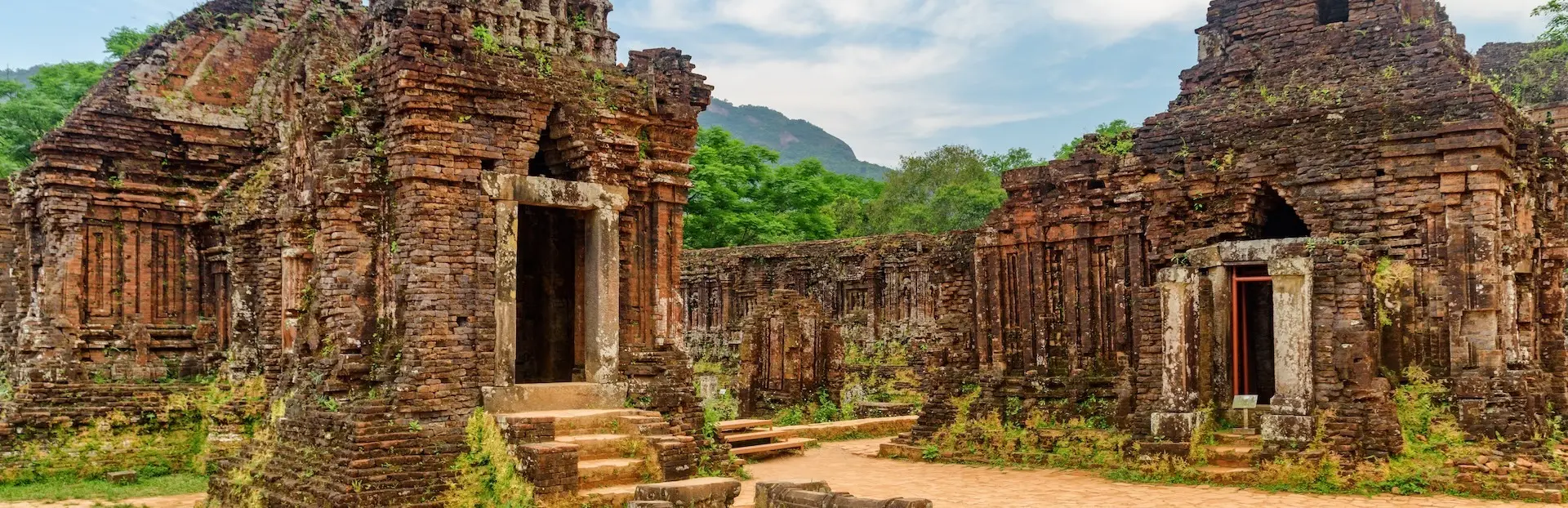
Mỹ Sơn's crumbling red-brick towers rarely get mentioned alongside Angkor or Bagan, yet this jungle sanctuary once anchored an entire civilisation. On this walking tour, you'll get under the skin of a site that most visitors struggle to make sense of. You'll learn how the Champa kingdoms fused Hindu mythology with Southeast Asian artistry across a thousand years, but you'll also the sad story of why so little of it survives today.
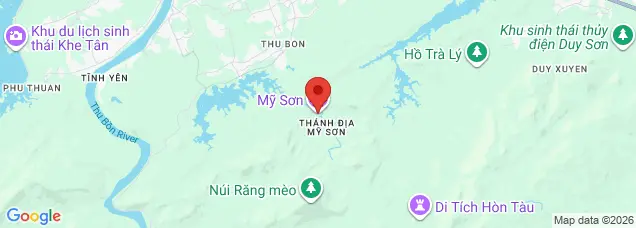
The tour starts at the My Son entrance, following an unusual route that provides the best introduction to the site. The path winds past a stream feeding the Thu Bồn River before reaching Group K, the site's ancient gateway. From there, you'll pass through clusters of increasingly impressive temple towers, learning why the site was abandoned, what the French did after they 'discovered' it, and how American B-52 raids in the 1960s destroyed more of Mỹ Sơn in days than six centuries of jungle encroachment.
Along the way, you'll spot carvings of Shiva, Parvati, and Kala, the devouring face of time. You'll also spot the celestial beasts that so many visitors miss, including Nandi, Garuda, and Dvarapala. The tour climaxes at the site's most impressive constructions: the once-lofty A1 tower, arguably the finest building in all of Champa, Group B's iconic boat-roofed kosagrha, and the sandstone linga and yoni uncovered in 1985, now a national treasure. The tour ends at the snack kiosk near Groups B, C, and D, where a small theatre sometimes hosts traditional Cham music and dance.
On this 90-minute tour, you'll have a chance to:
- See the Lord of the Dance carving inside Group D's reception house, capturing Shiva mid-movement
- Spot a National Treasure yoni and linga assembled from seventeen sandstone blocks inside tower A10
- Examine Cham script inscriptions, among the few surviving records of this vanished civilisation's kings and rituals
- Compare restored brickwork against untouched ruins at Group A, still scarred from wartime bombing
- Notice foliage carvings in Group C possibly influenced by artistic traditions from Java
- Learn why Indian conservators have helped restore these towers since UNESCO's 1999 listing
- Hear tips on how you can continue your journey through Champa after leaving the site
Too many visitors leave Mỹ Sơn feeling underwhelmed, having gained little understanding of its remarkable history. This tour is designed to change that, taking you beyond the ruins to uncover the stories of devotion, decline, and destruction, while placing Mỹ Sơn as an important chapter within Vietnam's rich and complex broader story.
Tour Producer
 Tour Producer

Joshua Zukas

I value depth over breadth, which is why I write exclusively about Vietnam—a country I’ve called home for more than a decade. I mainly write about travel, but I also cover culture, society, architecture, and food.
So, why Vietnam? Because I love a good story, and Vietnam is teeming with them. Some are mythological, others are grounded in fact, but most inhabit that grey area in between.
I draw on these stories in my work, including writing guidebooks for Bradt, Lonely Planet, Fodor’s and Hardie Grant, and features for The Economist, Wallpaper, Business Insider, The Michelin Guide and Adventure.com.
My VoiceMap walking tours offer more than an introduction to Vietnam’s complex history and mythology. They bring to life the stories hiding in plain sight, lead you down alleyways you might otherwise pass by, introduce new ways to see popular sights, and show you street food spots that most tourists never find.

Save with audio tour passes
How do passes work?

Preview Location
 Preview Location
Location 18
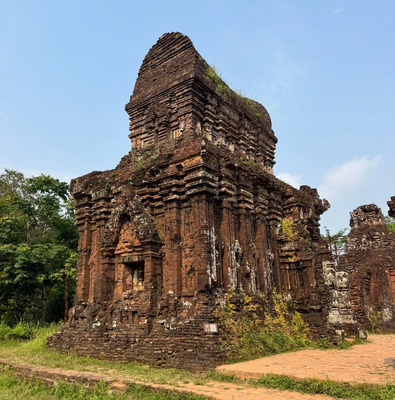
Group B: B5
::
This is...
 View locations and route

How VoiceMap Works







Major Landmarks
 Major Landmarks
-
My Son Sanctuary
-
My Son
-
Nhóm tháp A
-
Nhóm tháp B
-
Nhóm tháp C
-
Nhóm tháp D
-
Nhóm tháp E
-
Hindu temple group G
Getting There
 Getting There
Route Overview
-
Total distance1km
-
Final locationQ47F+7JP, Duy Hoà, Thu Bồn, Đà Nẵng, Vietnam
-
Distance back to start location741.91m


Directions to Starting Point
This tour begins inside the entrance to the site. After you've bought your ticket and entered, you'll pass a small museum that you can return to after the tour. Walk a little further and jump on one of the electric buggies, which are included in the price of your ticket. These take you to the start of the tour, which is just outside a large cafe. Note that the entrance fee is not included in the price of this walking tour.
 Show Directions



Tips
 Tips
Places to stop along the way
There are several snack kiosks dotted around the site. They mostly sell drinks, but you can get some basic food, like instant noodles.
Best time of day
If it's a clear day, try to arrive as early as you can, ideally when the gates open at 6.30am. Exploring Mỹ Sơn at sunrise is a magical experience, as the first rays of sunlight illuminate the ancient temples snd the jungle that surrounds it is still waking up. This is also a cooler and less crowded time of day. If it's raining, you can visit the site at any time.
Precautions
The only real issue you might face is the weather. If it's sunny and warm, bring sunblock and loose, breathable clothing. If it's raining, bring an umbrella and/ or raincoat. You'll also want to make sure that you're wearing the right footwear. If it's dry, wear sandals or trainers with good grip. If it's wet, wear sandals or waterproof shoes.
Get The App
 Get The App




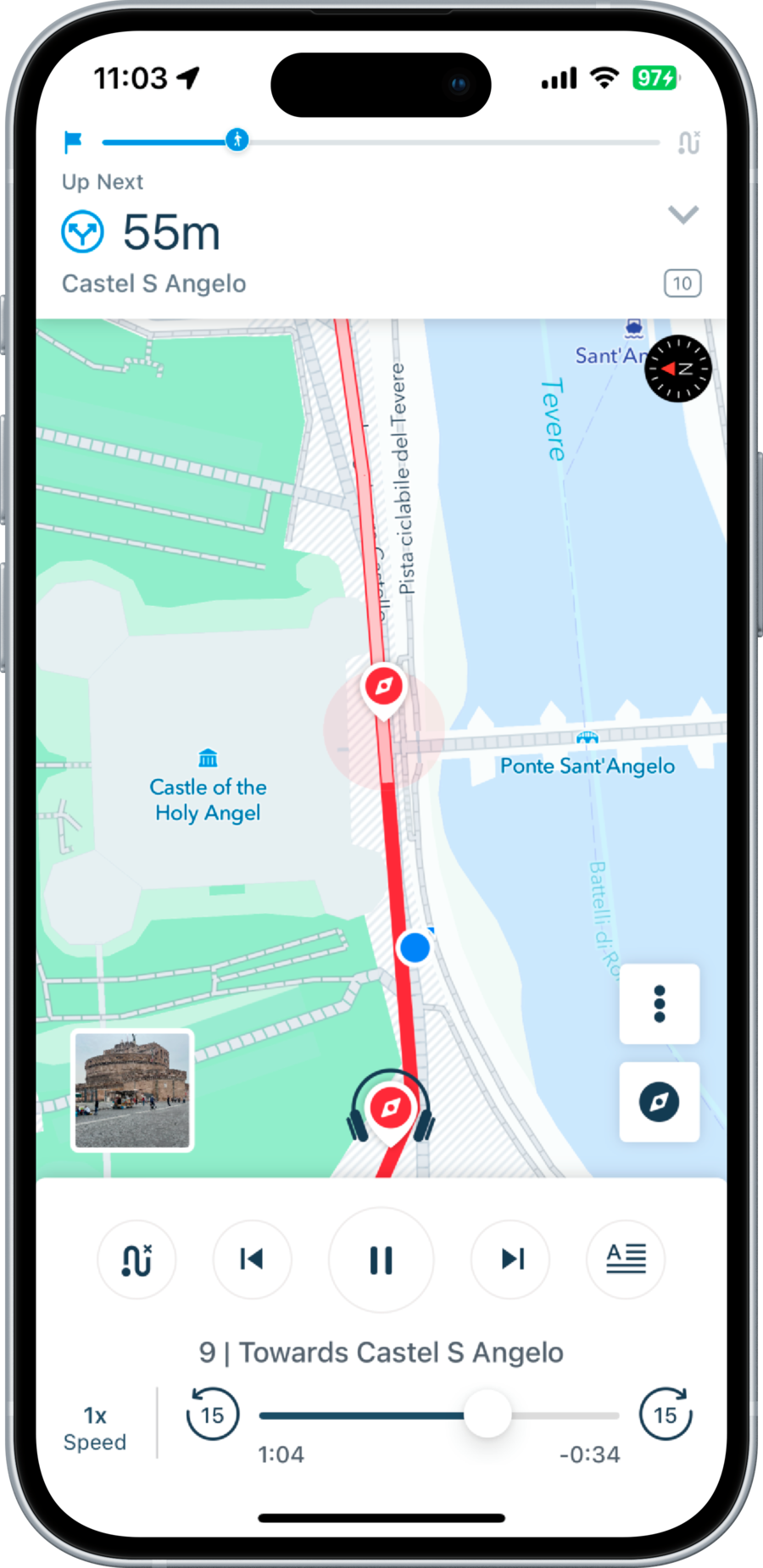
Scan to get app
Download the app for free
VoiceMap


 App of the Day

 Editor’s Choice


 Last Updated
 Questions and Reviews