


Athens Social and Political Walk: Modern Greece Unfiltered




 Buy for a Group
 Reviews
 About the Tour
 About the Tour
Athens has been called the cradle of democracy, but how did the country that gave the world democracy become the basket case of Europe
? The question may be crude and unfair, but it captures the contradiction at the heart of modern Greece.
On this walking tour, led by a political scientist, you'll trace the two-century story behind that contradiction through two competing Greek political instincts: Accommodation, the pragmatic tradition of working within foreign-backed systems, and Resistance, the deep cultural reflex that treats authority with suspicion and looks for ways around it. You'll also learn the Greek vocabulary that unlocks how power actually works here – diaploki, rousfetia, and the volemenos – concepts that no guidebook bothers to explain.
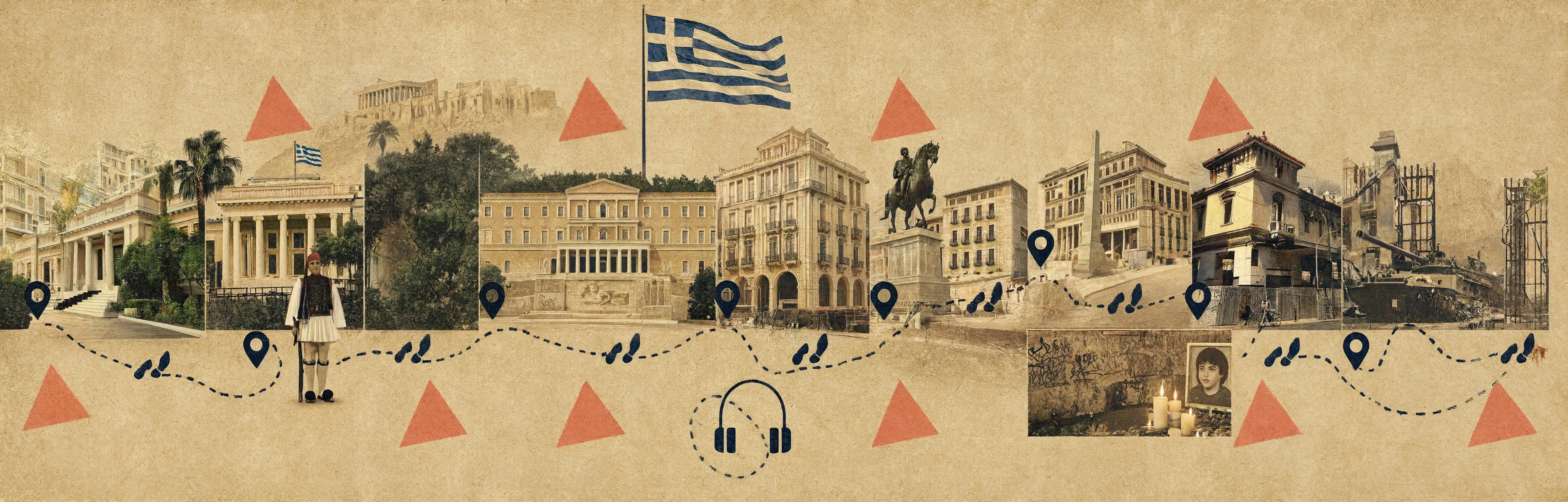
The tour starts in Kolonaki Square and takes you through the institutions and streets where modern Greece was built. From there, you'll pass the Prime Minister's office at Megaro Maximou, the Presidential Palace and its Evzones, whose uniforms preserve the memory of the Klephts who resisted Ottoman rule, and Syntagma Square, where a military revolt once forced King Otto to accept a constitution and, almost two centuries later, crowds gathered to protest austerity and the bailout.
Along the way, you'll encounter the old Parliament, where revolutionary hero Theodoros Kolokotronis was imprisoned by the government of the state he had helped create; the Hotel Grande Bretagne, which witnessed Nazi occupation, civil war and foreign intervention; Korai 4, the former Gestapo prison; and the Athenian Trilogy, built when the young state was trying to establish itself as a European power. The route then moves into the Greece of living memory: PASOK's transformation of the country after the dictatorship, the Marfin memorial from the protests of May 2010, the memorial to Alexis Grigoropoulos, and Exarcheia's decades of political counter-culture. The tour ends at the Polytechnic University gate, still twisted where a tank crushed it during the 1973 uprising against the military junta.
On this 75-minute tour, you'll have a chance to:
- Discover how foreign powers and foreign money shaped the young Greek state
- Understand how political patronage became embedded in Greek political life
- Visit Korai 4 and uncover a darker chapter of the Nazi occupation
- Learn how PASOK transformed Greek politics and society after 1981
- Follow the chain from the 2008 killing of Alexis Grigoropoulos to the unrest, austerity and political upheaval that followed
- Explore Exarcheia, one of Europe's best-known political neighborhoods, and understand why it remains a flashpoint between different visions of Greece
- Understand how the financial crisis, dictatorship and years of protest still shape Greek society and politics today – from policing to universities and public space
By the end, the bent gate will have told you more about modern Greece than any ancient ruin. The argument started before you arrived. It's still going on today.
Tour Producer
 Tour Producer

Planetwonk

Planetwonk creates immersive travel experiences focused on the social, political and cultural forces that shape the cities we visit.
Founded by political scientist Isaac Caballero Suey, Planetwonk was created for curious travellers who want to understand a destination beyond its famous sights. Rather than focusing only on monuments and traditional sightseeing, our experiences explore the stories, conflicts and transformations that continue to shape everyday life.
Our Social and Political Walks take travellers into the heart of contemporary cities, exploring subjects such as political conflict, economic crises, migration, inequality, gentrification, protest movements and social change. Each experience combines storytelling, historical context and first-hand exploration, giving travellers perspectives that are rarely found in conventional guidebooks or tourist routes.
Planetwonk’s approach to immersive travel was featured in The New York Times, highlighting the company’s mission to rethink how travellers experience cities in today’s complex world.
Planetwonk currently offers experiences in Athens, Mexico City, Colombo, Manila, La Paz, Jakarta, Buenos Aires, Santo Domingo, Cairo, Nairobi, Rio de Janeiro and Delhi,
Save with Athens audio tour passes
How do passes work?

Preview Location
 Preview Location
Location 25
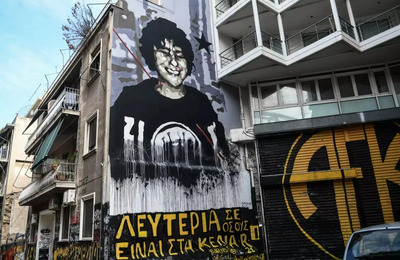
Grigoropoulos Memorial
::
On the evening of December 6, 2008, fifteen-year-old Alexis Grigoropoulos was here with friends. A police patrol passed. Words were exchanged. An officer named Epaminondas Korkoneas drew his weapon an...
 View locations and route

How VoiceMap Works





Major Landmarks
 Major Landmarks
-
Maximos Mansion
-
Presidential Mansion
-
Athens National Garden
-
Syntagma Square
-
Hotel Grande Bretagne
-
National Historical Museum - Old Parliament House
-
Korai 4 | Memorial Site 1941-1944
-
Panepistimio
-
Plateia Exarcheion
-
School of Architecture, National Technical University of Athens
Getting There
 Getting There
Route Overview
-
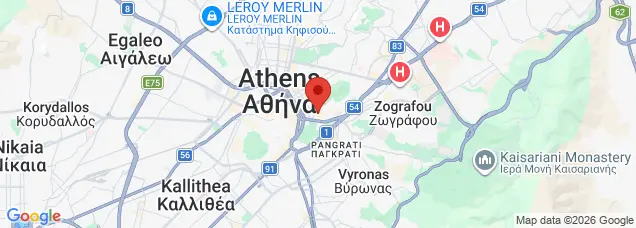
Start locationTsakalof 1, Athina 106 73, Greece
-
Total distance4km
-
Final location28is Oktovriou, Athina 106 82, Greece
-
Distance back to start location1km


Directions to Starting Point
The tour begins at Kolonaki Square, known locally as Plateia Filikis Eterias. It is a paved plaza, not a park, so do not confuse it with the nearby green space called Kolonaki Park.
Please note: At the time this recording was made, Kolonaki Square is an active construction site for a new metro station. The square itself is fenced off and inaccessible. The cafes and statue at the center are currently behind hoardings. The tour still starts from this location, but you will need to stand on the pavement at the edge of the square, at the intersection of the surrounding streets, rather than in the plaza itself. Look for the pedestrian crossing at the corner of Kanari and Patriarchou Ioakim Streets, opposite the construction fence. The audio will trigger from there.
The easiest way to arrive is by metro. Take Line 3 (the blue line) to Evangelismos station. Leave through the Rizari Street exit, walk straight down Rizari for about five minutes, and you will arrive at the square. Alternatively, take Lines 2 or 3 to Syntagma station and walk uphill along Vasilissis Sofias for ten minutes, turning right onto Kanari Street.
The square sits at the intersection of four streets: Patriarchou Ioakim, Skoufa, Kanari, and Filikis Eterias.
 Show Directions


Tips
 Tips
Tips
Places to stop along the way
National Garden: Free entry. Closes at sunset. Take a break on any bench near the duck ponds or the small zoo. There is also a pleasant outdoor cafe near the Vasilissis Sofias entrance if you need a cold drink before heading to Parliament. Do not linger past closing time or you will be locked inside and escorted to the nearest gate.
Presidential Palace gardens: Directly across from the National Garden entrance on Irodou Attikou. If you are doing this tour on a Sunday morning, the palace gardens are open to the public from 7:00 AM to 1:00 PM. The side gate offers a rare glimpse of the formal gardens and grounds behind the palace walls. A five-minute detour worth taking if the timing aligns.
Tomb of the Unknown Soldier / Parliament: The Evzones change guard every hour on the hour. The full ceremonial change with traditional dress happens on Sundays at 11:00 AM. Worth timing your arrival for this if you are not in a rush.
Hotel Grande Bretagne rooftop bar (if you want to see the view the tour discusses): Expensive, but accessible from the lobby without a reservation for a drink. Best in late afternoon.
National Historical Museum (behind the Kolokotronis statue, 12 Stadiou): Housed in the old Parliament building. Small, manageable, and directly relevant to the tour. Open Tuesday to Sunday, 8:30 AM to 3:30 PM. Closed Mondays and public holidays.
Korai 4 Memorial (on Korai Street): The underground museum of the Gestapo prison. Open Tuesday to Saturday, 9:00 AM to 2:00 PM. Free. It takes about fifteen minutes and is worth every one of them.
Exarcheia Square: Any of the small, unpretentious cafes around the square are good for a coffee or a beer.
Best time of day
This tour can be done year-round, but spring (April–May) and autumn (September–October) are ideal. Athens summer heat is serious; if you are walking between June and August, start early, ideally at 9:00 AM, or begin after 5:00 PM.
Critical: The National Garden closes at sunset, which means roughly 5:00 PM in winter, 7:00 PM in spring and autumn, and 8:00 PM or later in midsummer. If you start the tour in late afternoon, make sure you will reach the garden gates before they lock. The garden is free to enter, but the gates are shut promptly. If you arrive after closing, you will have to walk around the perimeter on the exposed pavement, which adds ten minutes and removes one of the most pleasant stretches of the route.
The route is safest and most comfortable during daylight hours. While the areas covered are central and busy, Exarcheia occasionally sees political tension and a heavier police presence in the evenings. Avoid the 17th of November, the anniversary of the Polytechnic uprising, when marches and demonstrations are scheduled and the area around the university gates becomes extremely crowded.
If you want to catch the Evzone changing of the guard in front of Parliament, the ceremony takes place every hour on the hour. The full ceremonial change with traditional dress happens on Sundays at 11:00 AM. If you time your arrival at Syntagma for roughly 10:50 AM on a Sunday, you will see the most elaborate version.
Precautions
Bring sunscreen, a hat, and a full bottle of water, especially in summer. Athens pavement reflects heat, and there is limited shade between Syntagma and Exarcheia.
Wear comfortable, sturdy shoes. Central Athens pavements are generally uneven, and some sidewalks in Exarcheia are narrow.
Keep your belongings secure and your phone tucked away when crossing busy intersections like Syntagma. The route passes through commercial and tourist areas that attract pickpockets.
Exarcheia is a working neighborhood, not a war zone, but it is politically charged. You will see graffiti, police vehicles, and political posters. Stay aware of your surroundings, avoid engaging with any street confrontations, and do not photograph people in sensitive situations without asking. If a demonstration is underway in Syntagma Square when you arrive, wait for it to clear before proceeding, or follow police directions.
Get The App
 Get The App




Scan to get app
Download the app for free
VoiceMap




 App of the Day

 Editor’s Choice


Last Updated
 Last Updated
Questions and Reviews
 Questions and Reviews