







ATTRACTION
Clifford's Tower,
York

About
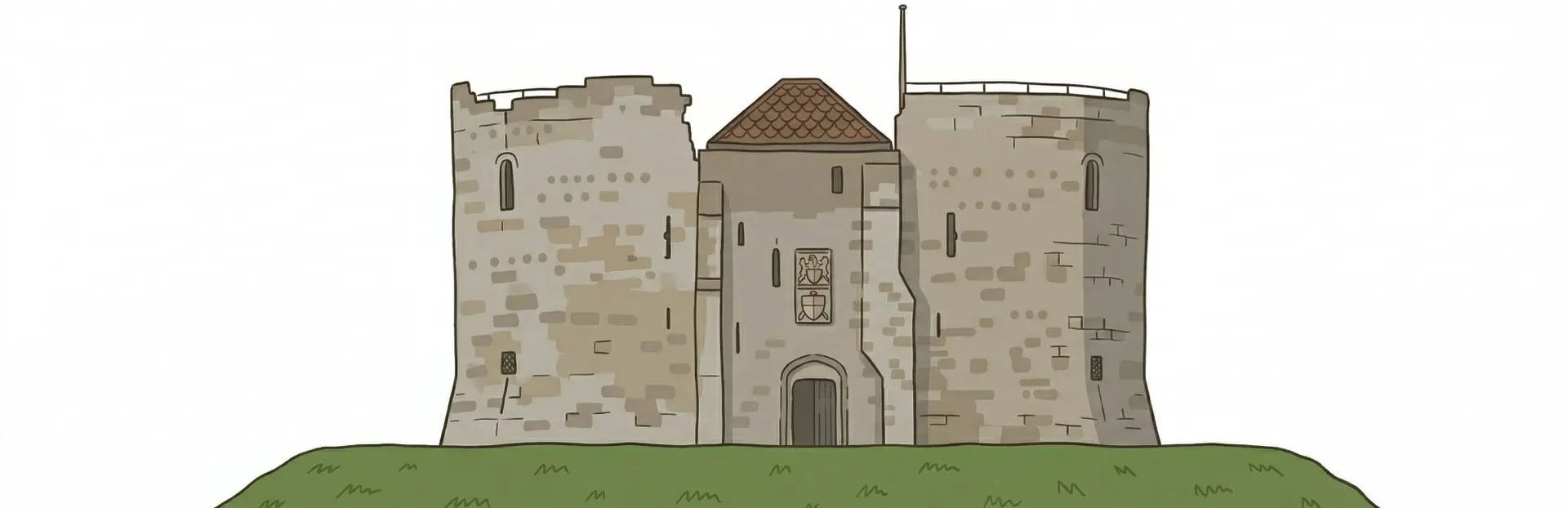
Clifford's Tower sits on its grassy mound above York like a castle that knows exactly what it has witnessed. Henry III built the stone keep you see today in the mid-13th century, replacing an earlier wooden structure thrown up by William the Conqueror after his 1066 invasion.
That first tower barely survived a decade before a Viking-backed rebellion seized York in 1069, prompting William's savage Harrying of the North, a campaign of retribution that killed around 100,000 people. The tower's darkest hour came in March 1190, when around 150 of York's Jewish residents, fleeing mob violence stirred up by indebted nobles seeking to cancel their debts, took refuge here and died. As for the name, it commemorates Roger de Clifford, hanged from these walls for treason in 1322. York, it seems, prefers to name places after criminals.
VoiceMap's tours trace the tower's role across York's full arc of violence, from the Conqueror's brutal consolidation of power through medieval antisemitism to the gallows, connecting it to the city's reputation as England's ghost capital.
That first tower barely survived a decade before a Viking-backed rebellion seized York in 1069, prompting William's savage Harrying of the North, a campaign of retribution that killed around 100,000 people. The tower's darkest hour came in March 1190, when around 150 of York's Jewish residents, fleeing mob violence stirred up by indebted nobles seeking to cancel their debts, took refuge here and died. As for the name, it commemorates Roger de Clifford, hanged from these walls for treason in 1322. York, it seems, prefers to name places after criminals.
VoiceMap's tours trace the tower's role across York's full arc of violence, from the Conqueror's brutal consolidation of power through medieval antisemitism to the gallows, connecting it to the city's reputation as England's ghost capital.

Tours featuring Clifford's Tower (4)

Medieval History
Ancient History
Food And Drink
Meet the Romans, Vikings and medieval characters who helped build modern York

 Walking Tour
|
 120 mins
Medieval History
Ghosts And Hauntings
Modern History
Brave the city’s bloody stories and secrets as you discover its intriguing past
 Walking Tour
|
90 mins

Medieval History
Top Sights
Oddities And Rarities
Discover York's bloodiest saints, bawdiest monks, and baldest Vikings
 Walking Tour
|
60 mins
Ghosts And Hauntings
Medieval History
Modern History
Uncover 2,000 years of hauntings, from plague victims to violent poltergeists
Walking Tour
|
90 mins
Download the app for free
VoiceMap
- Download tours to use them offline
- Listen hands-free with GPS playback
- Get turn-by-turn directions


Scan to get app
Download the app for free
VoiceMap




 App of the Day

 Editor’s Choice







Itchy feet? Us too
VoiceMap’s newsletter scratches that itch and stimulates your senses,
every fortnight. Curiosity is the only currency you need to subscribe.

Exploring is easier with a VoiceMap account
To purchase tours, add them to a wishlist, or access them with the VoiceMap app, please sign in or create a VoiceMap account


Exploring is easier with a VoiceMap account
To purchase tours, add them to a wishlist, or access them with the VoiceMap app, please sign in or create a VoiceMap account