







ATTRACTION
Lavenham Guildhall,
Suffolk

About
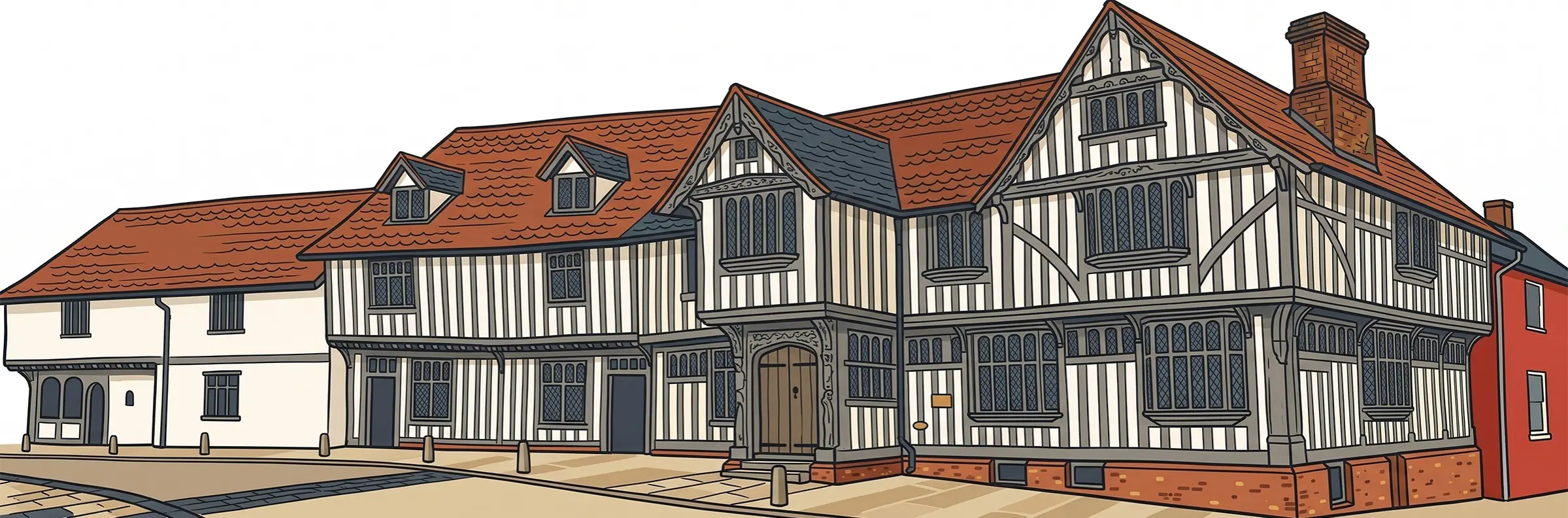
Lavenham’s Guildhall of Corpus Christi appears on the village sign, which says something in a town with no shortage of timber-framed contenders. It was built around 1530 by a religious guild, at a time when Lavenham was so rich on wool that a local clothier, Thomas Spring, ranked among England’s wealthiest commoners.
The guild’s timing was poor. Within two decades the Reformation had abolished religious guilds, and the building went on to serve as a prison, a workhouse, an almshouse and a wool store. Look for the elaborate carving on the original timbered section at the right. The National Trust now runs it, with displays on the cloth trade.
VoiceMap’s self-guided audio tour of Lavenham counts the Guildhall among the Market Place’s three crown jewels, and traces the wool trade’s fingerprints through tenter frames, workshops built over a stream and the market cross where clothiers once settled their bargains.

Tours featuring Lavenham Guildhall (1)

Medieval History
Photography
Architecture
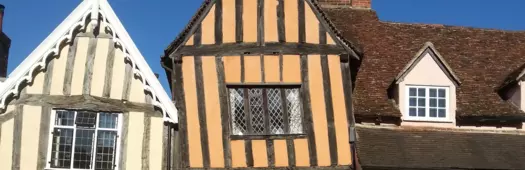
Take a walk on the medieval side to discover the Tudor side of life in Lavenham

 Walking Tour
|
 90 mins
Download the app for free
VoiceMap
- Download tours to use them offline
- Listen hands-free with GPS playback
- Get turn-by-turn directions


Scan to get app
Download the app for free
VoiceMap




 App of the Day

 Editor’s Choice







Itchy feet? Us too
VoiceMap’s newsletter scratches that itch and stimulates your senses, every fortnight. Curiosity is the only currency you need to subscribe.

Exploring is easier with a VoiceMap account
To purchase tours, add them to a wishlist, or access them with the VoiceMap app, please sign in or create a VoiceMap account


Exploring is easier with a VoiceMap account
To purchase tours, add them to a wishlist, or access them with the VoiceMap app, please sign in or create a VoiceMap account