







ATTRACTION
National Museum of Scotland,
Edinburgh


About
The National Museum of Scotland sits on Chambers Street in Edinburgh's Old Town, its red sandstone bulk hard to miss. The original 1866 building was designed by Captain Francis Fowke, a military engineer who also gave the world the Royal Albert Hall, and was inspired by London's Crystal Palace. Prince Albert laid the foundation stone.
In 1998, the building gained a striking extension: the result of a European competition that drew 371 anonymous entries, won by a small London studio, Benson and Forsyth, whose angular geometries echo the Scots baronial tradition. The two buildings coexist as philosophical opposites: one neutral, displaying objects against bare walls; the other integrating exhibits into its very architecture.
VoiceMap's Old Town tours use the museum to trace Edinburgh's design legacy and examine how Scotland's architectural identity was forged, from Victorian ambition to late-twentieth-century reinvention.
In 1998, the building gained a striking extension: the result of a European competition that drew 371 anonymous entries, won by a small London studio, Benson and Forsyth, whose angular geometries echo the Scots baronial tradition. The two buildings coexist as philosophical opposites: one neutral, displaying objects against bare walls; the other integrating exhibits into its very architecture.
VoiceMap's Old Town tours use the museum to trace Edinburgh's design legacy and examine how Scotland's architectural identity was forged, from Victorian ambition to late-twentieth-century reinvention.

Tours featuring National Museum of Scotland (5)


Medieval History
Literature
Music And Performance
Dive into the world of witchcraft and wizardry on this Harry Potter themed walk

 Walking Tour
|
 90 mins

Museums
Medieval History
Architecture
Unveil the building blocks of the Old Town on this architectural voyage
 Walking Tour
|
90 mins

Scopri il mondo della magia con questa passeggiata a tema Harry Potter.
Walking Tour
|
90 mins

Medieval History
Museums
Architecture
Unearth the city’s quirky stories, from bodysnatchers to literary legends
 Walking Tour
|
120 mins
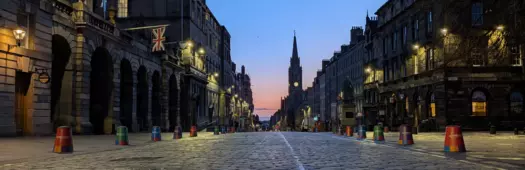
Modern History
Medieval History
Ghosts And Hauntings
Follow Edinburgh’s bloodiest tales, from palace plots to witch trials
 Walking Tour
|
90 mins
Download the app for free
VoiceMap
- Download tours to use them offline
- Listen hands-free with GPS playback
- Get turn-by-turn directions


Scan to get app
Download the app for free
VoiceMap




 App of the Day

 Editor’s Choice







Itchy feet? Us too
VoiceMap’s newsletter scratches that itch and stimulates your senses,
every fortnight. Curiosity is the only currency you need to subscribe.

Exploring is easier with a VoiceMap account
To purchase tours, add them to a wishlist, or access them with the VoiceMap app, please sign in or create a VoiceMap account


Exploring is easier with a VoiceMap account
To purchase tours, add them to a wishlist, or access them with the VoiceMap app, please sign in or create a VoiceMap account