







ATTRACTION
Mathematical Bridge,
Cambridge

About
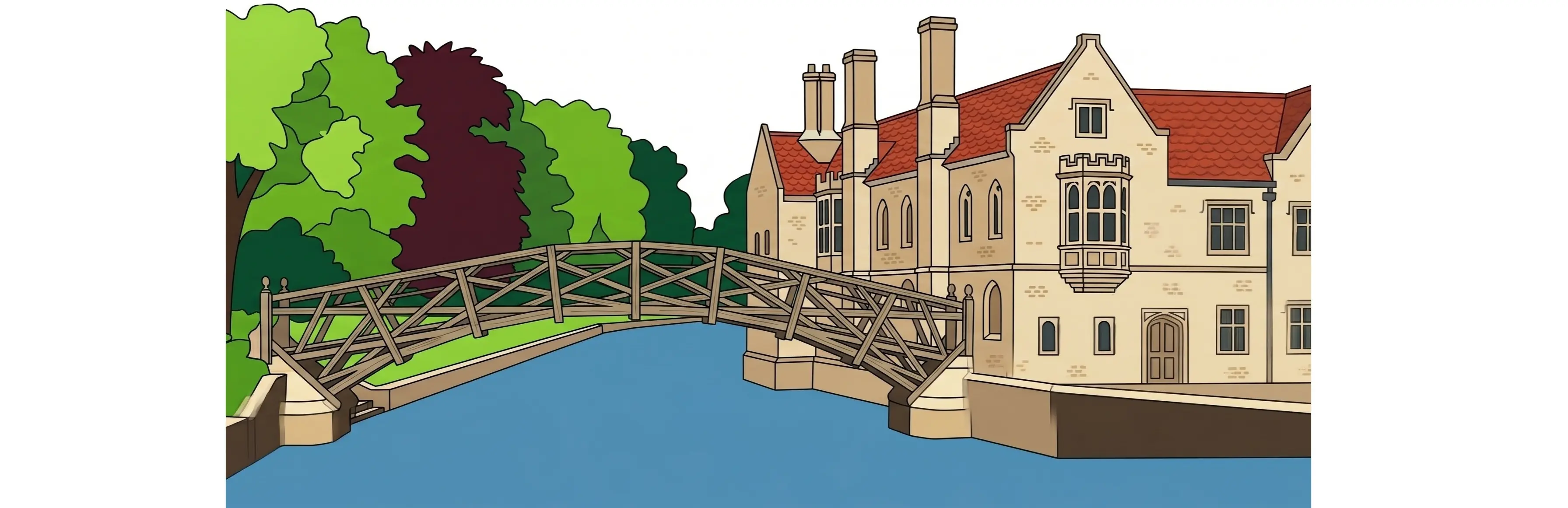
The Mathematical Bridge looks, at a glance, like an elegant wooden arch. Look closer and you'll notice something odd: it's built entirely from straight timbers. No curves at all. Designed by William Etheridge in 1748 and built by James Essex the following year, it uses a voussoir arch principle, locking straight pieces into a self-supporting lattice through compression rather than brute carpentry.
Then there's the legend. Guides have been telling visitors for generations that Cambridge students once dismantled the bridge to solve its puzzle, failed to reassemble it, and had to bolt it back together in defeat. A delightful story. Also completely false. The bridge has simply been rebuilt twice, most recently in 1905, using nuts and bolts throughout.
VoiceMap's self-guided audio tours use the Mathematical Bridge to unpick Cambridge's appetite for myth-making, tracing its true engineering lineage from Westminster Bridge and placing it within Queens' College's 600-year story.
Then there's the legend. Guides have been telling visitors for generations that Cambridge students once dismantled the bridge to solve its puzzle, failed to reassemble it, and had to bolt it back together in defeat. A delightful story. Also completely false. The bridge has simply been rebuilt twice, most recently in 1905, using nuts and bolts throughout.
VoiceMap's self-guided audio tours use the Mathematical Bridge to unpick Cambridge's appetite for myth-making, tracing its true engineering lineage from Westminster Bridge and placing it within Queens' College's 600-year story.

Tours featuring Mathematical Bridge (3)


Royal Heritage
Local Legends
Medieval History
Meet the colourful characters that shaped the university‘s 800-year history

 Walking Tour
|
 75 mins
Local Legends
Universities
Revolution
Meet world-changing pioneers, campaigners, and leaders in these historic streets
 Walking Tour
|
90 mins
Universities
Modern History
Scientific Discovery
Explore the place of pioneering physics
 Walking Tour
|
75 mins
Download the app for free
VoiceMap
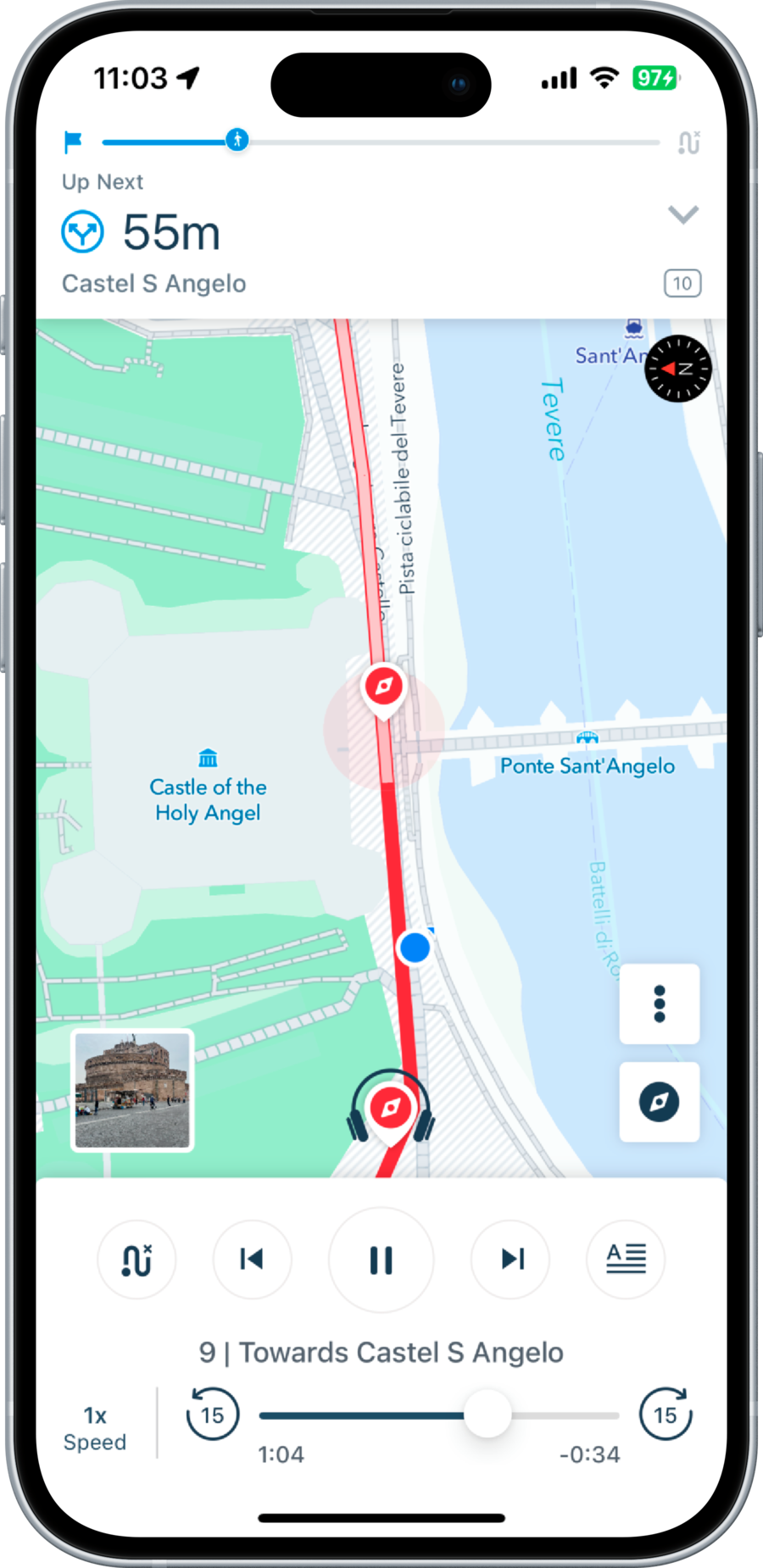
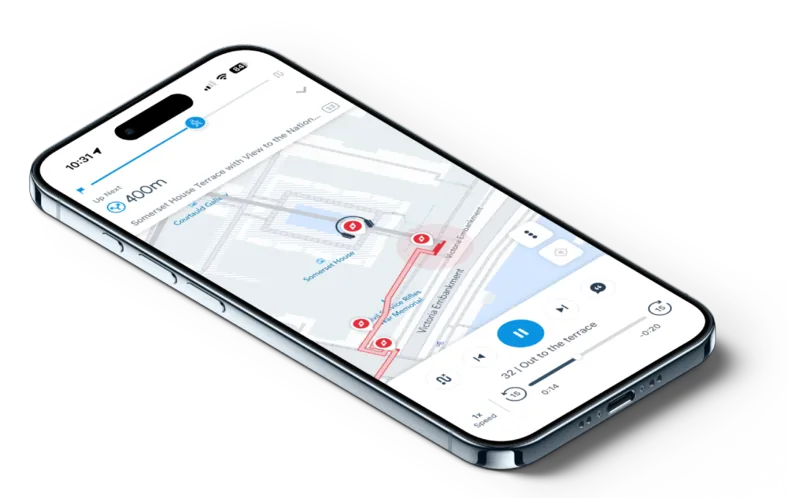
- Download tours to use them offline
- Listen hands-free with GPS playback
- Get turn-by-turn directions


Scan to get app
Download the app for free
VoiceMap




 App of the Day

 Editor’s Choice






Itchy feet? Us too
VoiceMap’s newsletter scratches that itch and stimulates your senses,
every fortnight. Curiosity is the only currency you need to subscribe.

Exploring is easier with a VoiceMap account
To purchase tours, add them to a wishlist, or access them with the VoiceMap app, please sign in or create a VoiceMap account


Exploring is easier with a VoiceMap account
To purchase tours, add them to a wishlist, or access them with the VoiceMap app, please sign in or create a VoiceMap account