






Where the Bureaucracy Lives: Pillars of Policy in D.C




 Buy for a Group
 Reviews
 About the Tour
 About the Tour
Washington DC’s federal buildings aren’t just backdrops. They’re physical records of every policy fight, budget battle, and national crisis the country’s ever faced.
On this walking tour, you’ll find out how America’s government grew from a handful of farmers and customs collectors into a three-million-person operation – told through the architecture, budgets, and backstories of 16 federal buildings between the National Mall and Southwest DC.
The tour starts at the People’s Garden, a working demonstration plot managed by the USDA. From there, you’ll walk the length of Independence Avenue, passing under two stone arches, one of which was named for the longest-serving Cabinet member in US history. Along the way, you’ll learn how Congress’ seniority system turned a Mississippi congressman into “the permanent secretary of agriculture,” and how a 1909 shipment of Coca-Cola syrup ended up before the Supreme Court.
You’ll walk under the James V. Forrestal Building’s controversial skybridge, and past the Central Heating Plant that keeps 100 federal buildings warm. As you make your way through a stretch of Southwest DC, you’ll hear about how a vibrant neighborhood was demolished to make way for modernist federal offices. The tour ends at Constitution Center, a commercial high-rise whose tenants – from the Federal Trade Commission to the National Endowment for the Arts – show just how interconnected federal power actually is.
On this 90-minute tour, you’ll have a chance to:
- Stand on the site of an 1800s slave pen where Solomon Northup, author of Twelve Years a Slave, was imprisoned
- Pass the Bureau of Engraving and Printing, where up to 26 million notes are printed daily
- Learn how the SNAP program feeds 41.7 million Americans monthly for an average of $187 per person
- Discover how FAA employees moved into their new headquarters the same afternoon JFK was assassinated
- See a WWI-era “temporary” building that’s still standing – and may soon be sold for Tidal Basin-adjacent real estate
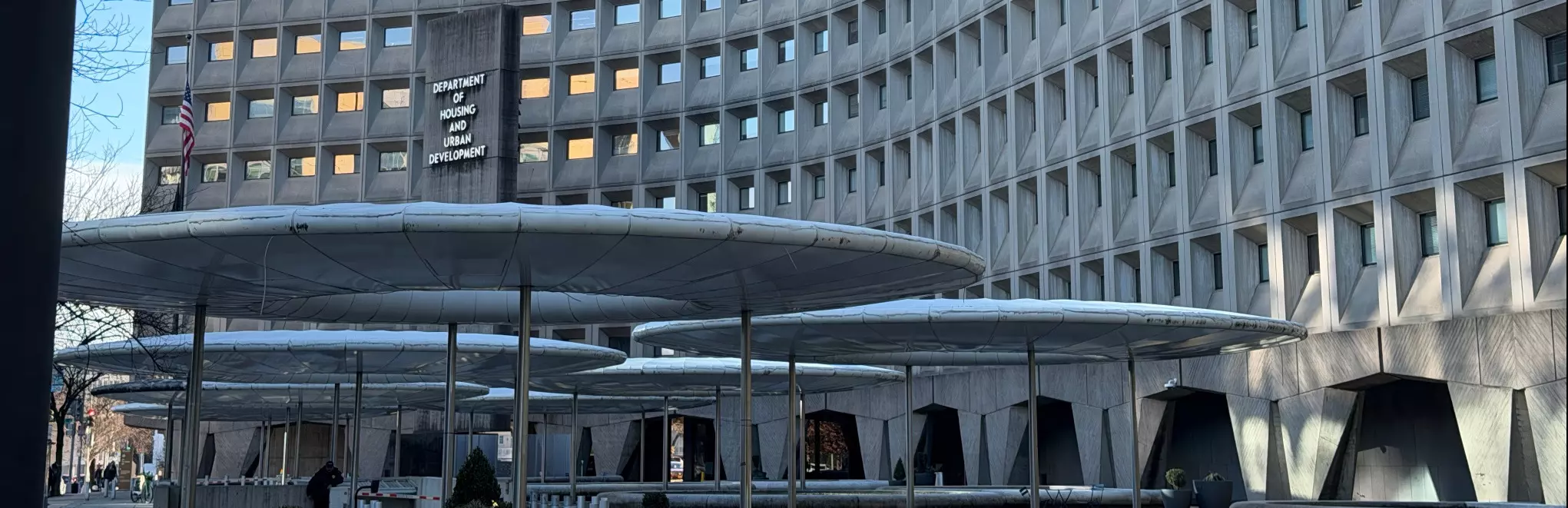
- Explore the HUD Building, the first federal structure built entirely in precast concrete, designed by Brutalist pioneer Marcel Breuer
- Hear how DOE funding spurred innovation in renewables and emerging energy sources
- Visit the Yates Building, where the term “red tape” was literally coined by Treasury auditors by wrapping bills in red binding tape
This tour won’t show you monuments or museums – it’ll show you where the actual work of government happens, and why that matters.
Tour Producer
 Tour Producer

Michael Ring

Michael Ring is a writer, educator, and longtime federal civil servant with a passion for storytelling, architecture, and American bureaucracy. A Floridian by birth and a Washingtonian by conviction, he moved to D.C. area in the early 2000s to help strengthen the nation’s cybersecurity posture and never stopped exploring the city’s federal heart. His last job before retiring was a staff detailee at the White House National Security Council as a Cyber Policy Director for East Asia.
Using his experience as a tour guide for Walt Disney and an instructor for the federal government, he is moving into the audio tour space to make every listener have a memorable experience. His walking tours are part history lesson, part policy deep-dive, and part sarcastic love letter to the quiet machinery of government. When he’s not uncovering overlooked federal buildings, he’s probably hunting down tacos or going for a walk listening to an audiobook.
Save with Washington, D.C. audio tour passes
How do passes work?

Preview Location
 Preview Location
Location 10
Bureau of Engraving and Printing - Dolla Dolla Bills
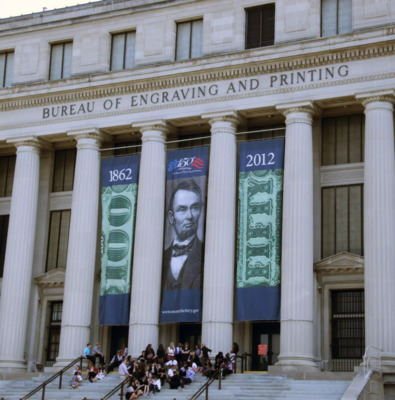
Money doesn’t grow on trees, it's printed on a cotton-linen blend, so that bill in your pocket is technically cloth more than paper: 25% linen, 75% ...
 View locations and route

How VoiceMap Works







Major Landmarks
 Major Landmarks
-
US Department of Agriculture
-
Sidney R. Yates Federal Building
-
United States Holocaust Memorial Museum
-
National Mall
-
Independence Avenue Southwest
-
Bureau of Engraving and Printing
-
James V. Forrestal Building
-
Orville Wright Federal Building – FOB 10A
-
Robert C. Weaver Federal Building
-
Constitution Center
Getting There
 Getting There
Route Overview
-
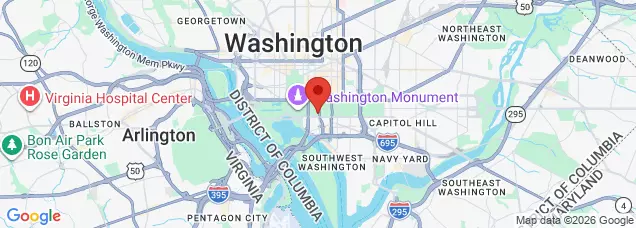
Start location1400 Independence Ave SW, Washington, DC 20250, USA
-
Total distance3km
-
Final location400 7th St SW, Washington, DC 20024, USA
-
Distance back to start location818.55m


Directions to Starting Point
This tour begins at The People’s Garden, located just behind the U.S. Department of Agriculture’s Jamie L. Whitten Building along 12th Street SW and Jefferson Drive SW. If you tap the “Directions” button in the app, it will open Apple or Google Maps and guide you to the location.
The easiest Metro stop is Smithsonian Station on the Blue, Orange, or Silver lines, about a three-minute walk away. When you exit the station, walk toward the National Mall, then head toward the large white USDA building along Independence Avenue. Continue around the building toward 12th Street, where you’ll find a small demonstration garden tucked between the sidewalks and federal buildings.
You’ll know you’re in the right place when you see the raised garden beds and educational signs of the People’s Garden, with the long white USDA headquarters building just beside you.
Once you’re standing near the garden, open the tour and I’ll take it from there.
 Show Directions




Tips
 Tips
Tips
Places to stop along the way
This tour moves through the working heart of the federal government, so you won’t find many coffee shops near the buildings themselves. Still, there are several good places nearby if you want to pause along the way.
You’ll pass close to the National Mall, which means dozens of Smithsonian museums are just a short detour away if you’re in the mood for air conditioning, a restroom break, or a quick look at an exhibit. The Holocaust Memorial Museum is also just off the route near the Yates Building and is well worth a visit if you have the time.
If you’re looking for food or coffee, the Wharf waterfront district is only a few blocks south of the route and has plenty of restaurants, cafés, and places to sit by the water.
The tour ends near Constitution Center. There's a Potbelly Sandwich nearby and several cafes. You’re only a short walk back toward the National Mall or down toward the Wharf if you’d like to keep exploring.
Best time of day
This tour works any time of year, though Washington is at its most pleasant in spring and fall, when the weather cooperates and the National Mall looks its best. Early morning or late afternoon are particularly nice, with cooler temperatures and fewer crowds.
Summer is perfectly doable, but DC humidity is a real thing. Bring water and maybe a hat unless you enjoy feeling like you’re walking through soup. Winters are quieter and often quite peaceful, though the wind across the Mall can be brisk.
Most of the walk follows wide sidewalks around federal buildings and public spaces, so it’s comfortable during daylight hours year-round. Weekdays can actually be fun—you’ll see the government workforce moving between buildings, which is a reminder that this isn’t just a museum district. It’s a working capital.
Precautions
You’ll be walking past working federal buildings and along a few busy streets, so just pay attention at crosswalks and follow the signals. Otherwise, the route sticks to public sidewalks and pedestrian areas.
And like any good walk around Washington: stay hydrated and pace yourself. The bureaucracy isn’t going anywhere if you take a short break.
Get The App
 Get The App




Scan to get app
Download the app for free
VoiceMap




 App of the Day

 Editor’s Choice


 Last Updated
 Questions and Reviews