


Renaissance Úbeda: A Tour of Magnificent Mansions and Serene Squares




 Buy for a Group
 Reviews
 About the Tour
 About the Tour
Úbeda’s architecture is a unique blend of Islamic and Italian Renaissance influences. The fine craftsmanship that can still be found within the historic town centre has earned Úbeda (and its neighbour Baeza) UNESCO World Heritage Site status.
On this walking tour, you’ll explore Úbeda’s 6,000-year-old history, which saw Muslims, Christians and Jews shaping its medieval old town.
The tour starts beside the clock tower in Plaza de Andalucía, just outside the medieval town walls. You’ll wind through alleyways, past the Archaeological Museum of Úbeda, to see one of the area’s oldest churches, the Church of San Pablo. As you walk, I’ll tell you about Úbeda’s strategic importance in the Middle Ages as a frontier town and agricultural centre. In the former Jewish quarter, you’ll find out why few traces remain of this once-thriving community.
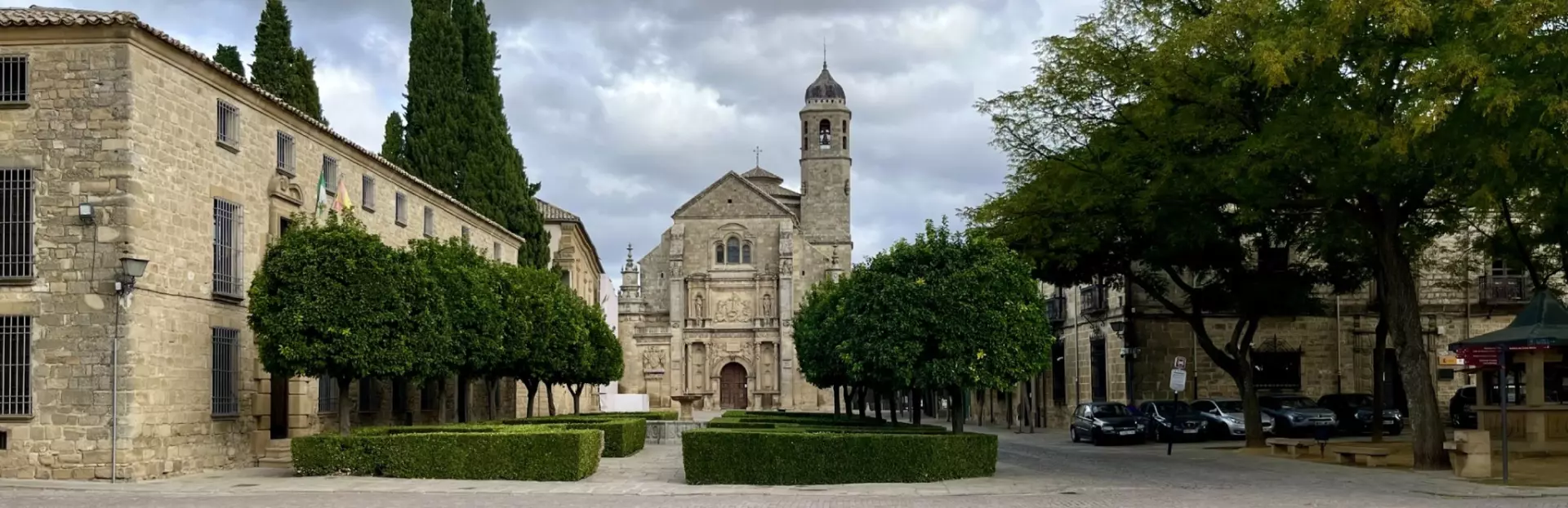
The tour ends in Plaza Vazquez de Molina, a square that’s packed with Renaissance treasures, including the Holy Chapel of the Saviour and the 16th-century palace, Palacio del Deán Ortega.
On this 90-minute tour, you’ll also have an opportunity to:
- Hear how a local noble rose to be Emperor Charles V’s right-hand man and brought untold wealth to the town
- Admire the beautiful Plateresque façade of the art school, Escuela de Arte Casa de las Torres, and the deconsecrated San Lorenzo church
- Trace Úbeda’s transformation thanks to architect Andrés de Vandelvira’s elegant and innovative designs, including the monumental Sacra Capilla del Salvador (Holy Chapel of the Saviour) and Úbeda’s Town Hall
- Find out how Isabella I won the crown of Castille, thanks to one of Ubeda’s nobles’ love life
- Discover where to find Úbeda’s distinctive artisan ceramics fired in traditional Arab ovens
- See Casa de los Salvajes and other famous monumental sandstone mansions, built for the local nobility
- Enjoy spectacular views across the Guadalquivir River valley and find out what it means to get lost in the hills of Úbeda
By the end of the tour, you’ll understand why a small Andalusian town like Úbeda is so packed with monumental Renaissance architecture. I’ll also tell you about some of the best places to sample Úbeda’s delicious local cuisine.
Tour Producer
 Tour Producer

Ben Barclay

When I moved to Granada in 2006, I initially intended to stay for a year or two. Maybe three or four at most. But like many people, I was captivated by the city’s history and culture, as well as its strategic location close to the sea and in the shadow of the imposing Sierra Nevada mountains. Having travelled widely before I came here, I knew that Granada was special. Little by little I became a local – a “Granaíno”. As well as enjoying everything Granada has to offer, I love exploring the cities and countryside of Andalucía, and my wife and I recently set up the travel website Andalucía Bound (andalucia-bound.com), which offers inspiration and practical advice for visitors to Andalucía. We're also keen hikers, and for fifteen years we've been running the website treksierranevada.com, with information about self-guided hikes in the Sierra Nevada.
In 2011, I co-founded the educational publisher LinguaFrame S.L., which produces textbooks in English for Spanish secondary schools, and I'm the author and editor of fifteen history, geography and science textbooks. I also work as a government-authorised translator, with my specialist areas including historical and cultural texts for museums and advertising material related to tourism.
Save with audio tour passes
How do passes work?

Preview Location
 Preview Location
Location 42
San Salvador facade
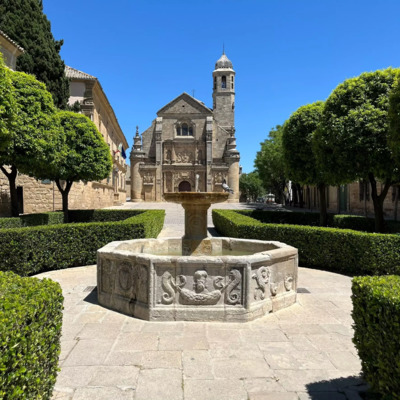
The sculptor responsible for decorating the façade was Esteban Jamete from France. He also produced the Caryatids in the sacristy, and he might even have been the person who convinced Vandelvira to start using them, as they...
 View locations and route

How VoiceMap Works




Major Landmarks
 Major Landmarks
-
Plaza de Andalucía
-
Clock Tower
-
Church of San Pablo
-
Museum John of the Cross
-
Escuela de Arte Casa de las Torres
-
Mirador del Alcázar
-
Yacimiento arqueológico de las Eras del Alcázar
-
Sacra Capilla del Salvador
-
Basílica de Santa María de los Reales Alcázares
-
Vázquez de Molina Palace
Getting There
 Getting There
Route Overview
-
Start locationPl. Andalucía, 23400 Úbeda, Jaén, Spain
-
Total distance3km
-
Distance back to start location475.46m


Directions to Starting Point
The tour starts by the statue in Plaza de Andalucía in Úbeda.
Úbeda makes a great day trip from Granada, Córdoba or Jaén. If you’re coming by car, there is a very convenient paid car park underneath the Plaza de Andalucía, where the tour starts.
There’s also free on-street parking just outside the historic centre on Calle Redonda de Miradores. It takes about an hour and a half to drive from either Granada or Córdoba. I don’t recommend driving into the historic centre – the roads are very narrow and some are restricted for non-residents.
Buses from Granada take about 2 and a half hours on average. From Córdoba, the journey time is similar, but there are fewer departures, which makes day-tripping more difficult. You can find the times and book on the bus company Alsa’s website. The bus station is on Calle San José, about a 700 m walk from the start of the tour.
You can also reach Úbeda by train. The Linares-Baeza station is about a 25 km bus or taxi ride away.
 Show Directions


Tips
 Tips
Tips
Places to stop along the way
The Sacra Capilla del Salvador is considered one of the masterpieces of Spanish Renaissance architecture and is well worth a visit. Most of Úbeda’s other sights don’t take very long to visit, but some opening times are a bit limited, and they vary throughout the year. It’s a good idea to get an-up-to-date listing from the Tourist Office, which is close to the starting point of our route. Some sights only have guided tours in Spanish, but they may also have some written information in English.
Úbeda is becoming a popular destination for gastrotourism, and I’ll point out some of the best restaurants. It’s always a good idea to book ahead if you have your heart set on a particular restaurant.
Best time of day
Whichever day you go, you can visit key sights like the Sacra Capilla del Salvador, Basílica de Santa María de los Reales Alcázares and Iglesia de San Pablo, and enjoy Úbeda biggest attraction of all: strolling through its stunning squares packed with Renaissance palaces.
Úbeda is particularly popular at weekends for Spanish tourists, so avoid these if you don’t like crowds. On the other hand, some of the smaller sights and many restaurants are closed on Mondays and Tuesdays, and in some cases even on Wednesdays at certain times of the year.
Like everywhere else in inland Spain, Úbeda gets extremely hot from June – September, so in these months aim to start out early in the morning to avoid the worst of the heat.
Úbeda is very compact, so it’s a perfect day trip destination. But it’s also worth staying overnight to enjoy the ambience and excellent dining options, and if you want to go into all of the main attractions, you’ll need more than a day.
Precautions
We'll be walking along cobbled streets, so you'll need comfortable shoes. Sunblock and a bottle of water are also essential if the weather is warm and sunny, which it often is in Úbeda! In summer, I recommend doing the tour in the morning, before it gets too hot.
Get The App
 Get The App




Scan to get app
Download the app for free
VoiceMap




 App of the Day

 Editor’s Choice


Last Updated
 Last Updated
Questions and Reviews
 Questions and Reviews