






From Imperialism to Modernism: The Architecture of Central Saigon




 Buy for a Group
 Reviews
 About the Tour
 About the Tour
Ho Chi Minh City – or Saigon to those who know and love it – is like a jumbled attic of architectural anomalies, each one recounting a chapter in Vietnam’s story.
On this walking tour, you’ll explore the city’s built heritage, from French edifices to groundbreaking modernist landmarks. You’ll also catch glimpses of the biophilia taking root in a city that is increasingly dominated by glass and steel.
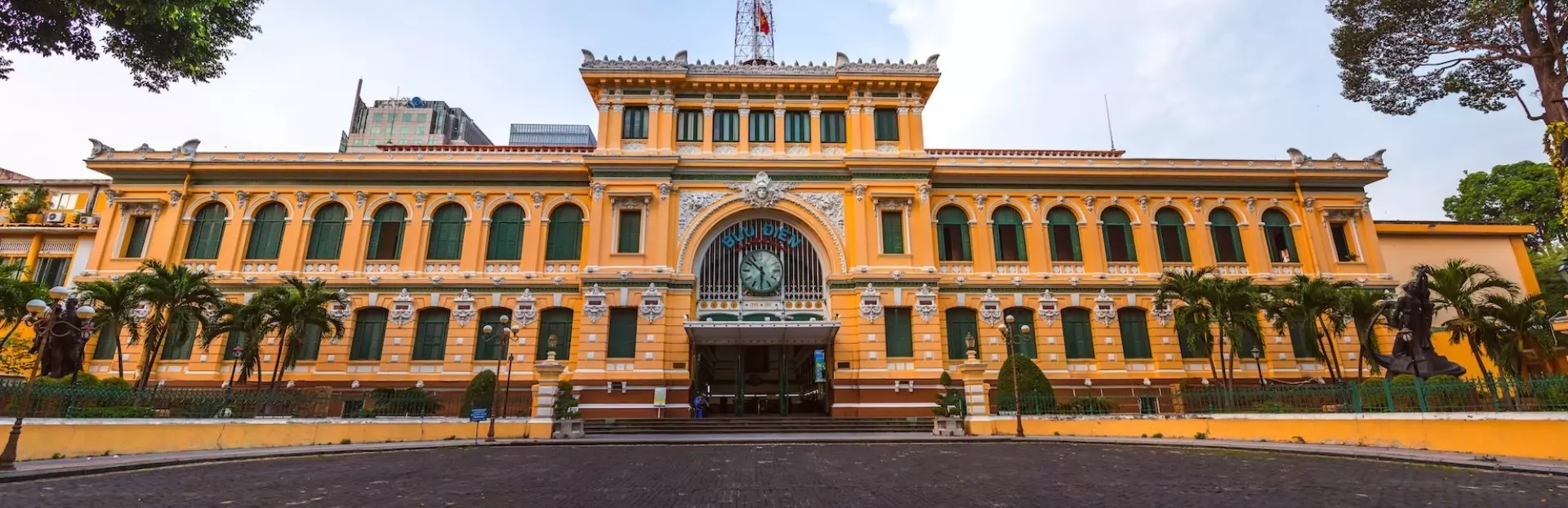
This tour starts at Notre Dame Cathedral, a colonial copy of its counterpart in Paris, but with its own cultural elements and local superstitions. You’ll explore the Saigon Central Post Office, a neo-baroque facade that flaunts flashes of French Indochina, and the neo-classical Justice Building, with Ionic and Corinthian columns straight out of Ancient Greece.
As you wander through leafy boulevards, you’ll also learn how Vietnamese architects reclaimed the city’s identity after the French exit. I’ll point out a rare, quiet side street where you can stop for coffee (or a beer). The tour ends at the Archbishop’s Residence compound, home to what may be Saigon’s oldest building, a feudal chapel with yin-yang roof tiles.
On this 75-minute tour, you’ll have a chance to:
- Examine how Vietnamese modernist architects incorporated traditional symbols like Chinese characters and dragon imagery into their progressive designs
- Discover how climate-responsive design was incorporated into buildings like the Independence Palace and General Sciences Library, naturally cooling buildings before air conditioning
- Learn about Vietnam’s growing biophilic architectural movement that seeks to merge nature with urban structures
- Spot the rooftop where the iconic helicopter evacuation photo was taken during America’s hasty 1975 departure
- Visit a rare pre-colonial tomb tucked away in the city’s central park
- Explore the curved corner apartment building at 218 Nguyễn Đình Chiểu, an example of Saigon’s endangered modernist heritage
This walking tour offers a unique perspective on how architecture reveals Vietnam’s journey from colonial rule to independence, and beyond.
Tour Producer
 Tour Producer

Joshua Zukas

I value depth over breadth, which is why I write exclusively about Vietnam—a country I’ve called home for more than a decade. I mainly write about travel, but I also cover culture, society, architecture, and food.
So, why Vietnam? Because I love a good story, and Vietnam is teeming with them. Some are mythological, others are grounded in fact, but most inhabit that grey area in between.
I draw on these stories in my work, including writing guidebooks for Bradt, Lonely Planet, Fodor’s and Hardie Grant, and features for The Economist, Wallpaper, Business Insider, The Michelin Guide and Adventure.com.
My VoiceMap walking tours offer more than an introduction to Vietnam’s complex history and mythology. They bring to life the stories hiding in plain sight, lead you down alleyways you might otherwise pass by, introduce new ways to see popular sights, and show you street food spots that most tourists never find.

Save with audio tour passes
How do passes work?

Preview Location
 Preview Location
Location 15
General Sciences Library
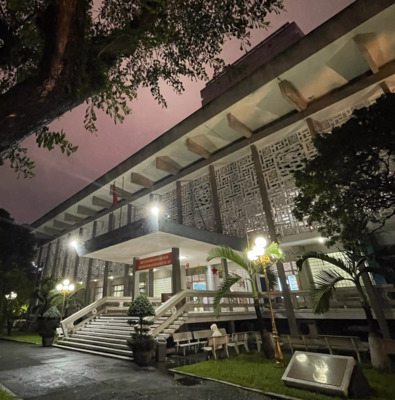
Like the Independence Palace, it's another example of how the Vietnamese reclaimed the city after the French left. Now a library which is free to vi...
 View locations and route

How VoiceMap Works







Major Landmarks
 Major Landmarks
-
Notre Dame Cathedral of Saigon
-
Saigon Central Post Office
-
Independence Palace
-
Ho Chi Minh City People's Court
-
General Science Library of Ho Chi Minh City
-
Tao Dan Park
-
218 Nguyễn Đình Chiểu
-
Tòa Tổng Giám Mục Sài Gòn
-
Saigon Book Street
-
Saigon Book Street
-
April 30th Park
-
April 30th Park
-
Museum of Ho Chi Minh City
-
Museum of Ho Chi Minh City
-
Silverland Yen Hotel
-
Silverland Yen Hotel
-
Gandhi Statue
-
Gandhi Statue
-
Di tích mộ cổ họ Lâm
-
Di tích mộ cổ họ Lâm
Getting There
 Getting There
Route Overview
-
Total distance3km
-
Distance back to start location932.83m


Directions to Starting Point
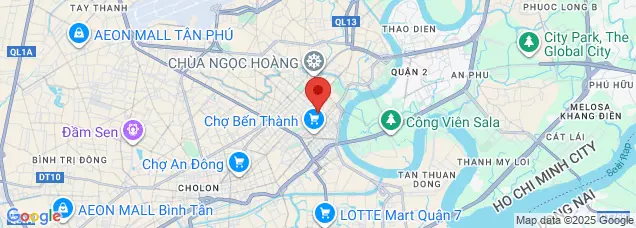
The tour begins in front of the Virgin Mary statue in central Saigon. She stands in front of the Notre Dame Cathedral at the northern end of Đồng Khởi Street.
 Show Directions




Tips
 Tips
Tips
Places to stop along the way
The tour has several places to stop along the way, including major landmarks that you can enter. We also pass a couple of museums, but it's best to come back to those another time. There is one coffee/ drink stop in the middle of the tour.
Best time of day
Anytime of day, any day of the year. However, be mindful of the weather -- bring a rain jacket just in case. The best time to do it is in the late afternoon or early evening when the city has cooled down and the buildings are lit to spectacular effect.
Precautions
The biggest issue is crossing the road. The traffic will not stop for you, even on zebra crossings. The key is to wait for a break in the traffic, and then move slowly and predictably across the road. Phone snatching can be a problem, so if you need to take your phone out, do so away from the road and with your back to the traffic. Bringing sunblock, waterproofs (or an umbrella) and a bottle of water is also a good idea.
Get The App
 Get The App




Scan to get app
Download the app for free
VoiceMap




 App of the Day

 Editor’s Choice


Questions and Reviews
 Questions and Reviews