





The Women Behind Puerto Madero’s Streets




 Buy for a Group
 Reviews
 About the Tour
 About the Tour
Buenos Aires’ most modern neighborhood has centuries of fascinating history beneath its sleek glass façades.
On this walking tour, you’ll hear about the failed harbor project that was Puerto Madero, and find out how it became a vibrant urban district. You’ll also learn about the remarkable women who shaped Argentina’s history, and whose names now grace every street in this unique part of the city.
The tour starts at the Reserva Ecológica Costanera Sur, a green oasis that was once destined for urban development. You’ll walk alongside peaceful lagoons teeming with wildlife and explore Micaela Bastidas Park.
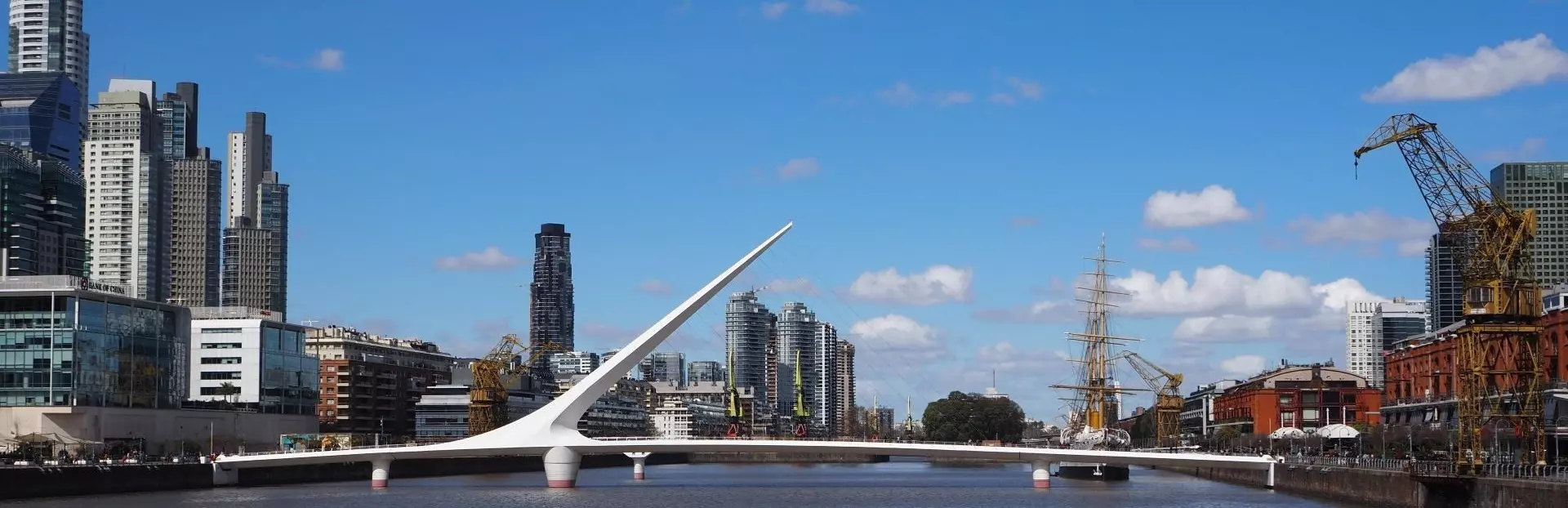
As you cross boulevards named after pioneering women, you’ll hear about revolutionary heroines, Latin America’s first female voter, and Argentina’s women’s rights movement. You’ll also discover how Puerto Madero’s streets came to be named mostly after women – a stark contrast to the rest of Buenos Aires. The tour ends at the iconic Puente de la Mujer (Women’s Bridge), with its graceful design depicting a couple dancing tango.
During this 60-minute tour, you’ll have a chance to:
- Learn how Julieta Lanteri became the first woman to vote in Latin America through a clever legal loophole
- Discover Juana Manso’s pioneering work in education reform and women’s emancipation
- Hear the tragic story of Azucena Villaflor, founder of the Mothers of Plaza de Mayo human rights movement
- Explore the architectural rivalry between Eduardo Madero and Luis Huergo that shaped the district’s distinctive docks
- Encounter Fuente de las Nereidas, a magnificent marble fountain that was considered so scandalous in early 20th-century Buenos Aires it was repeatedly relocated
- Discover how 1990s redevelopment created a unique urban space integrating historical preservation with modern design
Take this walk through Puerto Madero to understand how this distinctive neighborhood became both an architectural marvel and a tribute to Argentina’s remarkable women.
Tour Producer
 Tour Producer
Araceli

My name is Araceli. I design and produce self-guided tours shaped by field research and urban exploration. I was born in Greater Buenos Aires, and from the age of five my dream was to live in the City of Buenos Aires — a dream I fulfilled in my early youth (long ago and far away!).
I firmly believe — without any scientifically rigorous or remotely “objective” evidence — that Buenos Aires is the best city in the world. In my whimsical ranking of cities, Mar del Plata proudly holds second place. I should add that the ranking ends there; all other cities drift somewhere in a vast and undefined third place.
My work focuses on oral storytelling and urban cultural heritage. I explore themes related to Argentine culture, art, and history, and I am interested in cities, people, everyday stories, music, cinema, and visual art. Through my audio walks, I aim to share a way of seeing the world shaped by these curiosities, from Buenos Aires.
I imagine my listeners as curious people, unhurried wanderers — from Argentina, across Latin America, and around the world — who find in my stories a way to explore the city of Buenos Aires at their own pace, whenever our interests align: places, characters, and moments that deserve dedicated storytelling, attention, and discovery, expanding the way we see the world.
Save with audio tour passes
How do passes work?

Preview Location
 Preview Location
Location 4
Fuente de las Nereidas 2
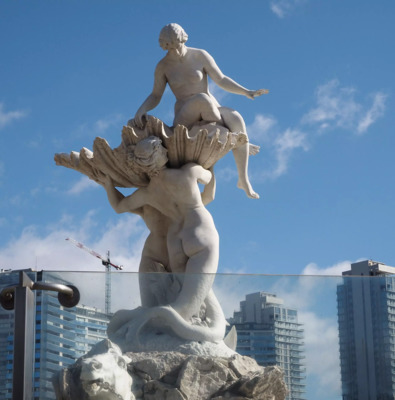
The Fountain of the Nereids is popularly known as the Lola Mora Fountain, in recognition of the author. It was o...
 View locations and route

How VoiceMap Works






Major Landmarks
 Major Landmarks
-
Puerto Madero Street Circuit
-
Puente de la Mujer

-
Fuente de las Nereidas (Lola Mora)
-
Дикая природа Аргентины
-
La ola de Nicolás Isidro Bardas (1937)
-
Mirador Artistas Iberoamericanos
-
Monumento al Tango
-
Micaela Bastidas Park
-
Dique 2 - Puerto Madero
-
Reserva Ecológica Costanera Sur
Getting There
 Getting There
Route Overview
-
Total distance2km
-
Distance back to start location1km


Directions to Starting Point
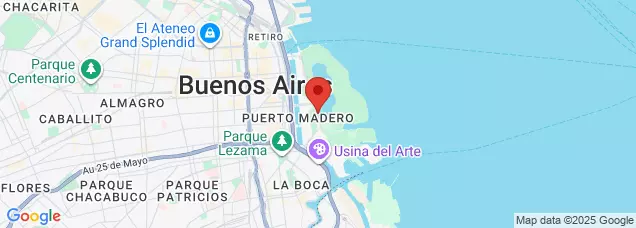
The tour begins in Costanera Sur, on the street between Av. Dr. Tristán Achával Rodriguez and the Laguna de los Coipos. For your reference, look for the tile that marks a recognition of hockey player Luciana Aymar, close to the stairs.
 Show Directions


Tips
 Tips
Tips
Places to stop along the way
If you like museums, close to Fuente de las Nereidas is the Museo de la Cárcova (Museum of Reproductions and Comparative Sculpture).
There is also the A.R.A. Sarmiento Frigate museum ship, that is open for visits and is located right next to the Puente de la Mujer, where the tour ends.
Not far from there, there is the private gallery that hosts Amalia Lacroze de Fortabat Art Collection.
Best time of day
During the day is the best time for this tour. If you do it in the morning, the ending point is good area for a coffee or lunch in case you end by midday. But if you pick the afternoon, it is even better to end in the conclusion point during the sunset, maybe having a drink next to the dams.
Precautions
Use a hat and sunglasses to protect from the sun if possible. This tour will take you through some open areas and the sun may be super heavy in the summer. Also, always be very aware of your surroundings.
Get The App
 Get The App




Scan to get app
Download the app for free
VoiceMap




 App of the Day

 Editor’s Choice


Questions and Reviews
 Questions and Reviews