






ATTRACTION
Heroes' Square,
Budapest

About
Beneath Heroes' Square lies an artesian well, drilled in 1878 to tap the thermal springs that now feed the nearby Széchenyi Baths. The square itself came later, built to mark Hungary's thousandth birthday in 1896, though like many ambitious projects, it ran fashionably late: the Millennium Monument wasn't fully complete until 1929.
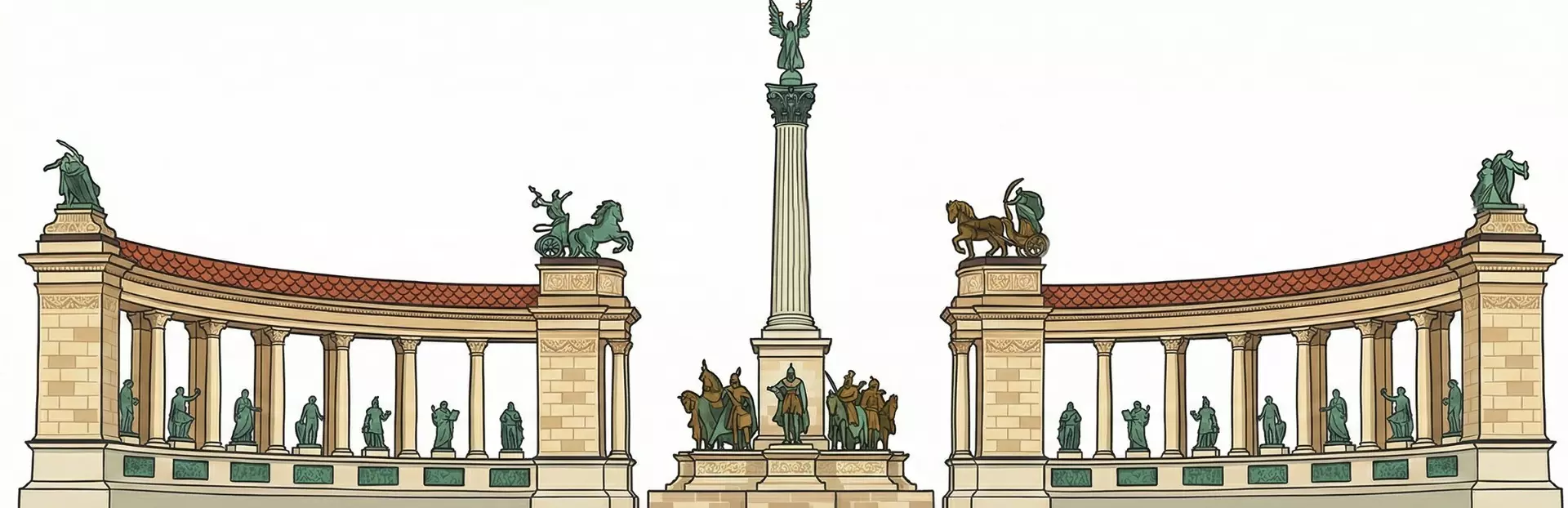
The 36-metre column is topped by Archangel Gabriel clutching the Holy Crown, which legend says he offered to St. Stephen in a dream. Around its base, seven mounted chieftains sit astride horses that historians politely describe as "fanciful." The colonnades behind them have seen considerable reshuffling: Habsburg emperors once stood here until the 1919 revolution, when revolutionaries smashed Franz Joseph's statue and draped the entire square in red. In 1989, a quarter of a million people gathered here to rebury Imre Nagy, transforming the square into a symbol of democratic transition.
VoiceMap's self-guided audio tours trace this complex national story, exploring how the square's statues were quietly swapped out as Hungary's political fortunes shifted, and connecting it to the City Park's thermal baths and fairy-tale castle beyond.
The 36-metre column is topped by Archangel Gabriel clutching the Holy Crown, which legend says he offered to St. Stephen in a dream. Around its base, seven mounted chieftains sit astride horses that historians politely describe as "fanciful." The colonnades behind them have seen considerable reshuffling: Habsburg emperors once stood here until the 1919 revolution, when revolutionaries smashed Franz Joseph's statue and draped the entire square in red. In 1989, a quarter of a million people gathered here to rebury Imre Nagy, transforming the square into a symbol of democratic transition.
VoiceMap's self-guided audio tours trace this complex national story, exploring how the square's statues were quietly swapped out as Hungary's political fortunes shifted, and connecting it to the City Park's thermal baths and fairy-tale castle beyond.

Tours featuring Heroes' Square (3)

UNESCO Sites
Parks And Gardens
Top Sights
Discover the hot pools and horse heroes of beautiful Budapest

 Walking Tour
|
 60 mins

Parks And Gardens
Modern History
Medieval History
Track down tales about vampires, elephants, and castles in Budapest’s City Park
 Walking Tour
|
75 mins
Top Sights
Modern History
UNESCO Sites
Uncover the rich history of Andrássy Avenue, from empire to modern-day
 Walking Tour
|
60 mins
Download the app for free
VoiceMap
- Download tours to use them offline
- Listen hands-free with GPS playback
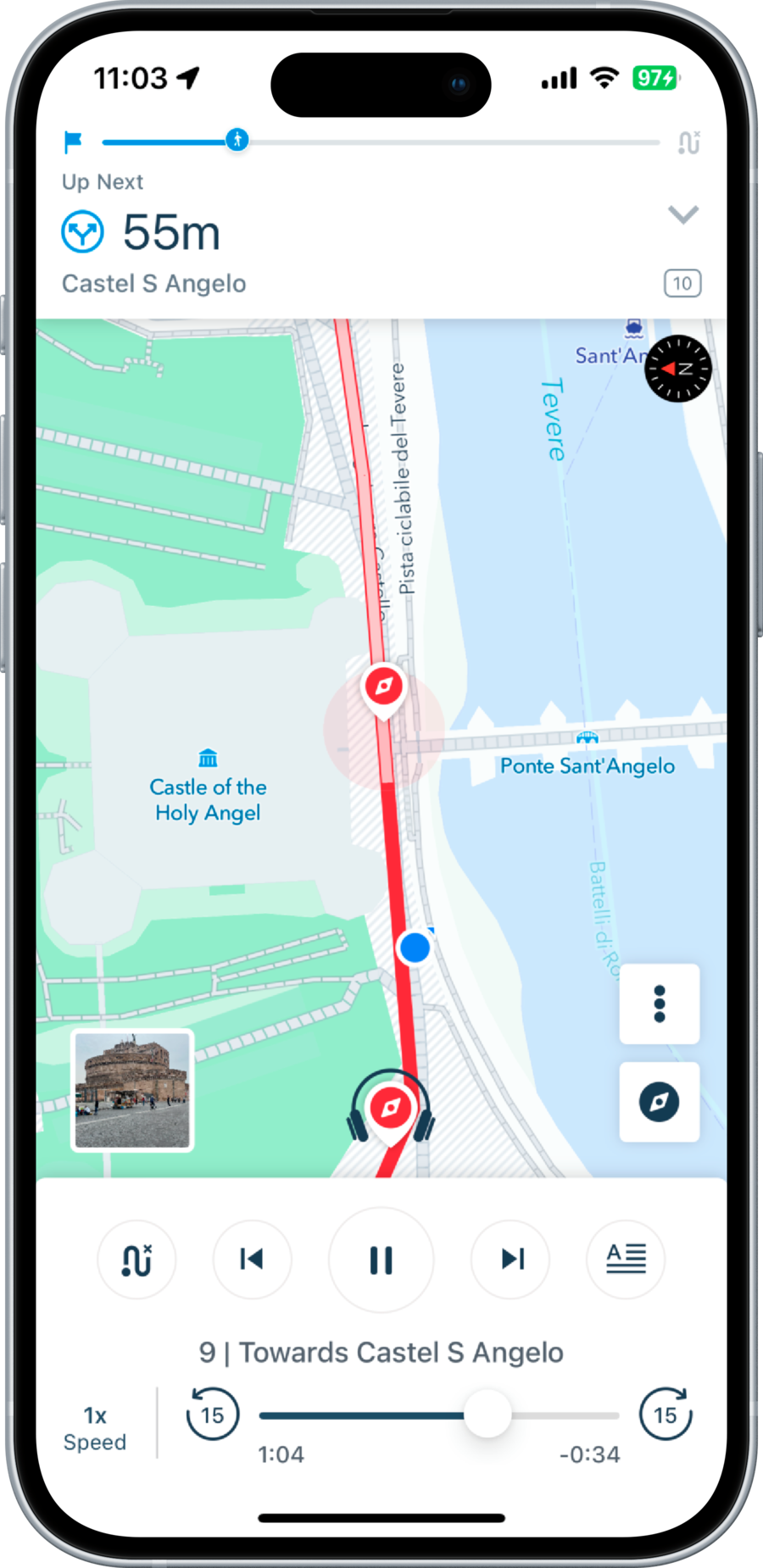
- Get turn-by-turn directions


Scan to get app
Download the app for free
VoiceMap




 App of the Day

 Editor’s Choice







Itchy feet? Us too
VoiceMap’s newsletter scratches that itch and stimulates your senses,
every fortnight. Curiosity is the only currency you need to subscribe.

Exploring is easier with a VoiceMap account
To purchase tours, add them to a wishlist, or access them with the VoiceMap app, please sign in or create a VoiceMap account


Exploring is easier with a VoiceMap account
To purchase tours, add them to a wishlist, or access them with the VoiceMap app, please sign in or create a VoiceMap account