




ATTRACTION
The Terrazza del Pincio,
Rome

About
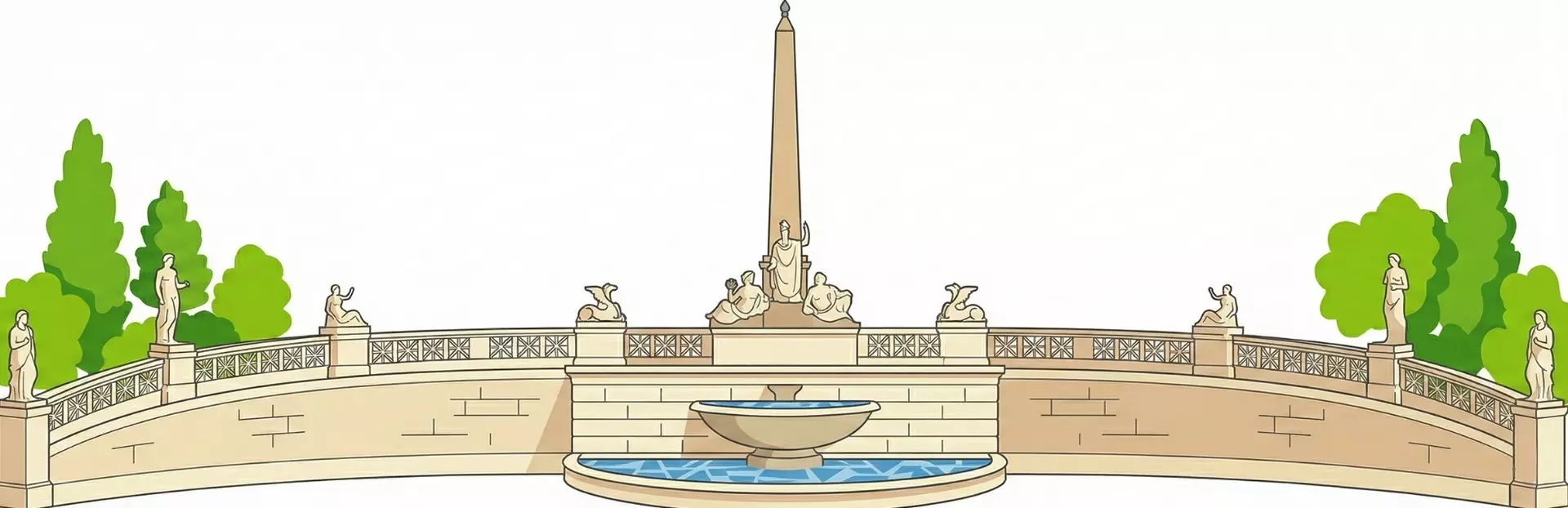
The Terrazza del Pincio offers Rome's finest sunset view, looking down over Piazza del Popolo to St. Peter's dome in the distance. Napoleon commissioned French architect Giuseppe Valadier to transform the hilltop into a public park between 1810 and 1834, though Napoleon himself never visited Rome.
The result was the city's first public gardens, complete with formal walkways, 228 marble busts of Italian heroes lining the paths, and a water clock that refused to leave its packing crate at the 1867 Paris Exposition. Dominican friar Giovanni Battista Embriaco designed the hydrochronometer that year, but Parisians feared breaking it. The clock finally arrived in Rome in 1873, where it still ticks inside a fairytale turret on an island in a pond along Viale dell'Orologio.
The ancient Romans called this spot Collis Hortulorum, the Hill of Gardens, when Lucullus hosted legendary banquets in his terraced villa here. Nero's ashes were buried on the slope. Giuseppe Mazzini later insisted that the promenades be lined with busts of Italian artists and Risorgimento heroes, from Giordano Bruno to Bernini, though Pope Pius IX vetoed anyone he deemed an atheist.
VoiceMap's literary tour begins at the terrace, following writers from Keats to Gogol who made Rome their creative home, tracing the Spanish Steps gathering places where they drank coffee and met fellow expatriates, connecting the fountain that inspired Keats's epitaph to the Protestant Cemetery where both he and Shelley lie buried.
The result was the city's first public gardens, complete with formal walkways, 228 marble busts of Italian heroes lining the paths, and a water clock that refused to leave its packing crate at the 1867 Paris Exposition. Dominican friar Giovanni Battista Embriaco designed the hydrochronometer that year, but Parisians feared breaking it. The clock finally arrived in Rome in 1873, where it still ticks inside a fairytale turret on an island in a pond along Viale dell'Orologio.
The ancient Romans called this spot Collis Hortulorum, the Hill of Gardens, when Lucullus hosted legendary banquets in his terraced villa here. Nero's ashes were buried on the slope. Giuseppe Mazzini later insisted that the promenades be lined with busts of Italian artists and Risorgimento heroes, from Giordano Bruno to Bernini, though Pope Pius IX vetoed anyone he deemed an atheist.
VoiceMap's literary tour begins at the terrace, following writers from Keats to Gogol who made Rome their creative home, tracing the Spanish Steps gathering places where they drank coffee and met fellow expatriates, connecting the fountain that inspired Keats's epitaph to the Protestant Cemetery where both he and Shelley lie buried.

Tours featuring the Terrazza del Pincio (2)

Architecture
Medieval History
Ancient History
Follow popes, fictional characters and artists through the Eternal City

 Walking Tour
|
 120 mins
Literature
Neighbourhoods
Top Sights
Find inspiration along the same streets that influenced literary legends
 Walking Tour
|
90 mins
Download the app for free
VoiceMap
- Download tours to use them offline
- Listen hands-free with GPS playback
- Get turn-by-turn directions


Scan to get app
Download the app for free
VoiceMap




 App of the Day

 Editor’s Choice







Itchy feet? Us too
VoiceMap’s newsletter scratches that itch and stimulates your senses,
every fortnight. Curiosity is the only currency you need to subscribe.

Exploring is easier with a VoiceMap account
To purchase tours, add them to a wishlist, or access them with the VoiceMap app, please sign in or create a VoiceMap account


Exploring is easier with a VoiceMap account
To purchase tours, add them to a wishlist, or access them with the VoiceMap app, please sign in or create a VoiceMap account