






A Split Sightseeing Tour: Diocletian's Palace to French Boulevards




 Buy for a Group
 Reviews
 About the Tour
 About the Tour
Split isn't just another ancient Mediterranean city—it's a living historical tapestry where each stone tells a story of transformation. On this walking tour, you'll discover how Emperor Diocletian's retirement palace (now a UNESCO World Heritage site) evolved into a vibrant medieval city, exploring 1,700 years of continuous adaptation as Roman temples became Christian churches, imperial corridors transformed into bustling streets, and defensive walls morphed into the foundations of homes and shops.
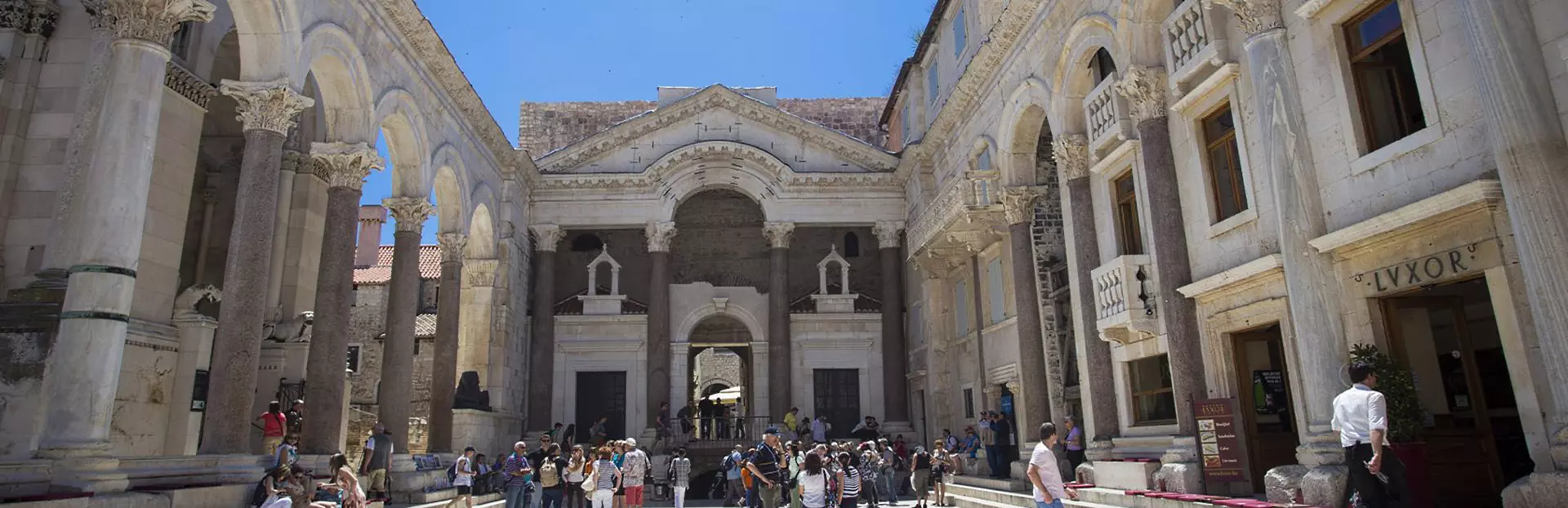
Starting at the bronze model of old town Split near the Bronze Gate, you'll enter Diocletian's Palace through its remarkably preserved southern wall. You'll wander through atmospheric basement halls that mirror the emperor's living quarters above, then emerge into the magnificent Peristyle Square—the heart of the palace complex. Here, you'll see how imperial Roman architecture has been creatively repurposed over the centuries, with noble family homes built directly into ancient colonnades.
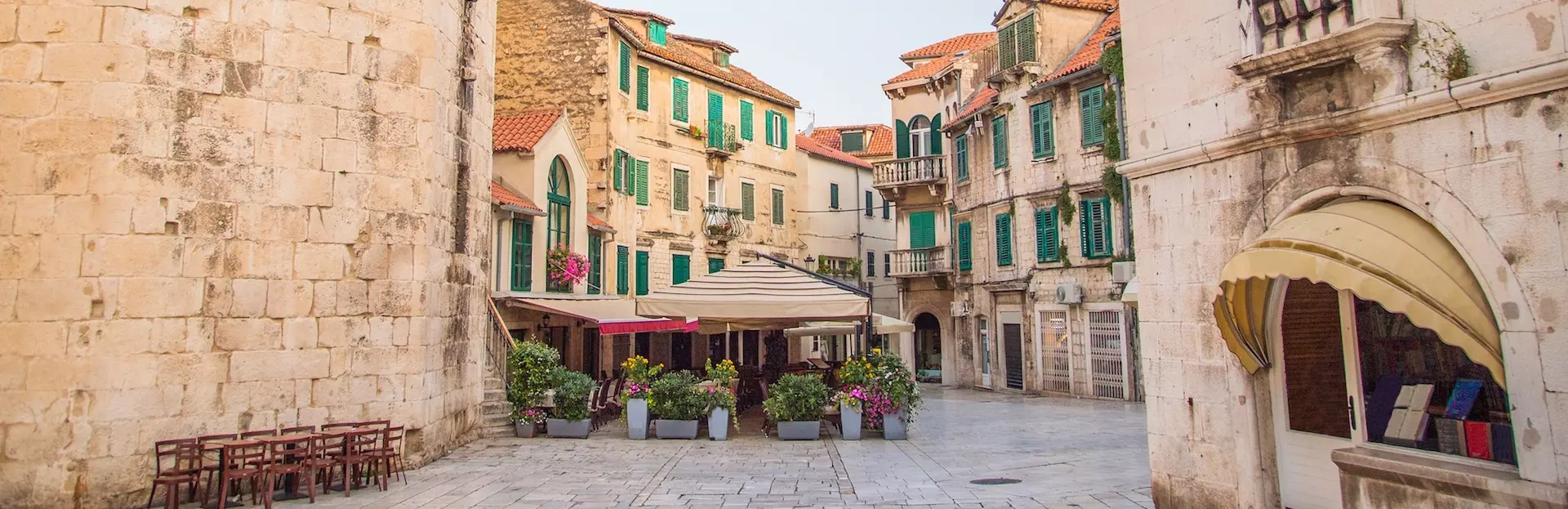
Along the way, you'll encounter 3,600-year-old Egyptian sphinxes brought to honor Diocletian, explore the emperor's mausoleum that ironically became a cathedral honoring a saint he executed, and discover the hidden Jewish quarter with its 16th-century synagogue. The tour ends at picturesque Fruit Square, where a statue of Croatian literary pioneer Marko Marulić stands near the remains of a 15th-century Venetian fortress, perfectly embodying Split's blend of cultural influences.
On this 90-minute journey through time, you'll have a chance to:
- Touch the toe of Bishop Gregory's massive bronze statue for good luck, a local tradition dating back to the 1950s
- Admire the grand Peristyle's impressive Egyptian granite columns, transported directly from Thebes at Diocletian's command
- Walk along the original Roman Decumanus and Cardo streets, still serving as main thoroughfares after 17 centuries
- Explore the remarkably preserved Gothic-Renaissance Papalić Palace, masterwork of Croatia's greatest 15th-century builder
- Visit one of Europe's oldest continuously active synagogues, dating to the early 1500s in the former Jewish Quarter
- See the elaborate six-arched windows of the Cipriani family palace, featuring rare architectural details
- Discover the Art Nouveau Nakić House from 1906, representing Austrian influence in Split's architectural landscape
- Stroll along the Riva promenade, created by French rulers who transformed demolition materials into Split's beloved
living room
Whether you're fascinated by ancient Roman engineering, medieval adaptation, or simply the Mediterranean joie de vivre evident in Split's café culture, this tour reveals how history has shaped—and continues to shape—this remarkable Croatian city.
Tour Producer
 Tour Producer

Ivica Profaca

My name is Ivica Profaca, from Split, Croatia. I am a licensed English guide for Split‑Dalmatia County and Šibenik-Knin County, and a member of the Association of Tourist Guides Split. For years I’ve worked with leading local and international agencies and contribute to different publications of the Tourist Board Split.
Before guiding I spent nearly 30 years as a journalist, which keeps me closely connected to all aspects of the city’s life. Today, I still write as a freelancer in several media, mostly travel stories. I’m passionately interested in Split’s history, heritage and social life, and I never stop exploring its squares, street corners, people, events, and nearby biking and hiking paths.
On my tours you’ll discover Split’s priceless heritage—from Diocletian’s era to the present—along with hidden gems and the local spirit only residents know. I also offer excursions to the surrounding area, rich in UNESCO sites, historical landmarks, natural beauty and outdoor activities. Welcome to Split, Dalmatia and Croatia!
Save with Split audio tour passes
How do passes work?

Preview Location
 Preview Location
Location 35
Prokurative Square
Walk to its centre, so you can see the whole place, and stop there.
This is Prokurative, officially Re...
 View locations and route

How VoiceMap Works







Major Landmarks
 Major Landmarks
-
Diocletian's Palace
-
Jupiter's Temple
-
Jupiter's Temple
-
Split Riva
-
Peristil
-
Saint Domnius Cathedral
-
Split Synagogue
-
Golden Gate
-
Monument to Gregory of Nin
-
Vestibul
-
Iron Gate
-
Silver Gate
-
Split City Museum
-
People's Square
-
Fishmarket
-
Republic Square
Getting There
 Getting There
Route Overview
-
Start locationObala Hrvatskog narodnog preporoda 23, 21000, Split, Croatia
-
Total distance2km
-
Final locationTrg Braće Radić 5, 21000, Split, Croatia
-
Distance back to start location124.06m


Directions to Starting Point
Tour start: Obala Hrvatskog narodnog preporoda 23, 21000, Split
The tour begins at the eastern-most end of the main waterfront promenade Riva, by the bronze model of the old town of Split.
It's placed just next to the parking lot, and opposite from the entrance to Diocletian's Palace basement halls. If you walk, you can approach it across the promenade, or - if coming from the harbour, just walk by the sea until you see the model at the beginning of recently renovated promenade.
 Show Directions




Tips
 Tips
Tips
Places to stop along the way
This tour doesn't include any visits to ticketed venues, which you can visit by pausing or closing off the tour. I recommend a visit to both wings of the Basement Halls, Cathedral with Baptistery/Jupiter's Temple, Split City Museum, Ethnographic Museum, Gallery of Fine Arts. Very attractive as view points are Cathedral's bell tower (currently under reconstruction), and terrace on top of the Vestibule, accessible through the Ethnographic Museum. You can also go off the path to visit the green market next to the Palace's Eastern Gate, with plenty of seasonal and local fruit and vegetables. There are many spots for a refreshment or meal break. Look especially for coffee drinking spots in the area of the Old Jewish Ghetto, mostly locals-oriented. For restaurants, a konoba (local version of a tavern or trattoria) is always a good choice. Public toilets are available en route and well marked, but you can also ask for it in bars and cafes.
Best time of day
During the summer season, take a tour earlier in the morning, preferably between 8 and 9 am, to avoid the heat and crowds. Evenings are not a good option, because the old town is usually very busy. For the rest of the year avoid mid-day. Mornings and early afternoon (to avoid dark) are the best options.
Precautions
During more crowded parts of a day avoid bigger groups for a better experience and safety. On your way you will pass through some indoor sections, and narrow streets are common. Be careful with your belongings because of pickpockets, which are not very common, but they do operate. If you walk on a sunny day, wear a hat because there are long sections of outdoor walking. Wear comfortable shoes, old town pavements are not suitable for longer walks in high heels. Around the Palace there are stairs which can't be avoided. Walk on your own pace and abilities.
Get The App
 Get The App




Scan to get app
Download the app for free
VoiceMap




 App of the Day

 Editor’s Choice


Last Updated
 Last Updated
Questions and Reviews
 Questions and Reviews