





ATTRACTION
Plaza de España,
Seville

About
Plaza de España was built for an exhibition that never quite happened on time.
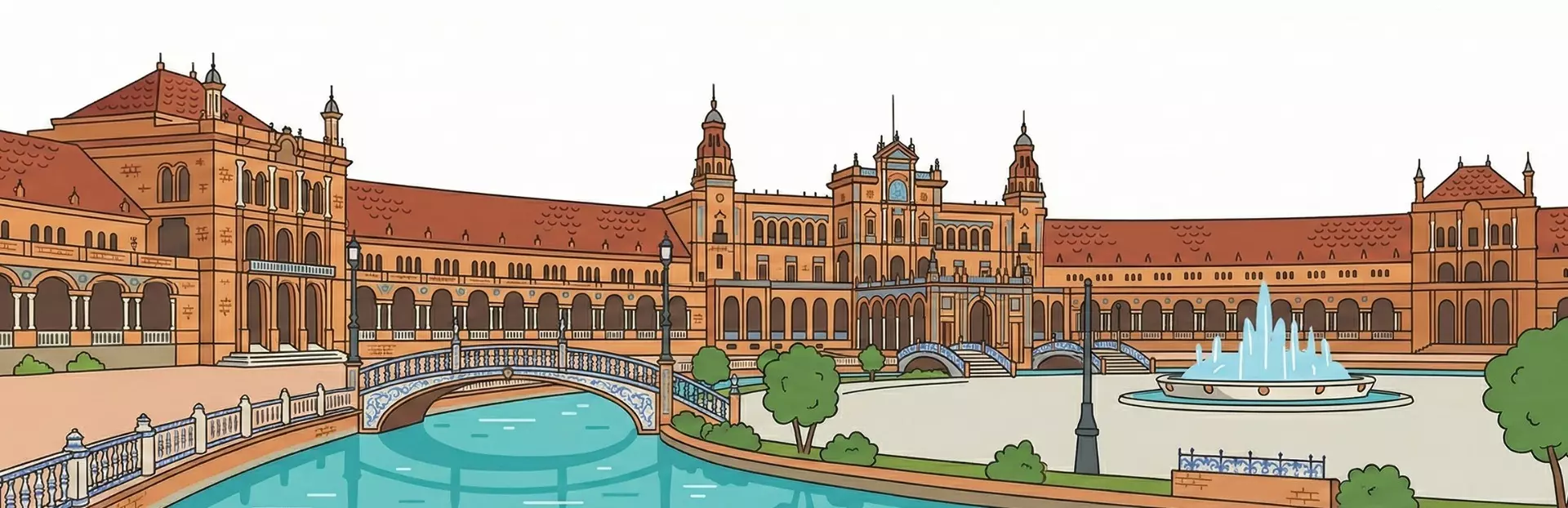
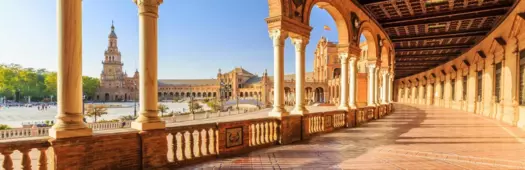
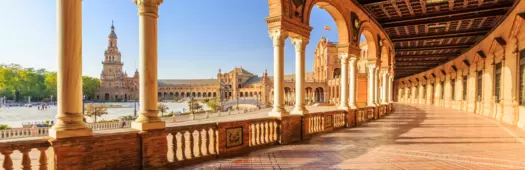
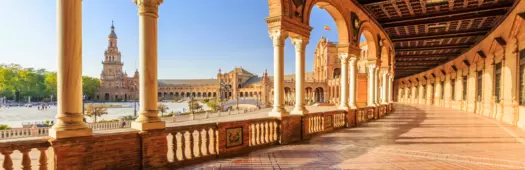
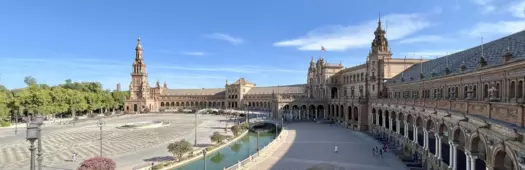
Anibal González began designing this vast semicircular plaza in 1914, intending it as the centrepiece for the 1929 Ibero-American Exposition. 15 years later, it emerged as one of Spain's most ambitious architectural projects: 50,000 square metres of exposed brick, ceramic tilework and Neo-Mudéjar detail arranged around a canal crossed by four bridges representing Spain's medieval kingdoms.
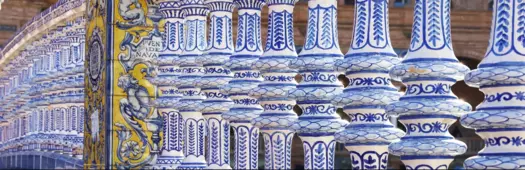
The plaza's most curious feature sits at ground level. Forty-eight ceramic alcoves run along the base, each dedicated to a Spanish province and illustrated with historical scenes. Seville gets special unmarked panels throughout rather than a single dedicated bench. The canal González designed curves around the building, representing Spain's embrace of its former colonies.
VoiceMap's self-guided audio tours explain how González used this architectural theatre to compress Spanish history into a single walkable space, revealing the stories behind each provincial mosaic and the symbolism embedded in bridges and towers.
Anibal González began designing this vast semicircular plaza in 1914, intending it as the centrepiece for the 1929 Ibero-American Exposition. 15 years later, it emerged as one of Spain's most ambitious architectural projects: 50,000 square metres of exposed brick, ceramic tilework and Neo-Mudéjar detail arranged around a canal crossed by four bridges representing Spain's medieval kingdoms.
The plaza's most curious feature sits at ground level. Forty-eight ceramic alcoves run along the base, each dedicated to a Spanish province and illustrated with historical scenes. Seville gets special unmarked panels throughout rather than a single dedicated bench. The canal González designed curves around the building, representing Spain's embrace of its former colonies.
VoiceMap's self-guided audio tours explain how González used this architectural theatre to compress Spanish history into a single walkable space, revealing the stories behind each provincial mosaic and the symbolism embedded in bridges and towers.

Tours featuring Plaza de España (5)

Architecture
UNESCO Sites
Medieval History
Discover the magic of Sevilla through its history, legends and iconic places.

 Walking Tour
|
 90 mins
UNESCO Sites
Modern History
Religious Sites
Descubre la magia de Sevilla a través de su historia, leyendas y lugares icónico
Walking Tour
|
90 mins
UNESCO Sites
Modern History
Architecture
我们将游览这个城市最重要的地方,并身临其境在这座城市的历史之中,同时了解这座神奇的城市她的历史和传说
Walking Tour
|
90 mins
Architecture
Neighbourhoods
Medieval History
Navigate narrow alleys where devils forged iron and Don Juan seduced souls
 Walking Tour
|
150 mins
Architecture
Medieval History
Colonial History
Unravel centuries of Spanish conquest and culture via this landmark's ceramics

 Indoor Tour
|
60 mins
Download the app for free
VoiceMap
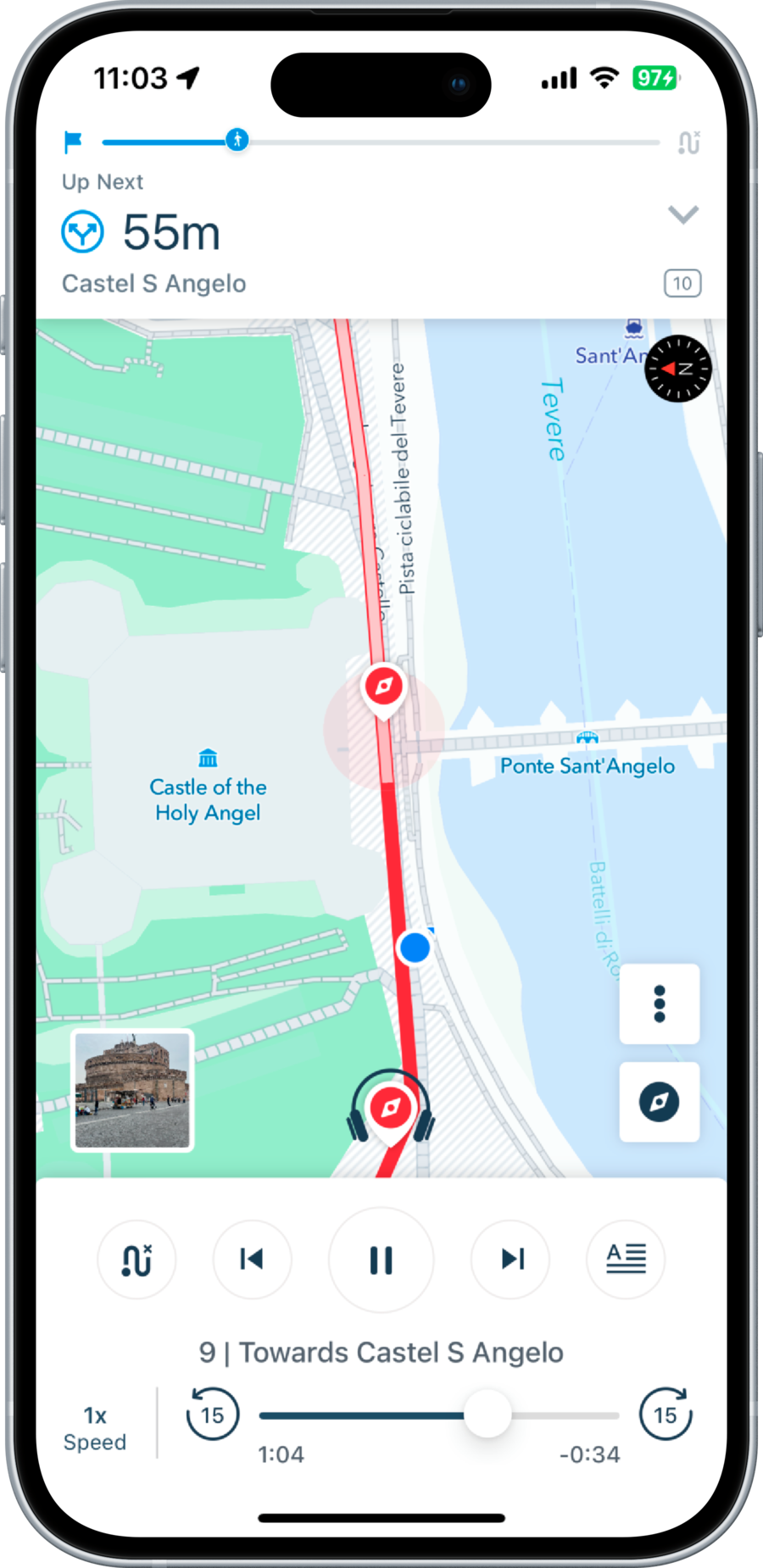
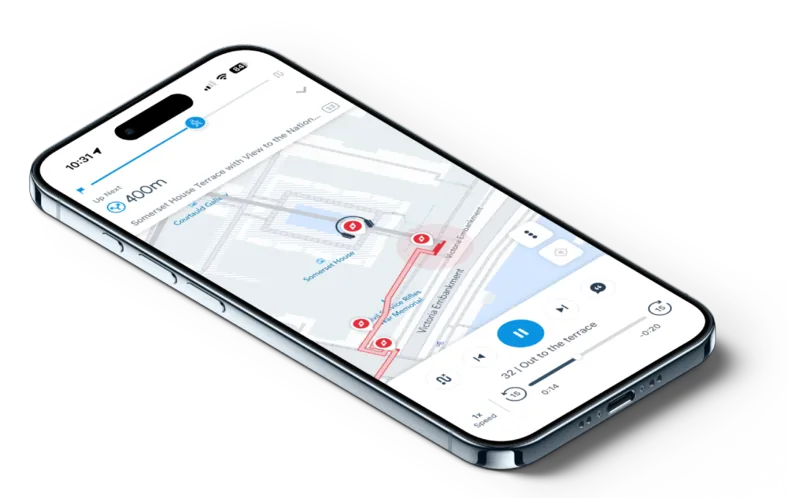
- Download tours to use them offline
- Listen hands-free with GPS playback
- Get turn-by-turn directions


Scan to get app
Download the app for free
VoiceMap




 App of the Day

 Editor’s Choice






Itchy feet? Us too
VoiceMap’s newsletter scratches that itch and stimulates your senses,
every fortnight. Curiosity is the only currency you need to subscribe.

Exploring is easier with a VoiceMap account
To purchase tours, add them to a wishlist, or access them with the VoiceMap app, please sign in or create a VoiceMap account


Exploring is easier with a VoiceMap account
To purchase tours, add them to a wishlist, or access them with the VoiceMap app, please sign in or create a VoiceMap account