British Museum Audio Guide: Assyria, Athens and Easter Island




 Buy for a Group
 Reviews
 About the Tour
 About the Tour
The British Museum holds roughly eight million objects. This tour looks closely at a handful of them. On this walking tour, you'll examine what stone sculptures from Assyria, Greece, Egypt, and Rapa Nui reveal about power, beauty, and who gets to define both. You'll also hear how those same objects ended up in a museum in London.
The tour starts in the Great Court, the museum's glass-roofed central space, before heading into the Assyrian galleries. There, you'll encounter the lamassu – towering winged guardians from the North-West Palace at Nimrud – and the Lion Hunt reliefs from Ashurbanipal's palace at Nineveh, where a closer look reveals that the hunt
was a carefully staged royal performance. You'll also explore a case for locating the legendary Hanging Gardens not in Babylon, but in Assyria.
From there, the tour moves into Room 18, the Parthenon Galleries, where the sculptures raise harder questions about whose bodies were idealised, whose labour went unacknowledged, and how a building funded by an imperial treasury became the ancient world's most celebrated monument. A brief stop at the Rosetta Stone follows before the tour ends at Hoa Hakananai'a, a moai from Rapa Nui – Easter Island – whose carved back tells a story about a seafaring people, a vanished forest, and a belief system that outlasted the conditions that made it possible.
On this tour, you'll have a chance to:
- Spot the rosette bracelet that identifies the Assyrian king in his palace reliefs
- Examine the cage scene in the Lion Hunt, where a worker releases lions directly into the king's arena
- See the back of the Ilissos statue, finished in extraordinary detail despite being hidden from view
- Hear why the centaurs on the Parthenon's south metopes were carved by the same hand as the heroes fighting them
- Learn how Lord Elgin's removal of the Parthenon sculptures was contested from the moment it happened
- Discover why recent research is revising the story of Rapa Nui's collapse
This is a tour for people who want to look again – at objects they may have walked past before, and listen to what those objects are quietly saying.
Tour Producer
 Tour Producer
Loonie | London on Tape

I am a London-based journalist and independent audio guide creator. For the past five years, I worked as a journalist at the BBC World Service, covering current affairs.
Before that, I wrote travel and cultural books about cities including London, New York, India, and the Nordic countries, and worked as a features editor for Vogue Korea and Harper’s Bazaar Korea.
My audio guides follow a journalist’s way of looking — noticing details, asking questions, and connecting ideas as we walk. Each tour moves through streets and museums with curiosity and attention, showing how stories build from one place to another.
This approach comes together through London on Tape, an ongoing project exploring museums, archives, and urban spaces in the UK.
Save with Passes
 How do passes work?


Preview Location
 Preview Location
Location 17
Room 18 - Seated Gods
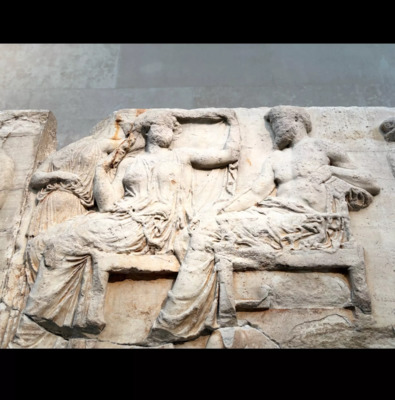
On the left are the cattle. In the centre are the seated gods and the women connected with Athena’s robe.
On the right are the riders.
These central panels come from the east frieze, the section that once stoo... Read More
 View locations and route

How VoiceMap Works





Major Landmarks
 Major Landmarks
-
The British Museum
Getting There
 Getting There
Route Overview
-
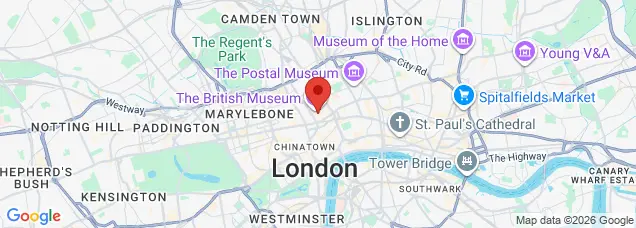
Start locationGreat Russell St, London WC1E 7JW, UK
-
Total distance0m
-
Final locationGreat Russell St, London WC1B 3DG, UK
-
Distance back to start location0m


Directions to Starting Point
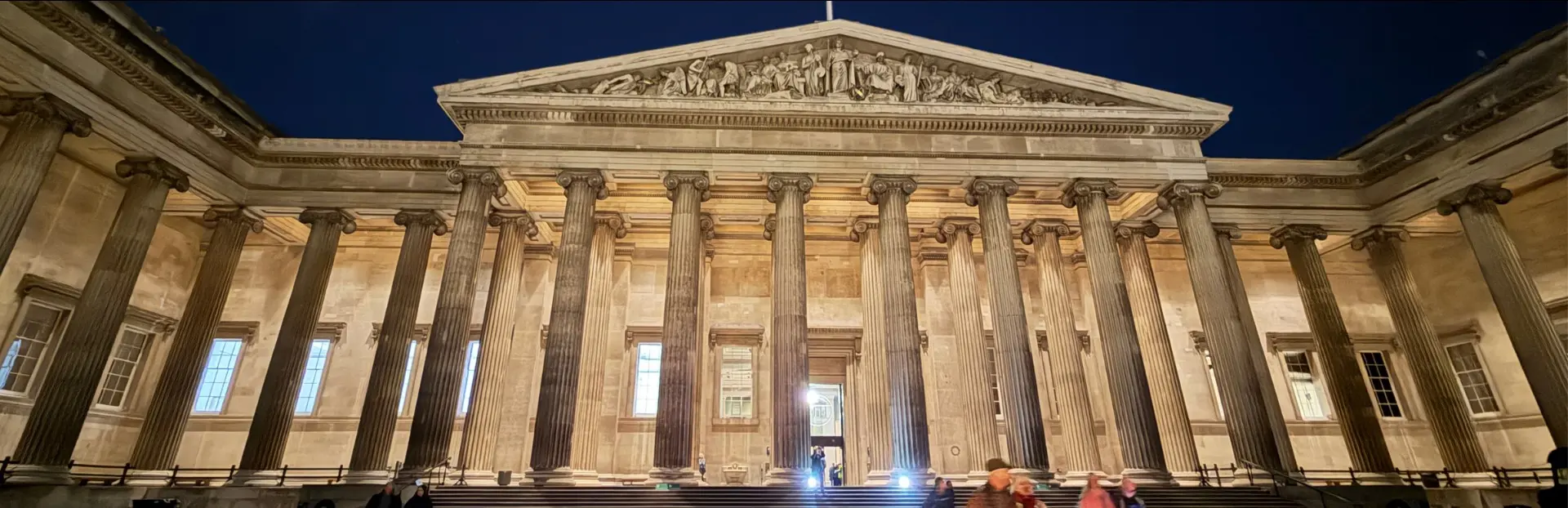
Start outside the British Museum, after you have passed through the security check at the main entrance on Great Russell Street. Stand in the open courtyard facing the museum entrance, with the steps directly ahead of you. This tour does not start from the Montague Place entrance on the opposite side of the museum.
 Show Directions


Tips
 Tips
Tips
Places to stop along the way
The British Museum has cafés, toilets, cloakroom facilities, and seating areas around the Great Court. You may want to pause there before or after the tour. The tour also passes through several major galleries, so you can return to any room afterwards for a longer look.
Best time of day
This tour can be done during the British Museum's opening hours. Weekday mornings or late afternoons are usually quieter. Allow extra time during weekends, school holidays, and bank holidays, when the museum can be very crowded.
Precautions
The tour is entirely indoors, but some galleries can be busy. Please keep your belongings close and avoid blocking entrances while listening. Food and drink are not allowed in the galleries.
Get The App
 Get The App





 Last Updated
 Questions and Reviews