






Fushimi Inari Shrine: An In-Depth Guide




 Buy for a Group
 Reviews
 About the Tour
 About the Tour
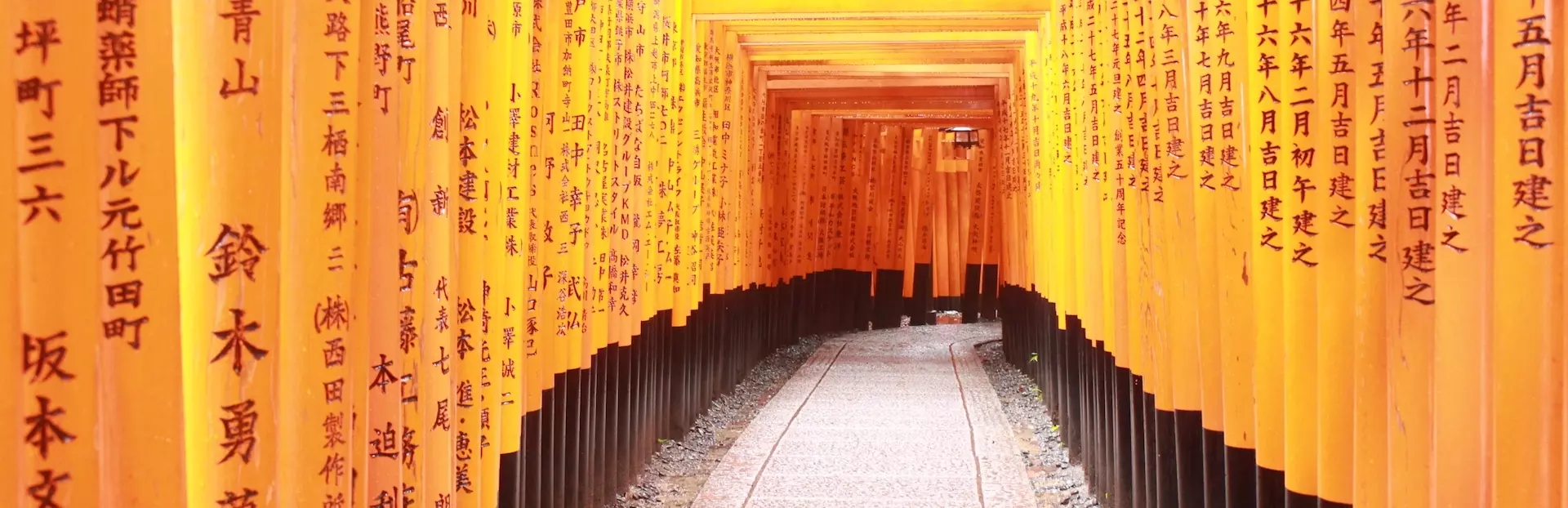
Fushimi Inari Shrine stands as one of Japan's most iconic sacred sites, famous for its thousands of vermilion torii gates winding up a forested mountain. On this self-guided walking tour, you'll delve into the deep cultural significance of this 1,300-year-old Shinto shrine dedicated to Inari, the god of rice, prosperity, and business success. Along the way, you'll discover how Japanese religious practices blend seamlessly with everyday life and learn the fascinating stories behind the shrine's most significant features.
The tour starts at the shrine entrance, where you'll be greeted by fox statues – the messengers of Inari – each holding different symbolic items in their mouths. You'll pass through the first of many torii gates, learn proper Shinto prayer etiquette, and participate in the hand-washing ritual that purifies visitors before entering sacred ground. As you weave through the shrine's main buildings and begin your journey under the famous Senbon Torii (thousand gates), you'll gain insight into the harmonious relationship between nature and human-made beauty that defines Japanese aesthetics.
You'll discover how each vermilion gate represents a fulfilled wish and a donation from a grateful worshipper, creating a pathway literally formed from thousands of dreams come true. As you explore the hidden areas of the shrine complex, you'll encounter unique features like the Root Up Pine Tree,
said to bring good fortune, and discover the thousands of personal stone monuments called Tsuka
scattered throughout the mountain. The tour ends near a tranquil pond, where you can choose to continue farther up the mountain or return to the main entrance.
During this 45-minute tour, you'll have a chance to:
- Learn the difference between Shinto shrines and Buddhist temples, and how these religions coexist in Japanese culture
- Discover the significance of the fox statues and what each one symbolizes through the different objects in their mouths
- Participate in traditional Shinto rituals including the proper way to pray at a Japanese shrine
- Explore the famous path of thousands of vermilion torii gates and learn why they were donated
- Find out how the concept of
wabi-sabi
(the beauty of imperfection) shapes Japanese aesthetic values - Visit the
Root up Pine Tree,
believed to bring business success and good fortune - Uncover the origin story of the shrine involving a warrior, a rice cake, and a mysterious white bird
- Discover hidden areas of the shrine complex where visitors can experience a more peaceful atmosphere
This self-guided tour offers more than just spectacular photo opportunities – it provides cultural context that transforms your visit into a meaningful experience that connects you to centuries of Japanese tradition and spirituality.
Tour Producer
 Tour Producer

Masaki Makoon Mori

Traveling can change the world.
It's my passion to support you making some great memories in Kyoto and Japan.
A National Government Licensed Guide Interpreter since 2016.
Guide Instructor of Kyoto City's Licensed Guide Interpreter.
Over 100 private tours a year, over 90% come by referral or returning.
Sharing history, culture, nature, modern, touristy, highlights, good or bad, everything about Japan.
Professional Dancer.
A Father of 2 children.
Sake/Beer/Ramen/Beef/Chicken...Food Lover.
Save with Kyoto audio tour passes
How do passes work?

Preview Location
 Preview Location
Location 5
Fox and Rice
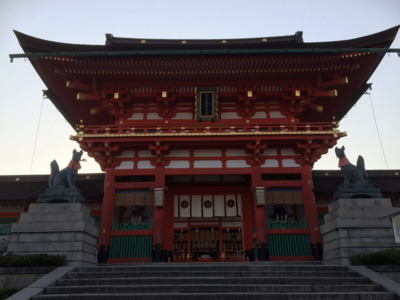
Do you notice two statues of foxes on the side?
What are they holding in their mouths?
Facing the gate, the right one is holding a ball, representing a spirit of god, giving you blessings.
The left one is holding a...
 View locations and route

How VoiceMap Works







Major Landmarks
 Major Landmarks
-
Fushimi Inari Shrine
-
Senbon Torii (Thousand Torii Gates)
-
Omokaru Stone
Getting There
 Getting There
Route Overview
-
Total distance1km
-
Distance back to start location707.54m


Directions to Starting Point
Start: Fukakusa Inarionmaecho, Fushimi Ward, Kyoto, 612-0881, Japan
The tour starts next to the statue of fox beside a big red Torii Gate across from JR Inari station
 Show Directions




Tips
 Tips
Tips
Places to stop along the way
Nice morning coffee at Kurasu Coffee, about 5mins walk from the shrine.
Also JR Inari station is good to go to Kyoto station area, but if you'd like to continue to the downtown area, use Keihan Fushimi Inari station.
Best time of day
Early morning. It gets busier after 9am. If you want a quiet and serene feel with pictures alone, 8am or even earlier.
Precautions
Some stairs, and mild slopes and unpaved paths with gravels.
Get The App
 Get The App





Scan to get app
Download the app for free
VoiceMap




 App of the Day

 Editor’s Choice


Last Updated
 Last Updated
Questions and Reviews
 Questions and Reviews