






Córdoba: A Guide to Its Islamic, Christian and Jewish Past




 Buy for a Group
 Reviews
 About the Tour
 About the Tour
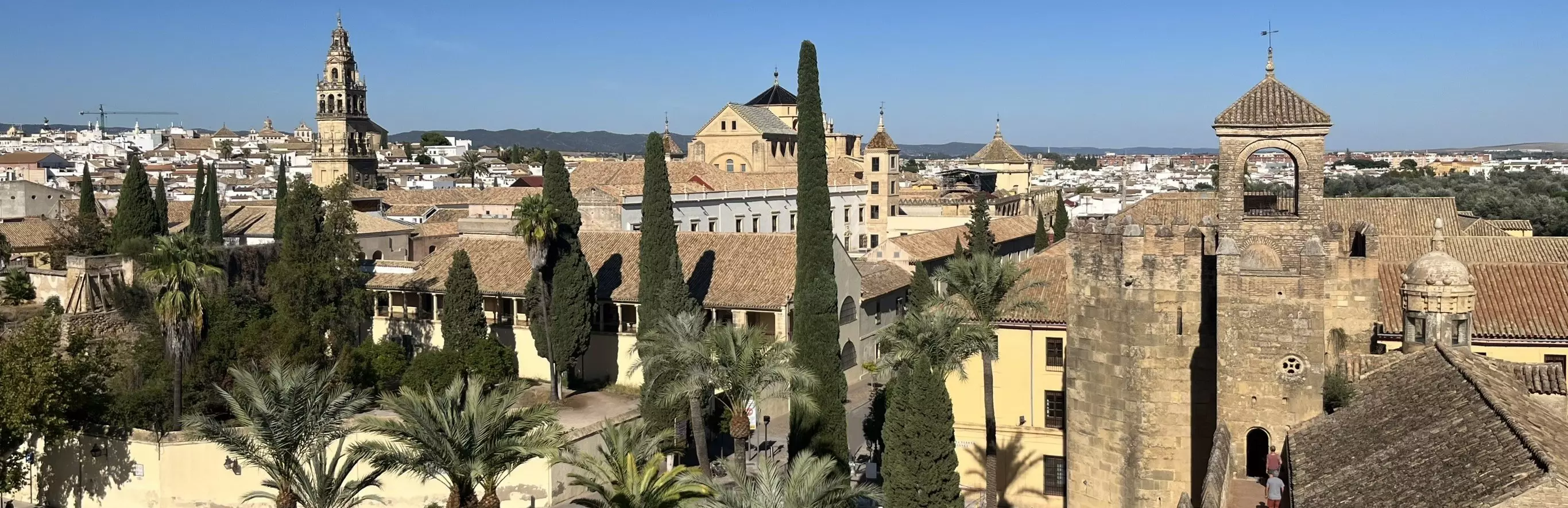
In the early Middle Ages, Córdoba was the thriving capital of the Caliphate of Córdoba, and by far the largest city in Western Europe. Its UNESCO-listed historic centre once thronged with Muslims, Christians, and Jews. On this walking tour, you’ll follow the same little-changed streets and maze-like alleyways that those three cultures walked in Medieval times.
The tour starts outside the magnificent Mosque-Cathedral‘s bell tower. You‘ll skirt around the walls of the Patio de los Naranjos (Orange Tree Courtyard) and the Great Mosque, and pass through Puerta del Puente (Bridge Gate) on your way to Puente Romano (Roman Bridge).
Along the way, I‘ll tell you about Abd al-Rahman I, the remarkable man who ordered the construction of the Great Mosque. You‘ll also explore the old Jewish quarter‘s labyrinthine streets, and learn about some of the fascinating figures who lived there, including Sephardic rabbi and philosopher, Maimonides, and the Andalusian jurist, Averroes. The tour ends in the beautiful Calleja de las Flores, with a view of the Mosque-Cathedral‘s bell tower between the flower-decorated balconies and windows.
On this 75-minute tour, you‘ll:
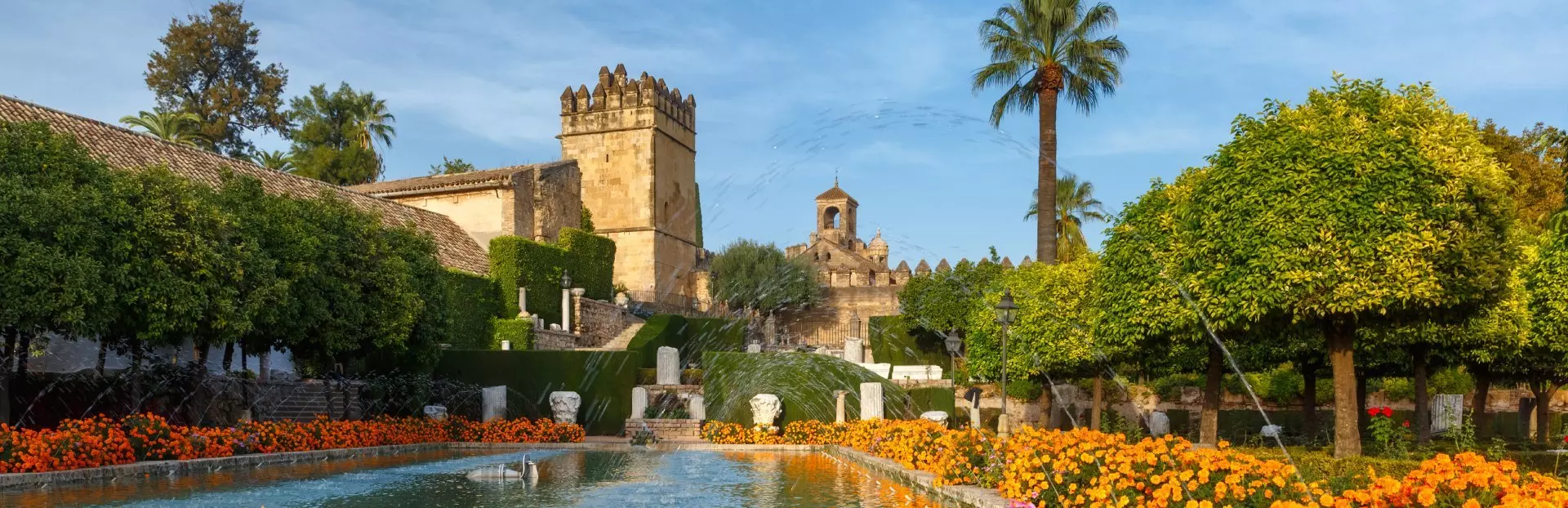
- See the imposing Alcázar de los Reyes Cristianos (the Castle of the Christian Monarchs), the finest expression of the city‘s Christian heritage, built after they conquered the city in 1236
- Pass Córdoba Synagogue and Capilla Mudéjar de San Bartolomé (Chapel of San Bartolomé), both famous for their intricate craftsmanship
- Visit beautifully restored medieval houses like Casa Árabe
- Find out why Isabella I of Castile ordered the city‘s famous waterwheel, Molino de la Albolafia, to be dismantled
- Follow the events that led to angry citizens storming the Alcázar in 1506, and freeing 400 prisoners
- Hear how the small tower on the top of the Alcázar‘s keep was used during the Inquisition
- Guess who was discovered hiding in the wood store of Baños del Alcázar Califal (the Caliphal Baths), and what happened to him afterwards
- Discover how Alfonso X‘s complicated love life led to civil war after his death
By the end of this tour, you‘ll have seen the city‘s highlights and found out about the Muslim, Christian and Jewish communities who lived there in the Middle Ages. Along the way, you‘ll see how the legacy of these three cultures still infuses Córdoban cuisine, architecture and handicrafts today.
Tour Producer
 Tour Producer

Ben Barclay

When I moved to Granada in 2006, I initially intended to stay for a year or two. Maybe three or four at most. But like many people, I was captivated by the city’s history and culture, as well as its strategic location close to the sea and in the shadow of the imposing Sierra Nevada mountains. Having travelled widely before I came here, I knew that Granada was special. Little by little I became a local – a “Granaíno”. As well as enjoying everything Granada has to offer, I love exploring the cities and countryside of Andalucía, and my wife and I recently set up the travel website Andalucía Bound (andalucia-bound.com), which offers inspiration and practical advice for visitors to Andalucía. We're also keen hikers, and for fifteen years we've been running the website treksierranevada.com, with information about self-guided hikes in the Sierra Nevada.
In 2011, I co-founded the educational publisher LinguaFrame S.L., which produces textbooks in English for Spanish secondary schools, and I'm the author and editor of fifteen history, geography and science textbooks. I also work as a government-authorised translator, with my specialist areas including historical and cultural texts for museums and advertising material related to tourism.
Save with Córdoba audio tour passes
How do passes work?

Preview Location
 Preview Location
Location 13
Torre del Homenaje
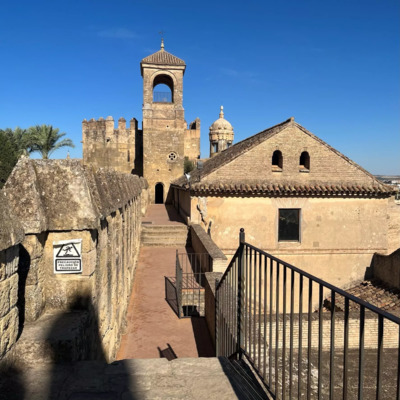
After conquering Granada, Isabella turned this castle into the local headquarters of the Inquisition. Palatial suites were converted into cells and offices.
The tower on the corner ahead of us is the so-called Tower...
 View locations and route

How VoiceMap Works





Major Landmarks
 Major Landmarks
-
Torre-campanario de la Mezquita-Catedral de Córdoba
-
Mosque-Cathedral of Córdoba

-
Puerta del Puente
-
Roman Bridge of Córdoba
-
Molino de la Albolafia
-
Alcazar of the Christian Monarchs
-
Baños del Alcázar Califal
-
Estatua de Maimónides
-
Córdoba Synagogue
-
Calleja de las Flores
Getting There
 Getting There
Route Overview
-
Start locationC. Cardenal Herrero, 1, Centro, 14003 Córdoba, Spain
-
Total distance2km
-
Final locationCalleja de las Flores, Centro, 14003 Córdoba, Spain
-
Distance back to start location123.73m


Directions to Starting Point
The tour starts by the Bell Tower of the Mosque-Cathedral of Córdoba on Calle Cardenal Herrero.
It’s about a 25 minute walk from the train and bus stations or a short taxi ride. If you’re arriving by car, there are various paid car parks on the edge of the historic centre, or free parking just across the river.
Please Note: If you would like to do a longer tour of Córdoba, check out our City of Caliphs: A Guide to Córdoba’s Layered History. It takes you further off the beaten track and delves into the city’s Roman history, food and drink, music, art and literature, as well as visiting its famous patios.
 Show Directions

Tips
 Tips
Tips
Places to stop along the way
Along the way, I’ll point out various sights you can go into (entry fees are not included in this tour). And you’ll never be far from a taberna, bar or café if you need to stop for refreshments.
In high season or if you only have a short time in Córdoba, I recommend booking tickets for the Mosque-Cathedral, Bell Tower and Alcázar of the Christian Monarchs in advance to ensure your preferred timeslots.
Best time of day
Any time, but mid-week is usually less crowded. Some sights are closed on Sunday afternoons and Mondays, as well as for a couple of hours in the middle of the day, so it's good idea to check opening times in advance.
In summer, I recommend doing the tour in the morning, before it gets too hot.
Precautions
We'll be walking along cobbled streets, so you'll need comfortable shoes. Sunblock and a bottle of water are also essential if the weather is warm and sunny, which it often is in Córdoba! In summer, I recommend doing the tour in the morning, before it gets too hot.
Get The App
 Get The App




Scan to get app
Download the app for free
VoiceMap




 App of the Day

 Editor’s Choice


Last Updated
 Last Updated
Questions and Reviews
 Questions and Reviews