Let’s embark on a guided walk that takes in Bucharest’s most iconic landmarks but also delves deeper, going beyond famous attractions to get under the skin of the city. This is a journey through Romanian history that will give you an understanding of this enchanting country and its past.
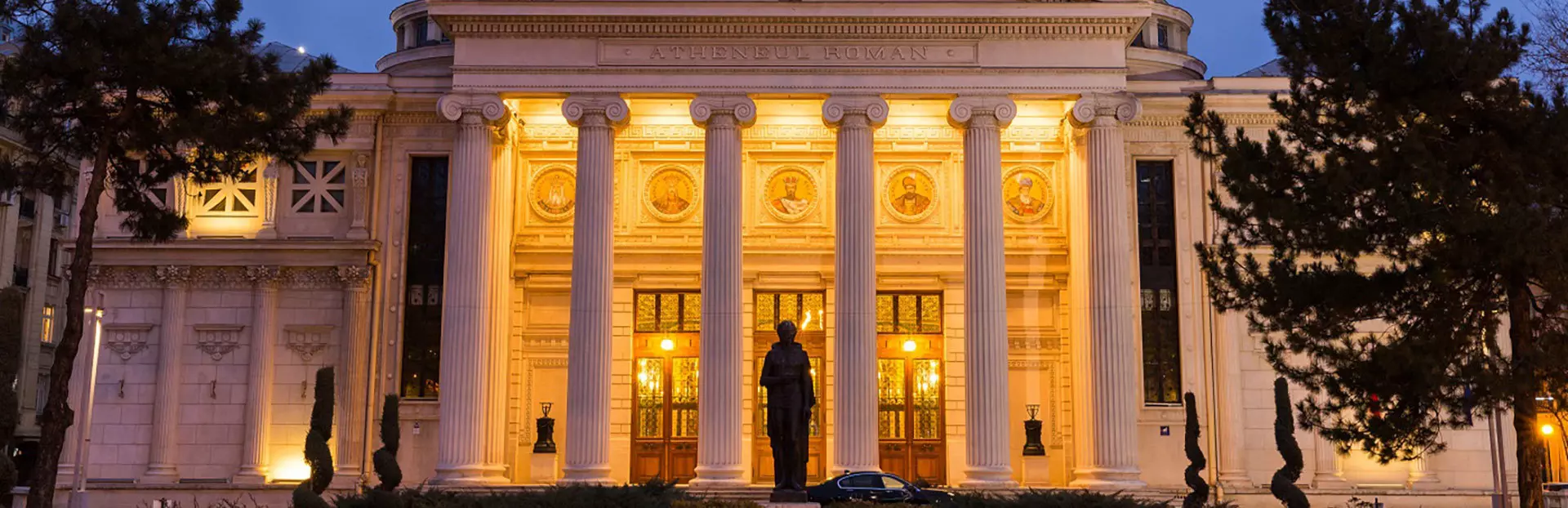
Our walking tour starts in front of the monumental Romanian Athenaeum which – though it could pass for a Greek temple – is a century-and-a-half old concert hall. From there we’ll make our way down Calea Victoriei, or ‘the Victory Way’, one of Bucharest’s best-known streets. It’s famous not only for its array of luxurious shops, but also its rich history. Along the way, we’ll wander past the balcony on which Romanian dictator Nicolae Ceaușescu gave his last speech before the fall of Communism. We’ll see the Royal Palace too, and discover the heritage that the monarchy left behind in Romania.
Our guided walk ends in the Old Town, where you’ll find the medieval ruins connected to ‘Vlad the Impaler’, the prince who inspired Dracula, and other dark and enticing stories of a bygone Bucharest.
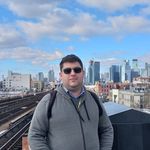
Hi! My name is Florin.
I was born and raised in Bucharest, Romania.
When I started to travel I was fascinated with Europe but especially with Romania!
I became a tour guide in Romania 6 years ago, and I started my own travel agency. Being a traveler and also a guide, I know how important it is the first impression a person has when he visits a foreign country. So I had the chance to design and offer amazing trips to those that visited Romania.
Please stop in front of this curious-looking structure. It's actually a monument dedicated to the heroes of the revolution, so for the over 1,000 people who were killed in 1989 here, in this square or in other spots all around Bucharest, while fighting to become free of oppres...
Please stop in front of this curious-looking structure. It's actually a monument dedicated to the heroes of the revolution, so for the over 1,000 people who were killed in 1989 here, in this square or in other spots all around Bucharest, while fighting to become free of oppression. It is called the Rebirth Memorial and symbolizes a crown of thorns, communism, being pierced by the pyramid of triumph.
Please go to the front of the monument so you can have a better look at the building in the front and stop for a few minutes so I can tell you about the communism in Romania.
You are in one of the most symbolic places in Romania from the last 3 decades: Revolution Square. This is where the events that led to the downfall of the communist dictator Nicolae Ceausescu unfolded in December 1989. Ceausescu who ruled Romania between 1965-1989 was the biggest tyrant in the Eastern Block.
As you probably know, starting from November 1989 the wind of change swept the countries in the Eastern Block starting from Germany when the Berlin Wall fell to Czechoslovakia to Hungary and the regimes there changed peacefully, with no bloodshed. Romanians were not so lucky and the regime was overtaken by a bloody Revolution, the only one in 1989, and a Putsch or Coup. It was the first televised revolution in the world, and Ceausescu was the only communist leader to have been executed.
The communists seized power from the king in 1947 and like everywhere else, it was the only party in the state for over 4 decades. Throughout the '40s and '50s, the communists abolished all other parties and crushed any opposition: anyone who was not with them was against them. Also in Romania, many people were arrested, beaten, sent to forced labor camps or prisons where they were treated inhumanely. Many people died, others simply disappeared. These were probably the most troubled, terrible years in Romanian history, and the terror pretty much stopped by the '60s. In the '60s, Romania was still a communist country, but there were many reforms that led to liberalization and an openness to the West.
Ceausescu was elected as the main figure in the state in 1965 and gave his best-known speech here in 1968. He spoke out against the Russian intervention in Prague, a military action in which Romania was not involved and took a stand for independence from the Soviet Union for all countries in the Eastern Block. The western world immediately started praising Ceausescu for his attitude, called him a dissident communist leader, and saw Romania as a model, like Tito in Yugoslavia. This convinced Nixon to visit Bucharest in 1969. Ceausescu invited many heads of state to Bucharest and he visited the world; almost everywhere he was welcomed with open arms, even by Queen Elisabeth. Many leaders in the West supported his rule, the IMF gave him loans to develop the industry.
However, all this sympathy went to his head and Ceausescu started amassing more and more power. He was the 'the most beloved son of the nation', a 'titan among titans', and historians even faked his descendence from some of the most respected figures from the Romanian history from the Antiquity to the Middle Ages. His face was everywhere: on all the school books, in all rooms of public institutions and factories.
By 1974, he created an executive presidency and even had a sceptre made for himself like a king, which was later mocked by artist Salvador Dali.
Ceausescu developed the personality cult after he saw how it was done in North Korea when he met Kim Il-Sung; and how it is still done up to this day. From the '70s on, massive parades were organized, basically to the glory of Ceausescu.
Things began to go truly downhill when Ceausescu announced in 1982 that Romania would not borrow any more money from abroad and pay back all the foreign debt in less than 8 years. This meant that all items and services would be rationed so that the country could export as much as possible in exchange for foreign currency. Ceausescu became increasingly nationalistic and refused any help from abroad, fearing any kind of foreign intervention.
Romania was the only country that paid back the entire foreign debt to the IMF and had 0 dollars in debt. But at the price of starvation of the Romanian people and ultimately, Ceausescu's head. Life got harder for most Romanians: they had to stand in line for hours for food like milk, eggs, bread, and the only meat they could find in stores was fish.
Romania went from being a beacon of hope in the Eastern Block to being a completely closed down country, whose population was impoverished and afraid. From many points of view, it was the country with the worst situation
By December 1989, the Romanians were fed up with all these measures and wanted a change. They had heard of communism coming down swiftly in neighboring countries, but it took Romania over a month to start the demonstrations. And, unsurprisingly, they started on December 16, 1989, in the Western city of Timisoara, probably because of a stronger connection that the people there had to what was abroad than those living in Bucharest.
The Communist Party, seeing that the protest was growing and considering it a threat, tried to shoot it down the following day, but more and more people joined and their anger rose. By December 21, despite hundreds of casualties, Timisoara declared itself a free city. On that same day, Bucharest was yet to see any demonstrations, but Ceausescu decided to call up tens of thousands of workers in this square to listen and cheer for him as he gave a speech from that balcony. He thought he still had complete control over those people, but he was wrong.
Small groups of protesters were in the crowd and during Ceausescu's speech, which was televised live, started booing and throwing firecrackers. Many others in the crowd got scared upon hearing these sounds, thinking that the army had started shooting them just like they had done in Timisoara, and began to flee; while others joined these voices and it all degenerated in a few minutes. Ceausescu tried to silence the crowd by promising them 100 lei, about 30 EUR today, more per month to no avail. The people were dissatisfied and for the first time in decades, they were expressing this in front of the High Leader.
Unfortunately, the army reacted in the same way at Ceausescu's command, namely by attacking the people, sending tanks, shooting people. Over 100 people lost their lives on December 21st in this very area. However, this only made the people angrier and more joined the demonstrations the following day.
But on December 22nd, the revolution changed track, as the army general committed "suicide" and was replaced by another general who soon after gave the orders to go on the side of the people and against Ceausescu. The revolution of the people had just turned into a military putsch. Many in the party did the same and Ceausescu had lost support from the party. By that time, Ceausescu had fallen out of favor with the Soviet government as well as any Western allies he may have had; he was known as the communist other communists loved to hate, the last Stalinist leader.
Realizing the danger, he and his wife called for a helicopter to take them out of the country. The helicopter landed on the roof and flew them away, while the crowd below was watching and cheering.
Ceausescu was caught later that evening because the pilot had also betrayed him and the couple was brought to a prison in Targoviste, about 80km west of Bucharest. There they were kept in secret for a couple of days just like prisoners. Meanwhile, the situation had escalated into a full-blown war on the streets of Bucharest and other cities in Romania, where mysterious men or forces deemed 'terrorists' had begun shooting at the people, soldiers, buildings. TV was reporting live and non-stop the events and they kept announcing that terrorists were trying to take over the country and that people should go out and defend Romania. On the streets, regular people received guns to better defend themselves against this unknown enemy. Who were these terrorists? Nobody can answer that and what followed was misinformation, chaos, slaughter. Many died by mistake because they were wrongfully accused. War was ongoing on the streets of Bucharest and hundreds of innocent people were caught in this whirlwind of chaotic fights where nobody knew anything. The soldiers themselves received contradicting confusing orders and even shot their colleagues.
Responsible for this alleged counter-offensive was Ceausescu who was defended by these forces. Fearing that the situation would get even worse, it was decided to try the Ceausescu couple in a military court organized in the short term. And this trial took place on December 25th lasting less than 2 hours. The accused had no lawyer and they were sentenced to death on several accounts, then taken outside and executed against a wall.
The fights on the streets stopped, somehow all terrorists disappeared as if they had vanished into thin air since none was caught. Romanians were celebrating the end of Ceausescu by throwing and burning all that reminded them of that gruesome era.
You can now continue around the monument. On the walls are written the names of the people that lost their lives in the Romanian Revolution.
When you're ready to continue, with the monument on your left and the street on your right, walk forward.
You can stop and visit the Romanian Athenaeum, The Churches on the way, The National History Museum or Bucharest History Museum.
They are also plenty of restaurants if you need a break, Caru cu Bere and Hanul lui Manuc are just 2 of them.
Best time of day
The best time to do this tour is between 09:00 AM to 06:00 PM
Precautions
Like in every big Capital it's best to keep an eye on your belongings :)
Get The App
Download tours to use them offline
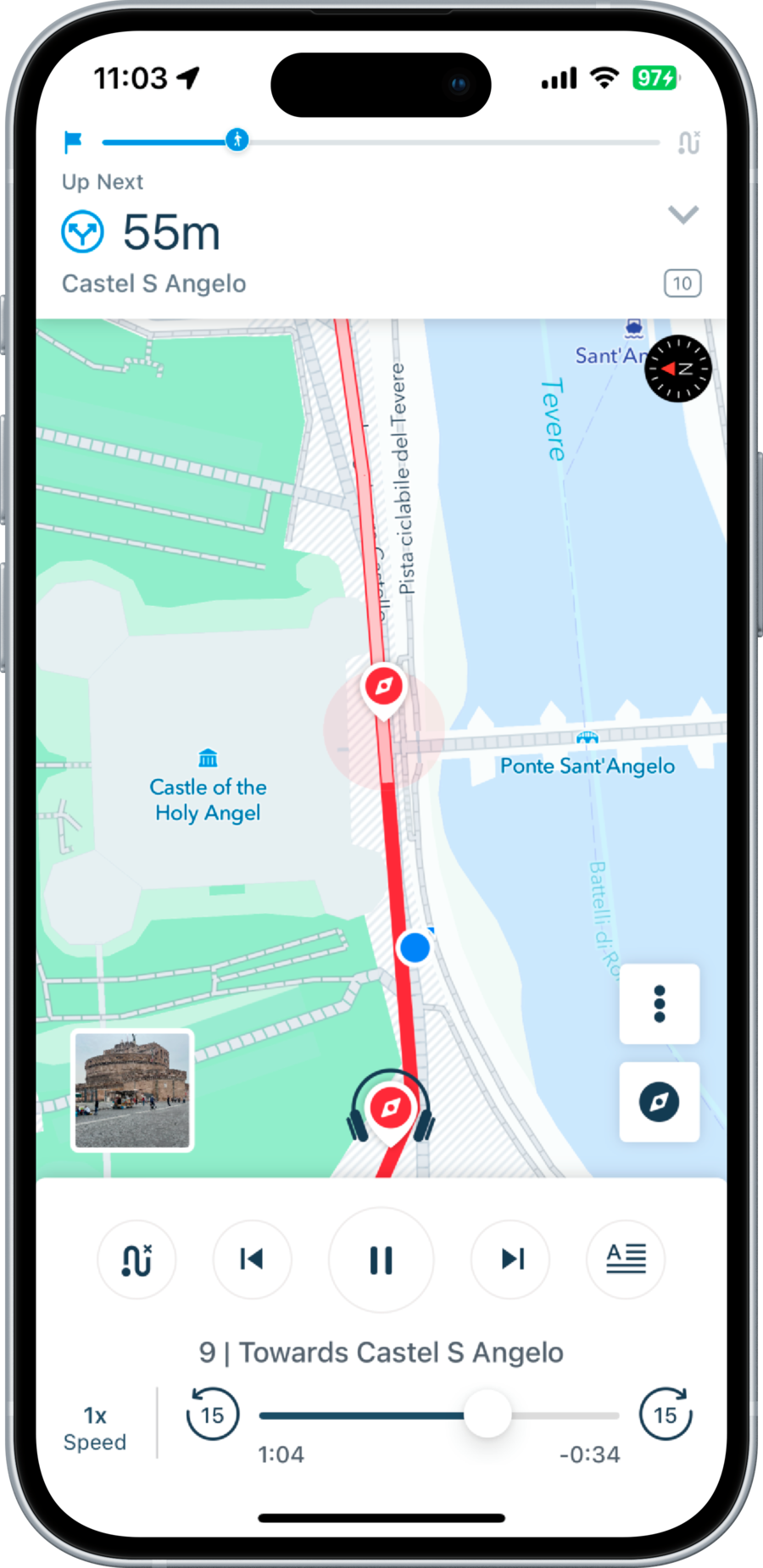
Listen hands-free with GPS playback
Get turn-by-turn directions
Scan to get app
Download the app for free
VoiceMap
App of the Day
Editor’s Choice
“This app has become my go-to app for audio tours. I pretty much use it for every trip and it works wonderfully. I highly recommend VoiceMap for travelers to truly experience cities.”
App Store Review
“Great app. walk around at your own pace, stop where you want, move on or speed up when you want. Read the script before you go or during the commentary, speed it up or replay it. Repeat the tour whenever you like.”






 Buy for a Group
 Reviews
 About the Tour
 About the Tour
 Tour Producer



 Preview Location
 View locations and route







 Major Landmarks
 Getting There


 Show Directions


 Tips
 Get The App








 App of the Day

 Editor’s Choice


 Questions and Reviews