



Gateway to the Americas: A Walking Tour Through Seville’s Golden Age




 Buy for a Group
 Reviews
 About the Tour
 About the Tour


Seville is a captivating city with a fascinating past. On this walking tour, you’ll explore its period of greatest splendour, which was sparked by Columbus reaching the Americas in 1492.
Seville obtained a monopoly on trade with Spain’s vast colonial empire, transforming the city into one of the world’s great ports which attracted merchants, sailors, artisans and artists – as well as criminals and chancers – from all over Europe. Its new wealth paid for the magnificent buildings and works of religious art by the great Baroque masters that still adorn the city today.
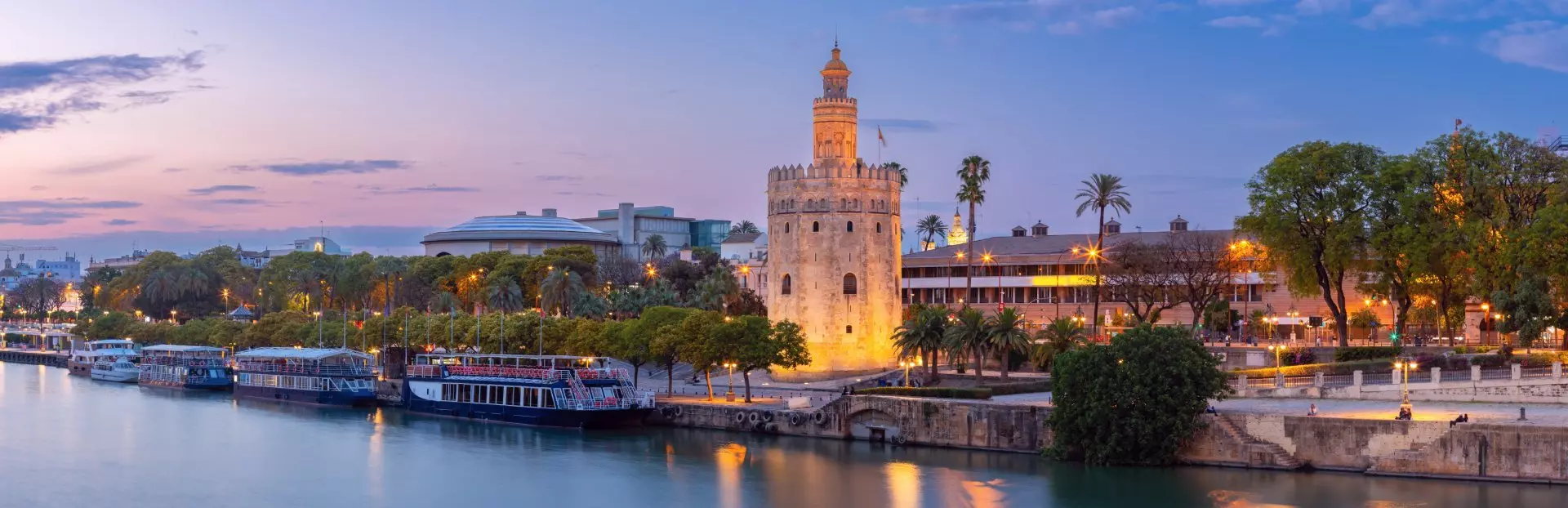
This Seville tour starts at the Archivo de Indias (the General Archive), which preserves a record of Spain’s colonial past, including the Treaty of Tordesillas. From there, you’ll wind your way past the old shipyards and the Royal Mint. Then you’ll head down to the mighty River Guadalquivir, watched over by the Torre del Oro, Seville’s golden watchtower and now a museum.
After a stroll along the river, you’ll return into the old walled city, passing many of Seville’s monumental buildings, including Ayuntamiento de Sevilla (the city hall), and the Catedral de Sevilla (the Seville Cathedral). Finally, you’ll stroll through the old Jewish quarter of Santa Cruz to end in front of Hospital los Venerables, a Baroque-style mansion and museum.
Along the way, you’ll:
- Find out why Seville was given a monopoly on trade with the Americas
- Stroll up the pleasant Paseo del Rio Guadalquivir, the promenade along the river which is now popular with joggers, cyclists and tourists
- Hear about the first sailors to circumnavigate the globe, including what their actual aim was when they set out, and the many trials and tribulations they suffered during their voyage
- Walk out onto Puente de Triana (Triana bridge), and take in stunning views up and down the river
- Gaze upon the ornate Puerta del Perdón y Patio de los Naranjos (the Gate of Forgiveness, which leads into the Orange Tree Courtyard)
- Learn about the great Baroque artists like Murillo and Velázquez, and find out where you can see some of their masterpieces
You’ll also discover:
- Why Brazil is Portuguese-speaking and the rest of South America speaks Spanish
- How the continent of America got its name, and why the Spanish called it the “Indies”
- Why it’s hard to see which way the river is flowing
- How Columbus kept travelling even after he died!
- What caused Spanish writer, Miguel de Cervantes, to be imprisoned, and which book it inspired him to write
By the end of this two-hour tour, you’ll have a better understanding of why Seville blossomed as the gateway to the Americas, ushering in a golden age of the arts, and influencing the culture and cuisine of Spain, Europe and Asia.
Tour Producer
 Tour Producer

Ben Barclay

When I moved to Granada in 2006, I initially intended to stay for a year or two. Maybe three or four at most. But like many people, I was captivated by the city’s history and culture, as well as its strategic location close to the sea and in the shadow of the imposing Sierra Nevada mountains. Having travelled widely before I came here, I knew that Granada was special. Little by little I became a local – a “Granaíno”. As well as enjoying everything Granada has to offer, I love exploring the cities and countryside of Andalucía, and my wife and I recently set up the travel website Andalucía Bound (andalucia-bound.com), which offers inspiration and practical advice for visitors to Andalucía. We're also keen hikers, and for fifteen years we've been running the website treksierranevada.com, with information about self-guided hikes in the Sierra Nevada.
In 2011, I co-founded the educational publisher LinguaFrame S.L., which produces textbooks in English for Spanish secondary schools, and I'm the author and editor of fifteen history, geography and science textbooks. I also work as a government-authorised translator, with my specialist areas including historical and cultural texts for museums and advertising material related to tourism.
Save with Seville audio tour passes
How do passes work?

Preview Location
 Preview Location
Location 16
River Guadalquivir
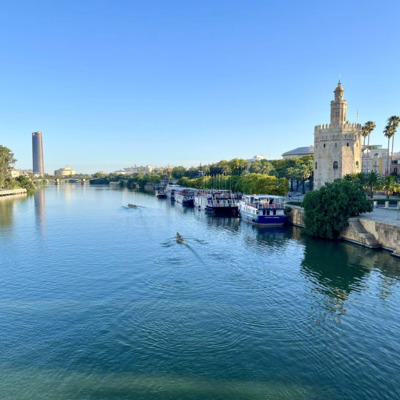
You might be wondering why Spain’s main port was located here, more than 100 kilometres upriver from the Guadalquivir estuary. Why not somewhere on the Atlantic coast like Cádiz? Because it was vulnerable to attack...
 View locations and route

How VoiceMap Works






Major Landmarks
 Major Landmarks
-
Fuente de Indias
-
Archivo de Indias
-
Cruz de los Juramentos
-
Arco del Postigo
-
Reales Atarazanas
-
Church of La Caridad
-
Hospital de la Caridad
-
Torre de la Plata
-
Torre del Oro
-
Centro Nao Victoria
-
Paseo del Rio Guadalquivir
-
Puente de Triana

-
Mercado del Arenal
-
Plaza Nueva
-
Monumento a San Fernando
-
Ayuntamiento de Sevilla
-
Los Palcos
-
Monumento a Miguel de Cervantes
-
Puerta del Perdón y Patio de los Naranjos
-
Biblioteca Capitular y Colombina
-
Σιντριβάνι Farola
-
Plaza Virgen de los Reyes
-
Palacio Arzobispal
-
Catedral de Sevilla
-
Plaza del Triunfo
-
Monumento a la Inmaculada Concepción
-
Patio de Banderas
-
Hospital los Venerables
Getting There
 Getting There
Route Overview
-
Total distance4km
-
Final locationPl. Venerables, 8, Casco Antiguo, 41004 Sevilla, Spain
-
Distance back to start location319.54m


Directions to Starting Point
The tour starts at the General Archive of the Indies on Avenida de la Constitución in the historic centre of Seville.
 Show Directions


Tips
 Tips
Tips
Places to stop along the way
Along the way, I’ll point out various museums and other places of interest. And you’ll never be far from a bar or café if you need to stop for refreshments.
Best time of day
You can do the tour any time, but mid-week is usually less crowded. I recommend starting early in the morning in summer, to avoid the worst of the heat. In the early evening the light is beautiful along the river.
Precautions
We’ll be walking a reasonable distance, so wear comfortable shoes. Sunblock and a bottle of water are also essential if the weather is warm and sunny, which it often is in Seville! In summer, I recommend doing the tour in the morning, before it gets too hot.
Get The App
 Get The App




Scan to get app
Download the app for free
VoiceMap




 App of the Day

 Editor’s Choice


Last Updated
 Last Updated
Questions and Reviews
 Questions and Reviews