






Flamenco on the Guadalquivir: Industry and Artistry in Seville’s Triana




 Buy for a Group
 Reviews
 About the Tour
 About the Tour
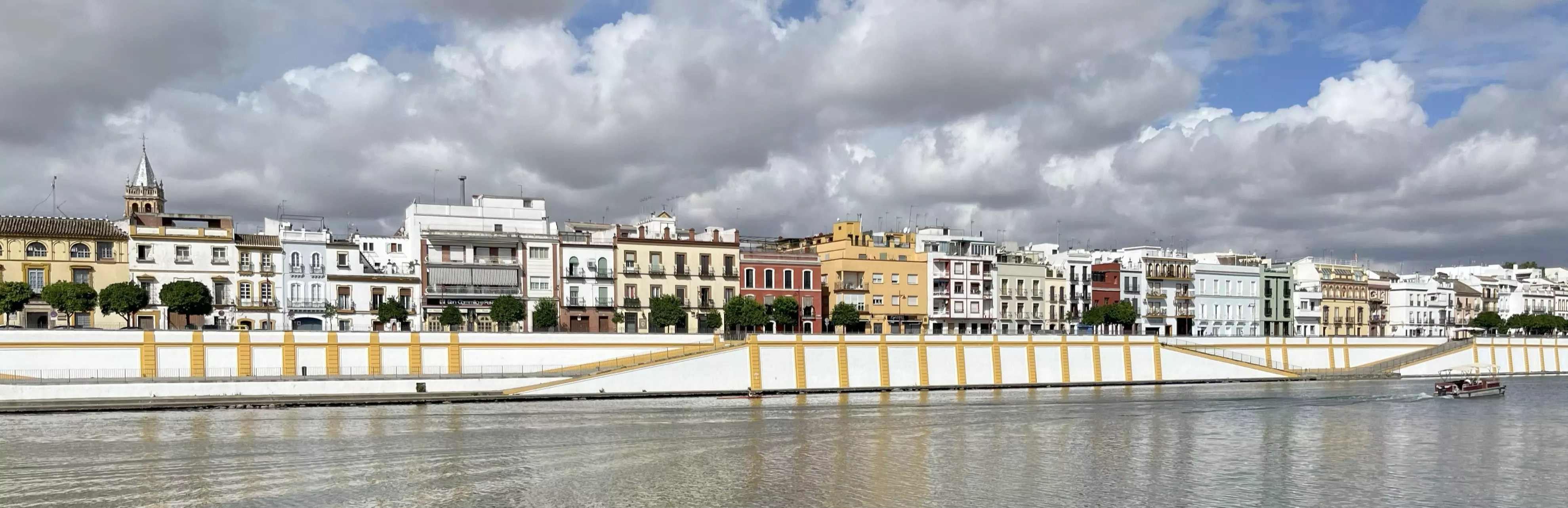
Across the Guadalquivir River from Seville’s historic centre lies Triana. This colourful neighbourhood was relatively isolated from the rest of the city until the first fixed bridge opened in 1852. On this walking tour, you’ll come to understand how this working-class district forged its own strong identity based on its industrial past and rich cultural heritage.
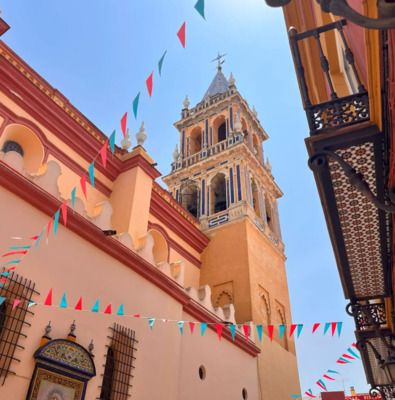
You’ll start the tour on the Puente de Triana bridge before diving into the narrow streets near the river, once home to Triana’s renowned ceramics industry and a royal soap factory. You’ll see beautiful tilework adorning Baroque churches, including Nuestra Señora de la O, and ornate Regionalist-style buildings like the former Montalván ceramics factory.
You’ll pass an example of Triana’s traditional housing, corral de vecinos, where the shared courtyards fostered a strong sense of community. You’ll wind through the former Cava de los Gitanos, where the passionate art of flamenco emerged from generations of Roma families gathering to express their emotions through song and dance. After passing the striking yellow Casa de las Columnas, the former headquarters of Seville’s seafarers’ guild, the tour ends with a spectacular view back across the river to Seville’s iconic skyline.
On this 90-minute walking tour, you’ll:
- Admire the Capilla del Carmen, an exquisite chapel designed by the architect behind Seville’s Plaza de España
- Discover how Castillo de San Jorge, once the headquarters of the dreaded Spanish Inquisition, has been transformed into the Mercado de Triana, a bustling and atmospheric market
- Hear the story of Juan Belmonte, the father of modern bullfighting who grew up in Triana
- Learn how ceramics production evolved from Islamic geometric designs to the intricately-painted smooth tiles that you see on buildings throughout Seville
- Discover the surprising story of manufacturing that’s hidden in the heart of this historic district
- Hear about Triana’s seafarers, including the first European to set eyes on the Americas, and visit their chapel, the Capilla de los Marineros
- Visit Santa Ana church, affectionately called ”Triana’s cathedral”, with its Gothic-Mudéjar architecture
- Find out where to sample local tapas and experience an authentic flamenco performance
By the end of the tour, you’ll have a taste of this distinctive and creative neighbourhood that keeps hold of its traditions despite the changing times.
Tour Producer
 Tour Producer

Ben Barclay

When I moved to Granada in 2006, I initially intended to stay for a year or two. Maybe three or four at most. But like many people, I was captivated by the city’s history and culture, as well as its strategic location close to the sea and in the shadow of the imposing Sierra Nevada mountains. Having travelled widely before I came here, I knew that Granada was special. Little by little I became a local – a “Granaíno”. As well as enjoying everything Granada has to offer, I love exploring the cities and countryside of Andalucía, and my wife and I recently set up the travel website Andalucía Bound (andalucia-bound.com), which offers inspiration and practical advice for visitors to Andalucía. We're also keen hikers, and for fifteen years we've been running the website treksierranevada.com, with information about self-guided hikes in the Sierra Nevada.
In 2011, I co-founded the educational publisher LinguaFrame S.L., which produces textbooks in English for Spanish secondary schools, and I'm the author and editor of fifteen history, geography and science textbooks. I also work as a government-authorised translator, with my specialist areas including historical and cultural texts for museums and advertising material related to tourism.
Save with Seville audio tour passes
How do passes work?

Preview Location
 Preview Location
Location 38
Iglesia de Santa Ana II
 View locations and route

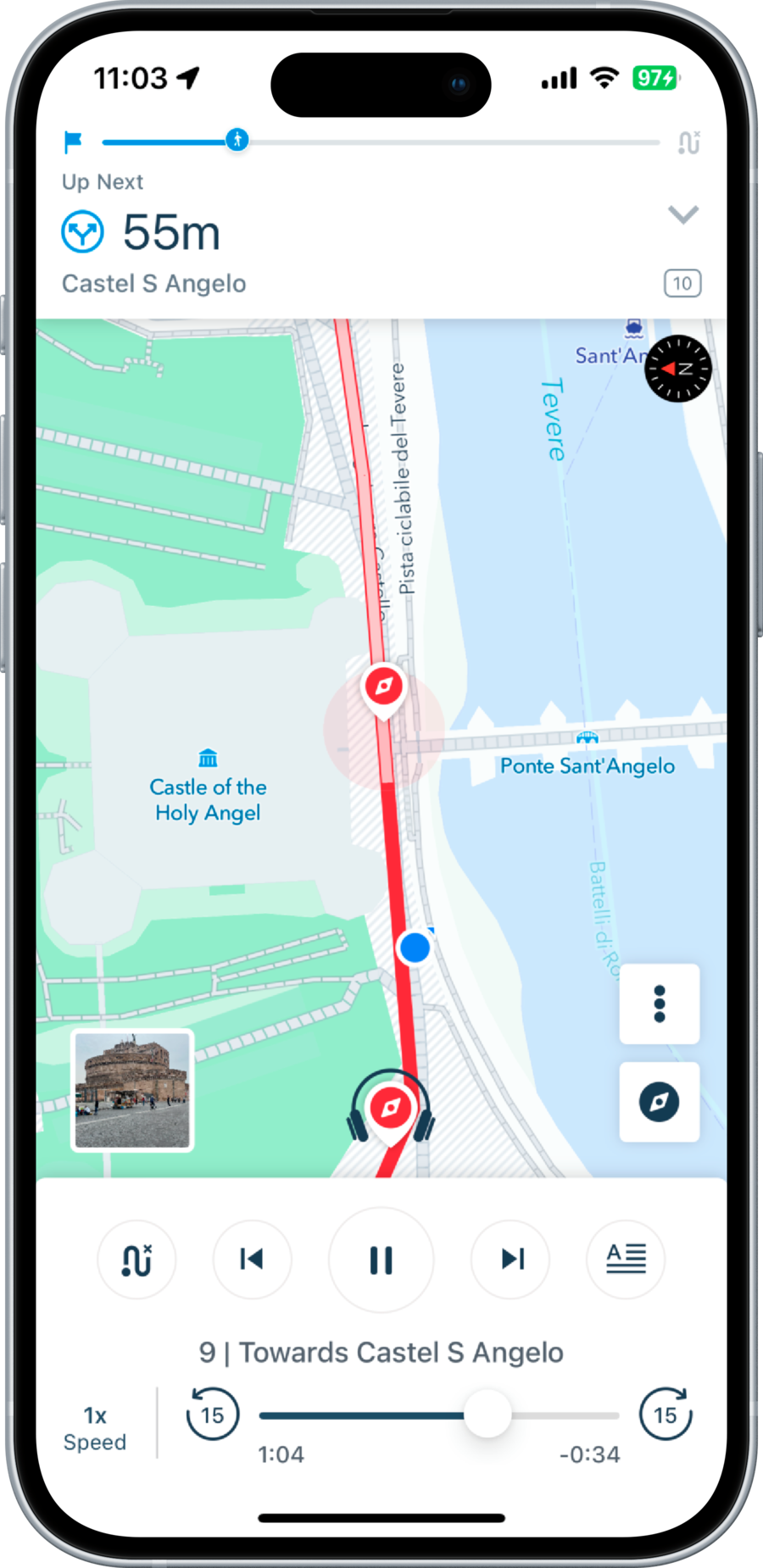
How VoiceMap Works







Major Landmarks
 Major Landmarks
-
Puente de Triana

-
Capilla Virgen del Carmen
-
Mercado de Triana
-
Museo Del Castillo De San Jorge
-
Juan Belmonte
-
Monumento al Arte Flamenco
-
Centro Cerámica Triana
-
Monumento a los alfareros, ceramistas y al cante por soleá de Triana
-
Callejón de la Inquisición
-
Parroquia Nuestra Señora de la O
-
Antiguas Almonas
-
Muelle San Jorge
-
Monumento a Trajano
-
Parroquia de San Jacinto (Dominicos)
-
Hermandad de la Estrella (Triana)
-
Capilla de los Marineros
-
Centro Cívico La Casa de las Columnas
-
Real Parroquia de Señora Santa Ana
-
Muelle Camaronero
Getting There
 Getting There
Route Overview
-
Start locationPuente de Isabel II, 30, 41010 Sevilla, Spain
-
Total distance3km
-
Final locationPuente de Triana, Pl. del Altozano, 1, 41010 Sevilla, Spain
-
Distance back to start location300.89m


Directions to Starting Point
The tour starts on the Puente de Isabel II (Puente de Triana), around two thirds of the way across the bridge to Triana from Seville's city centre, next to a wrought iron lamppost, and on the same side of the road as a restaurant with a roof terrace and a clock tower.
 Show Directions



Tips
 Tips
Tips
Places to stop along the way
Along the way I'll point out various museums, churches and chapels you can go into. None of them need to be booked in advance, but bear in mind that some close for a few hours in the middle of the day.
There are lots of cafés and tapas bars in Triana, so you'll never be far from somewhere to stop. I'll tell you about some of the best spots to sample traditional local food during the tour.
Best time of day
Any time, but I recommend starting early in the morning if it's very hot.
Some of the churches and other sights close for a few hours in the middle of the day.
Precautions
Some parts of the tour are quite exposed with little shade, so don't forget sunscreen, sunglasses + hat and a bottle of water.
Like other parts of Seville, Triana can get pretty crowded, so take the usual care with your belongings.
Get The App
 Get The App




Scan to get app
Download the app for free
VoiceMap




 App of the Day

 Editor’s Choice


Questions and Reviews
 Questions and Reviews