





Kamo River’s Timeless Tales: A Kyoto Walking Tour




 Buy for a Group
 Reviews
 About the Tour
 About the Tour
Japan’s ancient capital echoes with the footsteps of the samurai, geisha, and kabuki performers who walked these cobblestone streets centuries ago.
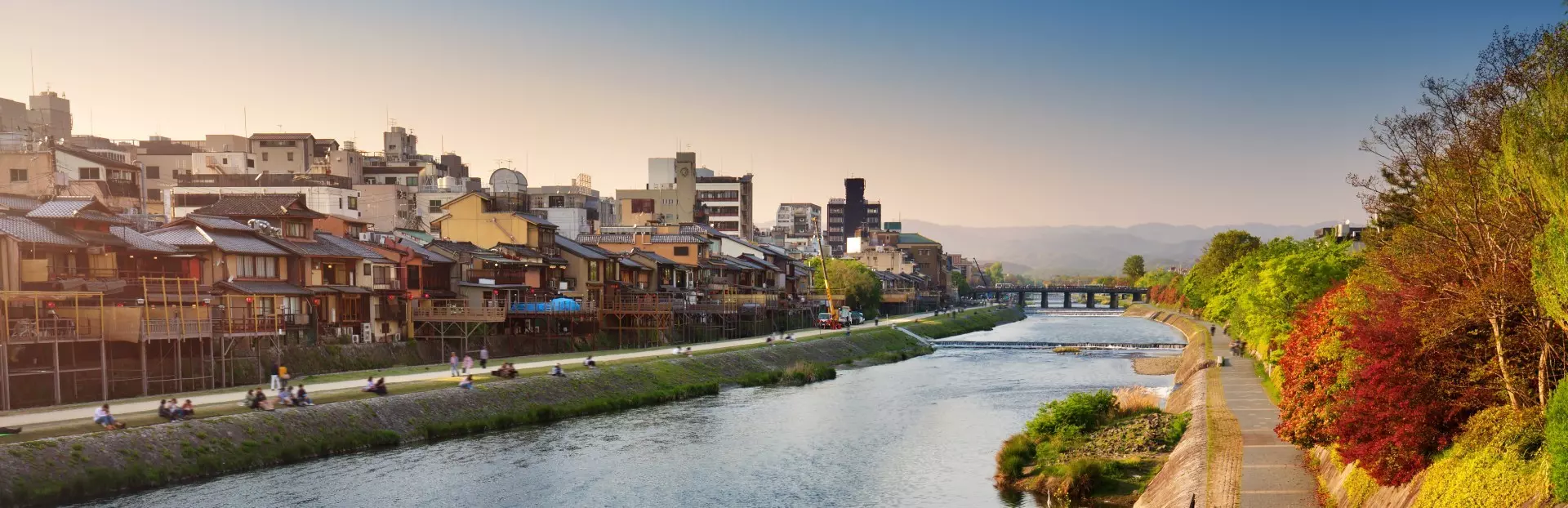
On this walking tour of Kyoto, you’ll stroll along the Kamo River to hear about the heart-stopping events that happened on its shores. The tour producer, Nick Toven, is a Context Travel expert who gained his PhD in politics during a long stay in Japan.
Starting at the historic Shijo Bridge, which has watched over Japan’s ancient capital since the Shogun era, you’ll discover how bridges evolved from footpaths to modern transport routes. You’ll hear tales of intrigue from the Gion District’s teahouses, including a famous Winter revenge plot. Nick will tell you about the sword-wielding woman who scandalized society on the river’s outdoor stage, and reveal how local birds inspired the paintings in Kyoto’s castles.
As you make your way along the river and back towards the tour’s starting point, you’ll follow in the footsteps of pilgrims who walked from Edo (now Tokyo) to Kyoto, eating rice crackers along the way. You’ll also stride along the famous Shijo street toward Yasaka Jinga, where pilgrims would celebrate the end of their 12-day journey. Before finishing the tour, you’ll step across the exquisite stone Tatsumi footbridge, lined with sakura trees that gloriously blossom in the Spring.
On this 75-minute tour, you’ll:
- Peer out over the sandbars and visualize the bygone days of food vendors serving customers in the middle of the flowing river
- Rub shoulders with the cultured patrons of the Minamiza Kabuki Theater as they gather for the latest performance
- Bow at the shrines dedicated to saving Kyoto residents from floods, before the days of modern drainage gates
- Cross the Sanjo Bridge and search for the pylon that bears traces of a sword fight in the waning days of the Tokugawa Shogunate
- Silently step into the Dainichinyorai graveyard where dozens of women of the Toyotomi clan were murdered in order to prevent the birth of any future male claimants to the dynasty
- Tip your hat as Charlie Chaplin did when he visited the Pontocho Kaburenjo performance house in the 1930s
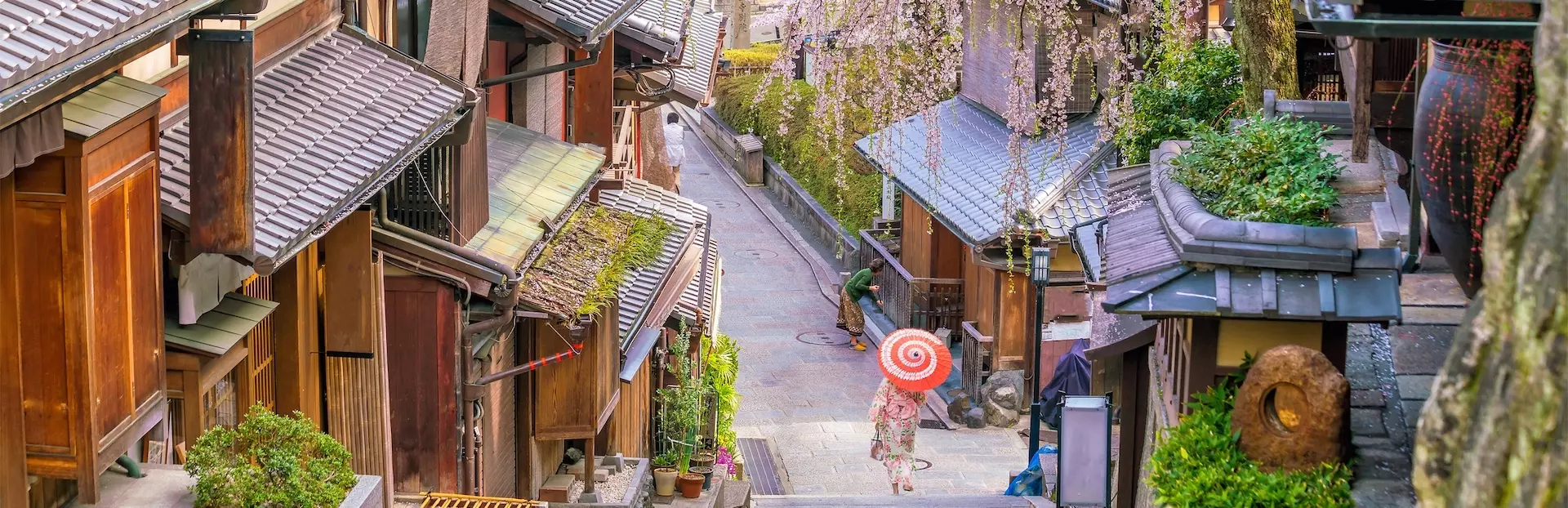
- Mingle with kimono-clad visitors in narrow stone alleys filled with bars and grills, featuring terraces overlooking the river
- Search the shop roofs for the “sugidama,” cedar spheres used to mark the aging of alcohol in wooden barrels
By the end of this tour, you’ll have enriched your knowledge of Kyoto’s history. With every step around the Kamo River, you’ll appreciate how this popular destination was a focal point for trade, culture, and spiritual life for centuries, and how it continues to draw curious visitors to this day.
This tour is best taken in the afternoon and early evening to catch the sunset over the water.
Tour Producer
 Tour Producer

Context Travel

Context was founded in Rome in 2003 by Paul Bennett and Lani Bevacqua, an expat couple eager to curate experiences for travelers, not tourists. Since then, Context has taken over 280,000 people to 80+ destinations around the world – accompanied by thousands of leading experts. What started as a dream to create cross-cultural connections is now a worldwide network and community of thoughtful, engaged travelers and experts.
Join a live private or small group tour in destinations around the world at contexttravel.com.
Save with Kyoto audio tour passes
How do passes work?

Preview Location
 Preview Location
Location 6
Gion district
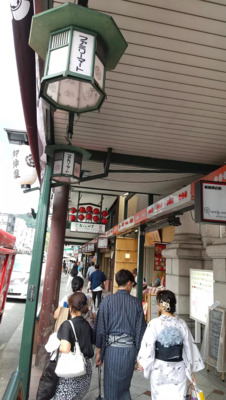
You might see the famed Yasaka Jinga shrine in the distance. We won't go that far in today's walk. Instead, we are going to explore the famed Gion district, known for geisha houses, tea rooms, and dining halls that ...
 View locations and route

How VoiceMap Works





Major Landmarks
 Major Landmarks

Getting There
 Getting There
Route Overview
-
Start locationKashiwayacho, Nakagyo Ward, Kyoto, 604-8014, Japan
-
Total distance3km
-
Final locationShijo-dori, Kyoto, Japan
-
Distance back to start location63.67m


Directions to Starting Point
Our tour starts at the police box on the north side of the Shijo Bridge, just one block east of the Kiyamachi Street-Shijo Street intersection. It is on the ground level near the terminus of the Hankyu train line, at Kawaramachi. It is also just west of the Keihan Line's Gion-Shijo station.
If you are using the Karasuma Line from Kyoto Station, take the line northbound to Shijo Station, then walk about 12 minutes east until you reach the bridge over the Kamogawa river. You will see a small police box just before a large outdoor staircase leading under the bridge.
 Show Directions

Tips
 Tips
Tips
Places to stop along the way
Funa-hashi-ya rice cracker shop. It is usually closed on Tuesdays, but open the rest of the week, from 10 AM to 6 PM.
The Ichi-Riki-Tei banquet hall, connected to the legend of the 47 Ronin. The Shirakawa canal and bridge, a favorite spot for professional photographers, especially during cherry blossom season. The Sanjo Bridge, which has copper finial posts that still bear the marks of a samurai sword fight that happened 140 years ago. The Pontochyo Kaburenjo theater, so famous that even Charlie Chaplin visited to learn the performance techniques. The Dainichi-nyorai and Zuisenji temple, the sight of a betrayal and murder within the Toyotomi ruling family.
Best time of day
Best to start about 45minutes to one hour before sunset. Check sunset times during the season when you visit. Japan doesn't switch clocks for daylight savings, so the sunset time can vary from 4:30pm in the Winter to after 7:00pm in the Summer.
Precautions
Please bring a pair of headphones and a water bottle. Don't forget to keep an eye on your belongings. It's also recommended to wear a comfortable pair of walking shoes as well as clean and well-kept socks, as you may be asked to remove your shoes if you choose to enter some eating venues. It is also recommended to bring either a collapsible umbrella or folding rain poncho, as the weather can change quickly and Japan does have some rainy months. And, as some shops are small and family-owned, they may not all accept cards or electronic payments, therefore we suggest bringing several bills of 1,000Yen, and coins of 100Yen, 50Yen, and 10Yen.
Get The App
 Get The App




Scan to get app
Download the app for free
VoiceMap




 App of the Day

 Editor’s Choice


Questions and Reviews
 Questions and Reviews