






From Antique Wells to French Facades: A Hội An Old Town Tour




 Buy for a Group
 Reviews
 About the Tour
 About the Tour
Life unfolds in the narrow alleyways of Hội An’s Old Town. On this walking tour, Vietnam travel writer Joshua Zukas will peel back the layers of the ancient quarter’s multicultural history, spanning over 2,000 years.
Starting at an often-overlooked American Army Blockhouse, you’ll wander down atmospheric back lanes and streets bursting with heritage, offering a different perspective of the busy old town. You’ll learn how this UNESCO World Heritage site was shaped by seven cultures, from the ancient Champa civilization which was influenced by India, to the Polish architect who saved the town from neglect. You’ll hear how the city was shaped by Chinese merchants who built elaborate assembly halls and the French colonists who transformed the skyline.
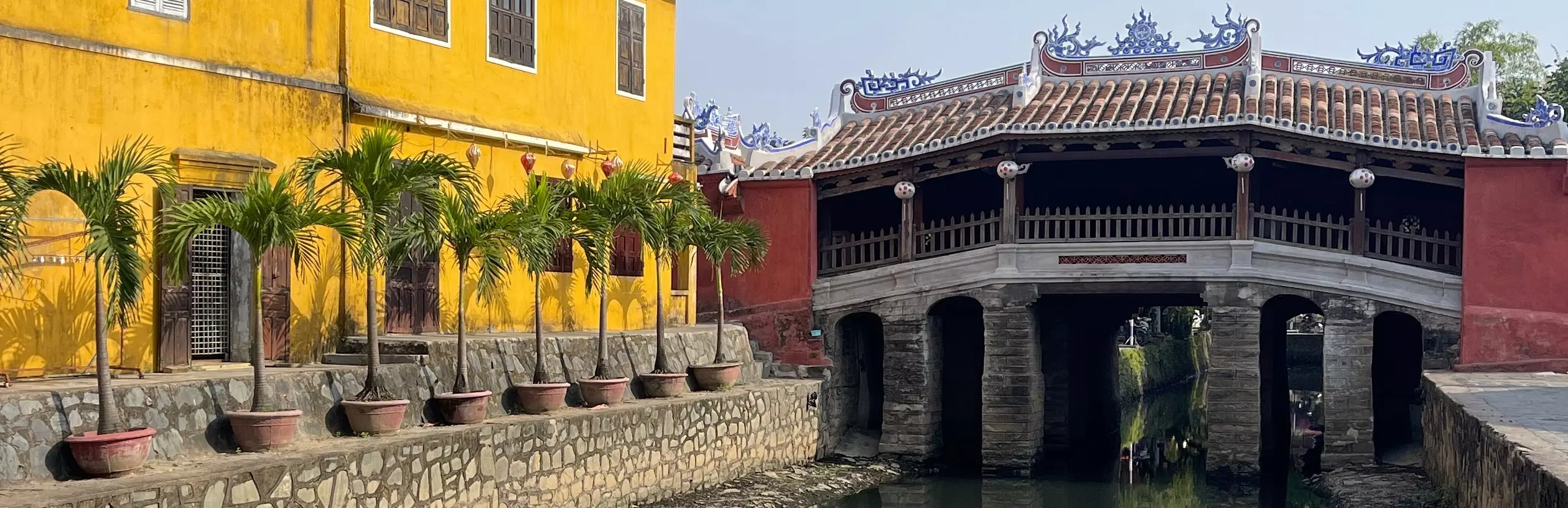
You’ll make your way across Kwiatkowski Square and through the often rowdy Hội An Market where, early in the morning at least, local commerce continues much as it has for at least a century. You’ll take in shophouse architecture, and learn how its practical design separates commercial and residential spaces with hidden courtyards. As you make your way to the Japanese Bridge where the tour ends, you’ll see ancient houses like Đức An, home to several generations of the same family and once a secret revolutionary hub.
On this hour-long tour, you’ll have a chance to:
- Discover 800-year-old wells built by the Champa civilisation, evidence of the town’s ancient foundations
- Find out why the so-called French Quarter, with its arched European façades, didn’t actually house any French people
- Walk past Nguyễn Tường Family Chapel, once belonging to a 19th-century Imperial Army leader, reflecting Hội An’s connections to the former royal capital of Huế
- Learn why monkey statues guard one end of the enigmatic Japanese Bridge, and dog statues the other
Perfect for early risers, this tour reveals how Hội An’s picturesque old town is actually a living document of global trade networks, cultural exchanges, and traditions that continue to thrive.
Tour Producer
 Tour Producer

Joshua Zukas

I value depth over breadth, which is why I write exclusively about Vietnam—a country I’ve called home for more than a decade. I mainly write about travel, but I also cover culture, society, architecture, and food.
So, why Vietnam? Because I love a good story, and Vietnam is teeming with them. Some are mythological, others are grounded in fact, but most inhabit that grey area in between.
I draw on these stories in my work, including writing guidebooks for Bradt, Lonely Planet, Fodor’s and Hardie Grant, and features for The Economist, Wallpaper, Business Insider, The Michelin Guide and Adventure.com.
My VoiceMap walking tours offer more than an introduction to Vietnam’s complex history and mythology. They bring to life the stories hiding in plain sight, lead you down alleyways you might otherwise pass by, introduce new ways to see popular sights, and show you street food spots that most tourists never find.

Save with audio tour passes
How do passes work?

Preview Location
 Preview Location
Location 14
Mr Elephant Communal House
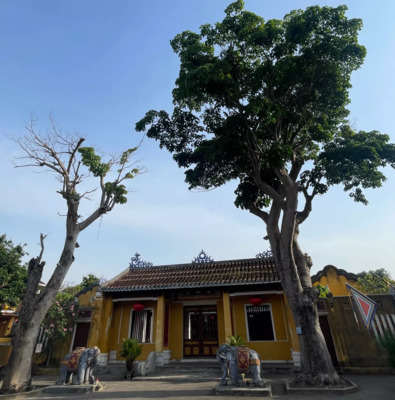
Unlike many other buildings and temples in Hoi An, this communal house is quintessentially Vietnamese. ...
 View locations and route

How VoiceMap Works







Major Landmarks
 Major Landmarks
-
Trieu Chau Assembly Hall
-
Hoi An Market
-
Museum of Traditional Medicine
-
Museum of Folk Culture
-
Quan Thang Ancient House
-
Đình Ông Voi
-
Kwiatkowski Square
-
The Japanese Bridge
-
Nguyen Tuong Family Chapel
-
Cantonese Assembly Hall
-
Hoi An Museum
-
Công viên Trung tâm Hội An
-
Army Blockhouses
-
Market Bar - Market Terrace
-
Hoi An Art Gallery
-
Phở Tùng
-
Phố Cổ Hội An
-
Mót Hội An - Nước Thảo Mộc Sả Chanh
-
Hoi An Old Town promenade
-
Nữ Eatery
Getting There
 Getting There
Route Overview
-
Start locationV8JM+MV2, Sơn Phong, Hội An, Quảng Nam, Vietnam
-
Total distance2km
-
Final location176 Trần Phú, Phường Minh An, Hội An, Quảng Nam, Vietnam
-
Distance back to start location796.69m


Directions to Starting Point
The tour begins on Trần Hưng Đạo Street at the south side of Công viên Trung tâm Hội An (Hội An Central Park) in front of the westernmost army blockhouse (careful - there are two). Walk or get a taxi there from your hotel. The tour finishes on the other side of town.
 Show Directions




Tips
 Tips
Tips
Places to stop along the way
I haven't pointed out specific places to have a juice, coffee or snack during the tour, but there are cafes and street kitchens everywhere. If one of them appeals, simply take a seat, stop the tour, and keep going when you're ready.
Best time of day
To enjoy Hội An's old town all to yourself, try and start the tour between 6am and 8am (the earlier the better), especially during the busy high season (February to May). You can do the tour at any time of year - as long as you come prepared for the weather. Several stops along the way present opportunities to rest and absorb the architectural details that tell Hội An’s complex story.
The tour doesn’t enter any ticketed sights, and they’re all closed early in the morning anyway. But Hội An is very small: if anywhere piques your interest, simply make a note and return later.
Precautions
Hội An is extremely safe, but it's still sensible to exercise the same safety precautions that you would elsewhere in the world. Take extra care when crossing streets, including at zebra crossings: the cars and motorbikes won't stop for you so wait for a break in the traffic, then move slowly and predictably across the road looking in both directions. Consider bringing an umbrella if rain looks even remotely likely (most hotels offer them for free) and remember to stay hydrated when it's warm.
Get The App
 Get The App




Scan to get app
Download the app for free
VoiceMap




 App of the Day

 Editor’s Choice


Questions and Reviews
 Questions and Reviews