





Enchanting Granada: A Walking Tour of the Historical Centre and Lower Albaicín




 Buy for a Group
 Reviews
 About the Tour
 About the Tour
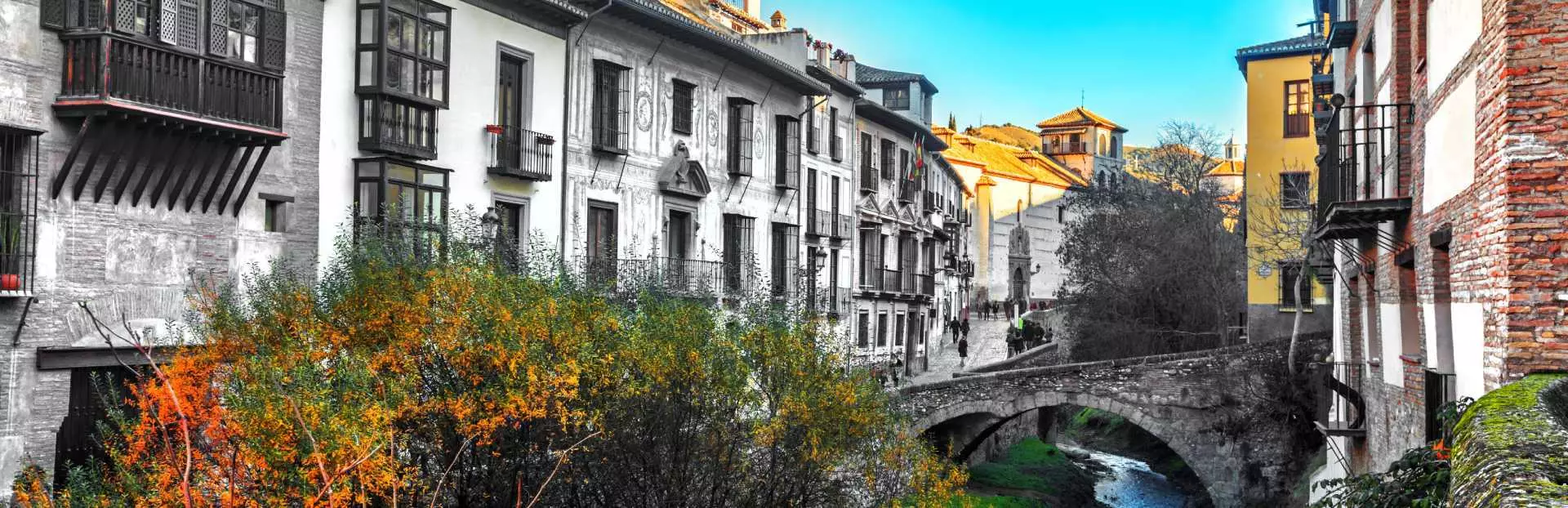
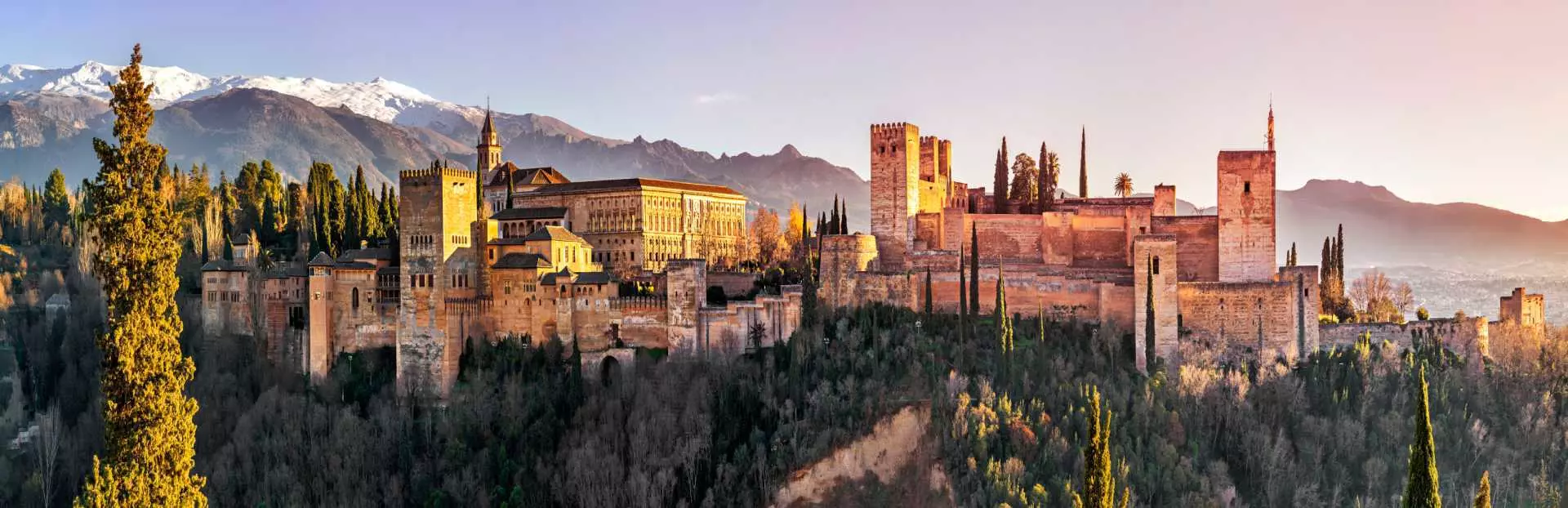
Many visitors to Granada head straight to the awe-inspiring Alhambra, the fortified palace complex that rises above the skyline. But this vibrant and historic city has so much more to offer! Wandering through its cobbled squares, alleyways and viewpoints is the perfect way to soak up its rich 1,000-year history. On this walking tour, I’ll show you the beautiful fusion of Moorish, Renaissance and Baroque architecture that you’ll find all around you in Granada’s historical centre.
You’ll start the tour in Plaza Bib-Rambla, right at the heart of the city, near the charming web of market lanes, the Alcaicería, located on the site of the former main bazaar. I’ll show you the striking building where charcoal was stored in the 1600s, the Corral del Carbón, and Plaza Isabel La Católica where you’ll see the statue of Isabella I of Castile meeting Christopher Columbus. From there, I’ll guide you through the maze of narrow streets in the Albaicín – the former Moorish quarter, and now a UNESCO World Heritage Site. You’ll make your way to some of the city’s Renaissance-era highlights, including Granada’s Monasterio de San Jerónimo (St. Jerome Monastery), Catedral de Granada (the cathedral) and Capilla Real (the Royal Chapel) where Isabella I of Castile and Ferdinand II of Aragon are buried.
On our tour through this centuries-old city, you’ll also have an opportunity to:
- Take in famous sites like El Bañuelo (the Arab baths), Puente del Aljibillo – the bridge that leads to the Alhambra – and the Palacio de la Madraza, built as a school of Koranic law in the 14th century
- Stroll along Paseo de los Tristes, also known as the Promenade of the Sad People, and through squares like Plaza de la Trinidad and Plaza Nueva de Granada
- Browse the food stalls at Granada’s central market, the Mercado de San Agustín
- Soak up views of the Alhambra at Mirador Placeta de Carvajales
- See one of the best-preserved Moorish houses, Casa de Zafra, and Casa Natal de Enrique Morente, the birthplace of flamenco singer Enrique Morente
- Find out about Peña La Platería, the cultural association dedicated to the art of flamenco
During the tour, you’ll also find out the answers to questions like:
- What happens if you ring the bell on the Alhambra’s Torre de la Vela on the 2nd of January?
- Why does the cathedral only have one tower and Emperor Charles V only have one arm?
- Whose ghost haunts the Royal Chancery?
- Why can’t you stroll through the city centre along the River Darro?
Give yourself about 3 hours to get the most out of this tour, or linger a while at the sites, cafes or bars that take your fancy along the way. I’ll tell you about everything from Granada’s famous complimentary tapas, to playwright Federico Garcia Lorca, and a few of the most widespread misconceptions about aspects of Andalusian culture – including flamenco. And of course, there’ll be plenty of great photo opportunities!
Tour Producer
 Tour Producer

Ben Barclay

When I moved to Granada in 2006, I initially intended to stay for a year or two. Maybe three or four at most. But like many people, I was captivated by the city’s history and culture, as well as its strategic location close to the sea and in the shadow of the imposing Sierra Nevada mountains. Having travelled widely before I came here, I knew that Granada was special. Little by little I became a local – a “Granaíno”. As well as enjoying everything Granada has to offer, I love exploring the cities and countryside of Andalucía, and my wife and I recently set up the travel website Andalucía Bound (andalucia-bound.com), which offers inspiration and practical advice for visitors to Andalucía. We're also keen hikers, and for fifteen years we've been running the website treksierranevada.com, with information about self-guided hikes in the Sierra Nevada.
In 2011, I co-founded the educational publisher LinguaFrame S.L., which produces textbooks in English for Spanish secondary schools, and I'm the author and editor of fifteen history, geography and science textbooks. I also work as a government-authorised translator, with my specialist areas including historical and cultural texts for museums and advertising material related to tourism.
Save with Granada audio tour passes
How do passes work?

Preview Location
 Preview Location
Location 6
Corral del Carbón: the courtyard
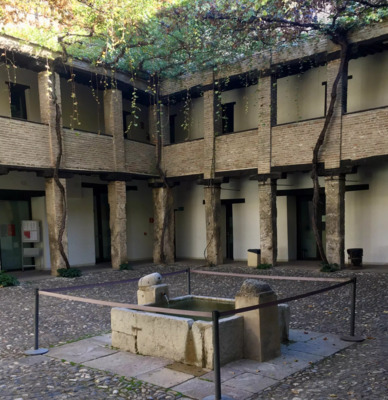
The name Corral del Carbón means Charcoal Courtyard, which comes from the fact that local people used to store charcoal here in the 1600s. However, it was built by the Muslims in the 1300s as an alhóndiga – a warehouse where wheat was stored and ...
 View locations and route

How VoiceMap Works






Major Landmarks
 Major Landmarks
-
Plaza de Bib-Rambla

-
Alcaicería
-
Corral del Carbón
-
Plaza Nueva
-
Iglesia de San Gil y Santa Ana
-
El Bañuelo
-
Carrera del Darro
-
Paseo de los Tristes
-
Catedral de Granada
-
Royal Chapel of Granada
Getting There
 Getting There
Route Overview
-
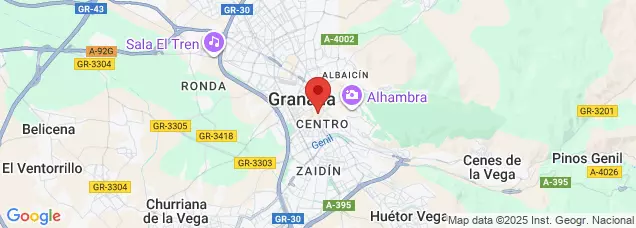
Start locationPl. de Bib-Rambla, 1, Centro, 18001 Granada, Spain
-
Total distance4km
-
Final locationCalle Oficios, s/n, Centro, 18001 Granada, Spain
-
Distance back to start location145.83m


Directions to Starting Point
The tour starts by the fountain in Plaza Bib-Rambla in the centre of Granada.
Use the “show directions” link on your phone if you need help to find the starting point.
 Show Directions

Tips
 Tips
Tips
Places to stop along the way
There are quite a few sights that I'll point out along the route, including the Arab Baths, Casa de Zafra, Archaeological Museum, cathedral, Royal Chapel and St. Jerome monastery.
In the historic centre, there are plenty of places to get a drink or tapas, but in the Albaicín it is more limited. Paseo de los Tristes is a good place to grab a drink with lovely views up to the Alhambra. On the way back out of the Albaicín you can stop for a cup of tea and a pastry in one of the teterías (Moorish tea shops).
Best time of day
Any time, but mid-week is usually less crowded. Some sights are closed on Sunday afternoons and Mondays, as well as for a couple of hours in the middle of the day, so it's good idea to check opening times in advance.
Precautions
We'll be walking along cobbled streets in the Albaicín, so comfortable shoes are recommended. In summer, sunblock and a bottle of water are essential.
Get The App
 Get The App




Scan to get app
Download the app for free
VoiceMap




 App of the Day

 Editor’s Choice


Last Updated
 Last Updated
Questions and Reviews
 Questions and Reviews